Teaching your dog a high five is one of the most fun and adorable tricks you can train. It’s cute, impressive, and surprisingly easy to teach — even for beginners. Whether you want to strengthen your bond, improve your dog’s obedience skills, or just enjoy a lighthearted training session, the high five trick is perfect for dogs of all ages and breeds.
This training builds confidence, improves focus, and uses positive reinforcement to create a joyful experience for your dog. With just a little patience, consistency, and the right steps, your dog will quickly learn how to raise a paw and high five like a superstar.
Below is a detailed guide to help you teach this trick in 4 simple steps, along with tips, common mistakes to avoid, and ways to make training more fun and effective.
Why Teach Your Dog a High Five?
Teaching your dog a high five isn’t just about showing off. It offers several benefits:
- Boosts your dog’s confidence
- Strengthens communication between you and your pup
- Helps channel energy into positive behavior
- Encourages problem-solving and mental stimulation
- Reinforces foundational obedience skills
- Makes training enjoyable and rewarding
This trick is also a great way to introduce dogs to more advanced paw-based tricks such as handshakes, wave hello, or give paw.
What You Need Before You Begin
Before starting the high-five training, make sure you have:
- Your dog’s favorite small treats
- A quiet space with no distractions
- A comfortable surface for your dog to sit
- A positive, patient attitude
Short sessions (5–10 minutes) work best. Dogs learn faster when training is fun and relaxed.
Step 1: Start with “Sit” and Reward Attention
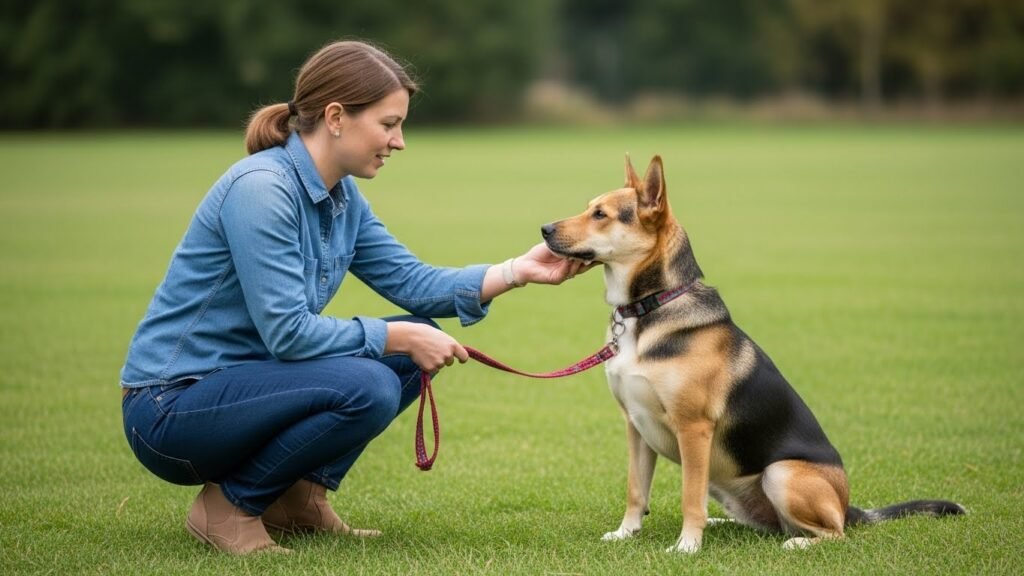
The first step to teaching a high five is to have your dog in a calm, focused position. The “sit” command creates a stable starting point.
How to Do It
- Ask your dog to sit.
- Once seated, make sure your dog is paying attention by showing a treat.
- Praise your dog for sitting and staying focused.
If your dog already knows “sit,” this part is easy. If not, you may need to practice sit training separately before moving on.
Why This Step Matters
Sitting helps your dog stay balanced and prevents jumping or lunging during training. Focus is also important — you want your dog to watch your hand and treat.
Step 2: Teach Your Dog to Lift a Paw
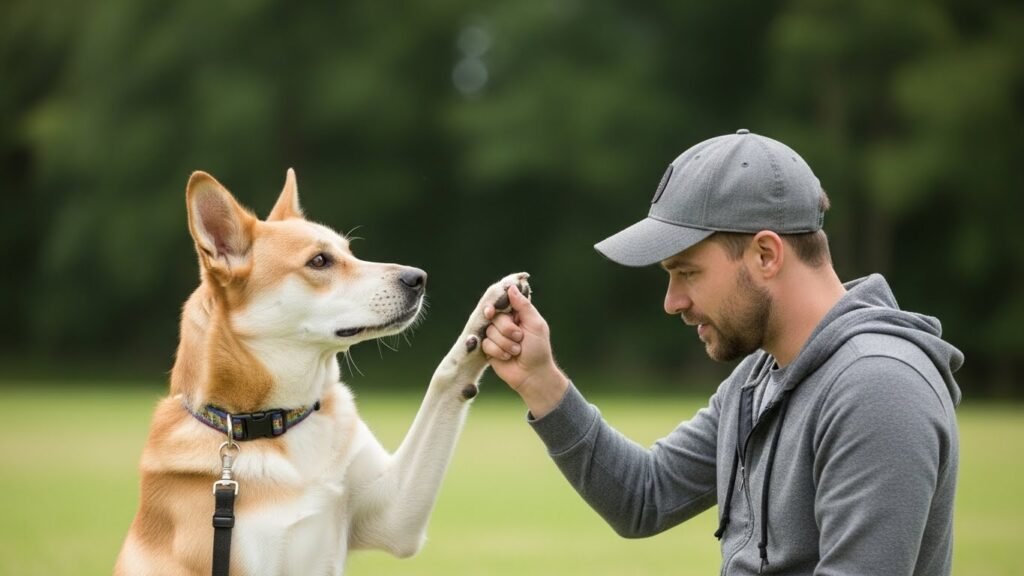
Before your dog can give a high five, they must learn to use their paw intentionally. This step encourages your dog to raise their paw by gently guiding the behavior.
How to Do It
- Hold a treat inside your closed hand and let your dog sniff it.
- Most dogs will naturally nudge, paw, or tap your hand to get the treat.
- The moment your dog touches your hand with their paw — even slightly — say “Yes!” or “Good!” and give the treat.
- Repeat until your dog reliably paws at your hand.
Training Tip
If your dog doesn’t paw at your hand, try gently tapping their paw or brushing your hand against their leg. Reward immediately when they lift their paw even a little.
Why This Step Matters
This step teaches cause and effect: paw lift = reward. It creates the foundation for the high five movement.
Step 3: Introduce the Hand Signal for High Five
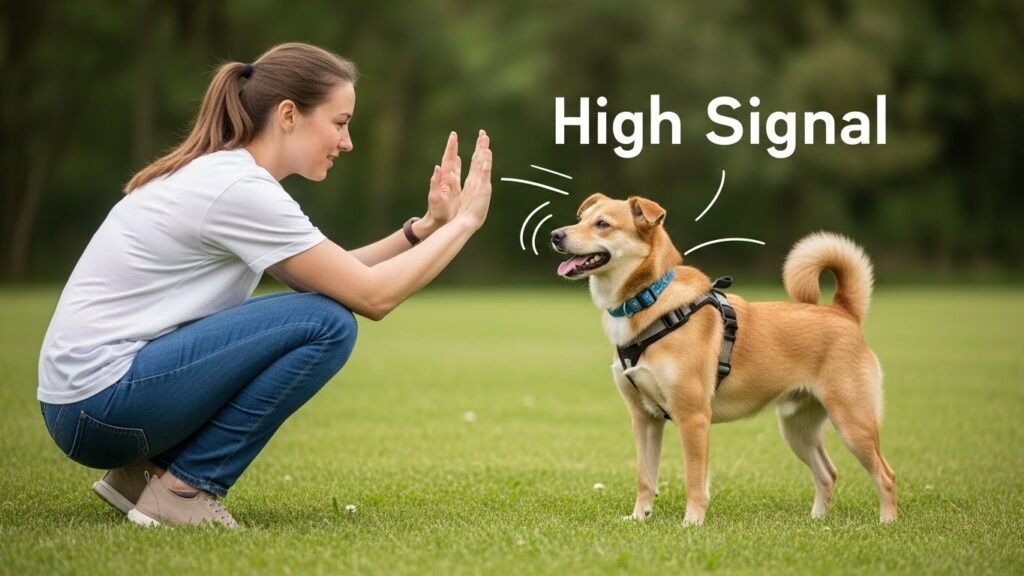
Once your dog understands pawing, you can introduce the real high five hand gesture.
How to Do It
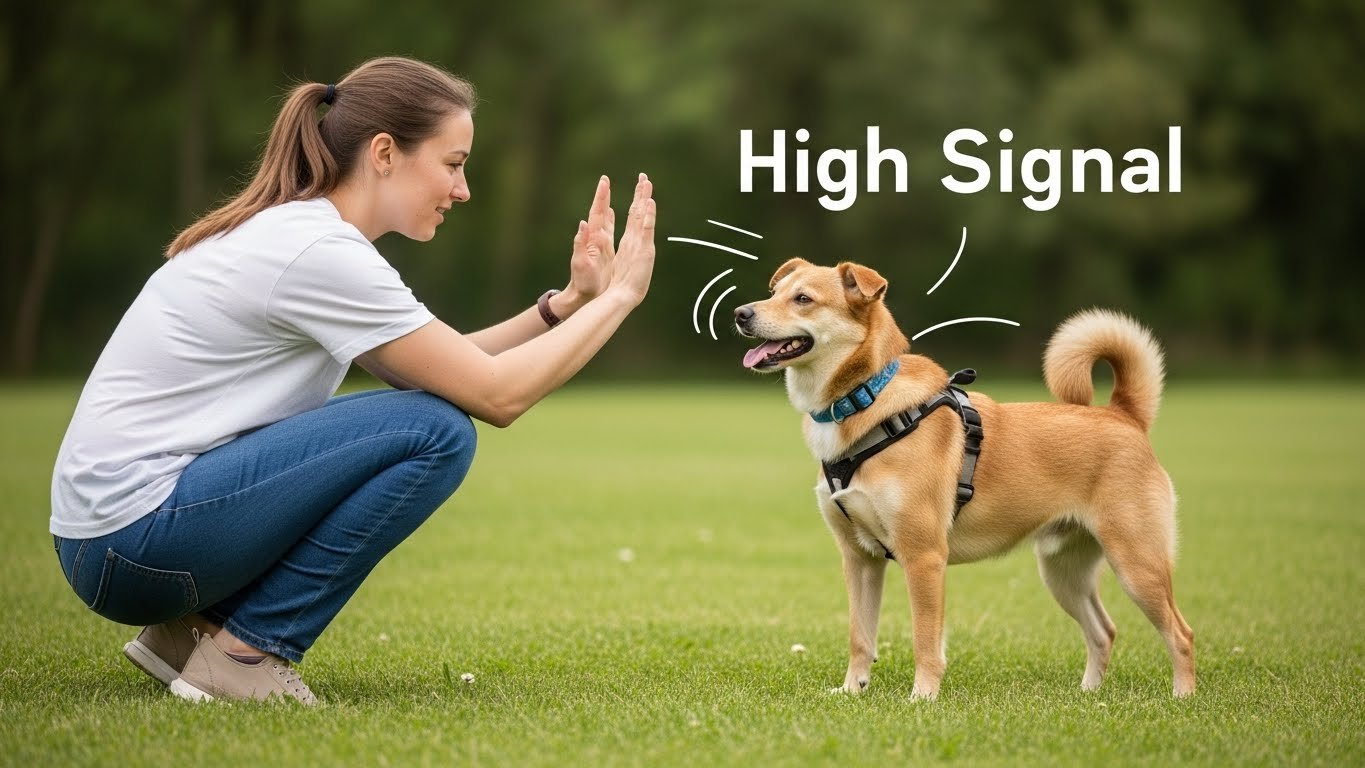
- Open your hand and hold it upright, palm facing your dog — just like a real high five.
- Say “High five!” in a cheerful voice.
- Your dog will likely paw your hand because they’ve learned pawing earns a treat.
- The moment they touch your raised hand, praise and reward.
- Practice until your dog begins lifting their paw as soon as they see your hand signal.
Training Tip
Start by keeping your hand close to your dog’s paw level. Gradually raise your hand higher as your dog gains confidence.
Why This Step Matters
This step connects the behavior (paw lift) with the visual cue (hand signal), helping your dog understand that touching your raised hand is the goal.
Step 4: Add the Verbal Command “High Five”
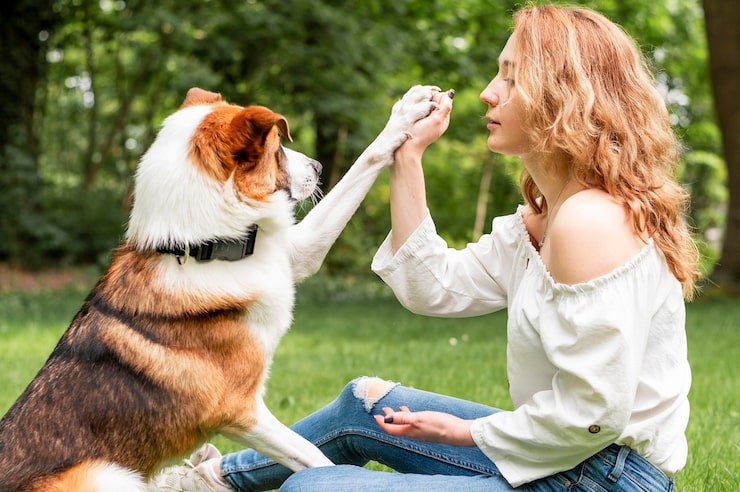
Once your dog consistently responds to the hand gesture, it’s time to pair it with the verbal cue.
How to Do It
- Say “High five!” clearly.
- Lift your hand into the high five position.
- Wait for your dog to respond.
- Reward instantly when their paw meets your hand.
- Over time, gradually delay giving the hand signal so the dog responds to the verbal cue alone.
Training Tip
Keep each session short and upbeat. Dogs learn faster when rewarded with praise, treats, and excitement.
Why This Step Matters
Verbal commands help your dog understand the trick fully and perform it in different situations — not just during training sessions.
How to Make the High Five Stronger and More Impressive
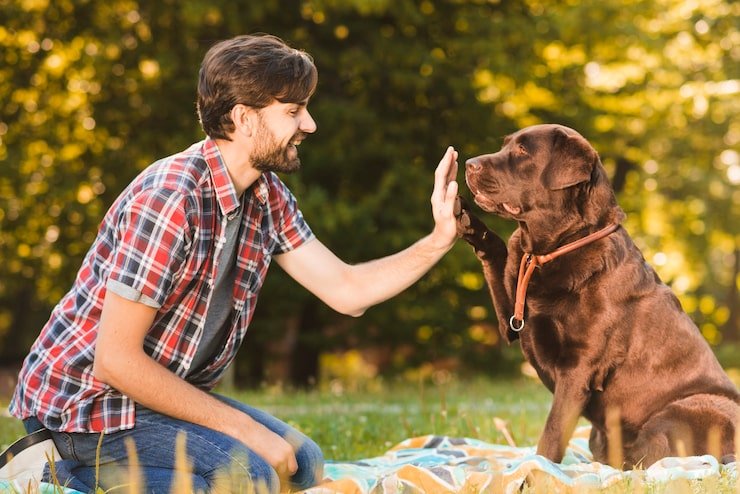
Once your dog knows the basics, you can refine the trick to make it look sharper and cuter.
Build Height
Gradually raise your hand higher so your dog lifts their paw higher too.
Increase Duration
Reward your dog for briefly holding their paw against your hand.
Practice Both Paws
Train the high five on:
- Right paw
- Left paw
Dogs enjoy variety and mental stimulation.
Turn It Into a “Double High Five”
Once your dog knows both paws, you can teach them to raise both paws — this becomes “double high five” or “beg”.
Common Mistakes to Avoid

Training is easy, but a few mistakes can slow progress.
Using Big Treats
Small treats keep sessions efficient and prevent overfeeding.
Training Too Long
Sessions longer than 10 minutes can overwhelm your dog.
Using Harsh Tone or Impatience
Dogs respond best to positive reinforcement.
Skipping Steps Too Soon
Make sure your dog masters each stage before moving to the next.
Training in a Distracting Environment
Start indoors before practicing at the park.
Helpful Training Tips
- Practice daily for better results.
- Always end training on a positive note.
- Praise your dog even for small improvements.
- Keep your movements slow and clear.
- Use a consistent tone and command word.
Dogs thrive on routine and clarity.
Which Dogs Can Learn a High Five?
Almost any dog can learn this trick, including:
- Puppies
- Adult dogs
- Senior dogs
- Small breeds
- Large breeds
Paw-based tricks are easy and natural for dogs, making high five a fantastic beginner trick.
Signs Your Dog Is Learning Well
Your dog is progressing if they:
- Lift their paw more quickly
- Maintain eye contact
- Show excitement during training
- Offer their paw even before you ask
- Respond to the hand signal consistently
These are great signs that your dog enjoys the trick and training process.
How Often Should You Practice?
For best results:
- Train 5–10 minutes per day
- Practice in short bursts
- Repeat steps calmly and patiently
Small, frequent sessions work better than long ones.
Conclusion
Teaching your dog a high five is fun, simple, and incredibly rewarding. With just four clear steps — teaching paw lift, adding the hand signal, introducing the verbal cue, and practicing regularly — your dog will quickly learn to greet you with a proud, adorable high five.
This trick strengthens your bond, boosts confidence, and adds joy to your daily routine. Whether you’re showing off to friends, taking cute photos, or practicing obedience skills, a high five is always a crowd-pleaser.