Bringing a Miniature Schnauzer into your home is a joy. These charming, intelligent, and spirited dogs quickly become beloved family members. With their distinctive beards and alert expressions, they have a way of capturing hearts. However, like all dog breeds, Miniature Schnauzers benefit immensely from early and consistent training.
While they are incredibly smart and eager to please, Schnauzers also have a confident and sometimes independent streak. This means that clear guidance and patience from their human companions are key to helping them become well-behaved, happy members of the family. A well-trained Schnauzer is a joy to live with, and a strong training foundation helps prevent common behavioral challenges.
In this article, we’ll walk you through seven essential training tips tailored specifically for your Miniature Schnauzer. These practical strategies will help you build a strong bond with your furry friend and guide them toward becoming the best companion they can be.
Understanding Your Miniature Schnauzer’s Personality
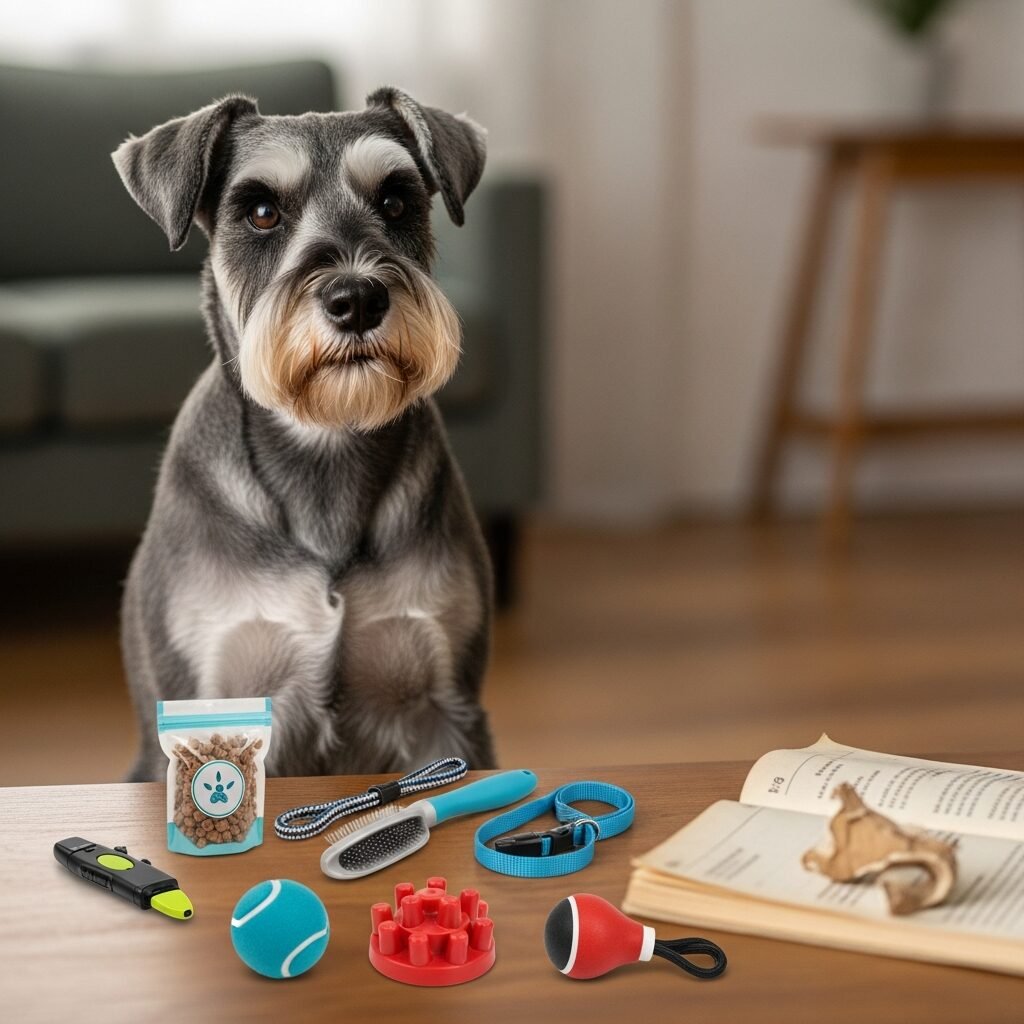
Before we dive into the training tips, it helps to understand what makes a Miniature Schnauzer tick. Knowing their natural tendencies can help you tailor your training approach and anticipate potential challenges.
Miniature Schnauzers are known for their lively personalities and keen intelligence. They learn quickly, but they can also be quite opinionated and sometimes a bit stubborn. They were originally bred to be ratters and farm dogs, which means they have a natural alertness and a tendency to be quite vocal. This watchdog nature is part of their charm, but it also means barking can become an issue if not managed. They are energetic and playful, needing both physical exercise and plenty of mental stimulation to thrive.
Tip 1: Start Training Early and Socialize Well

One of the most powerful things you can do for your Miniature Schnauzer is to begin their training journey as early as possible. This sets them up for success and helps shape their behavior positively from the start.
Why Early Training Matters
Puppies are like sponges, soaking up information about the world around them. Their early months are a crucial time for learning boundaries, routines, and expectations. Starting training early helps them understand what is acceptable behavior in your home. It also makes it much easier to prevent unwanted habits from forming, which are always harder to correct later on.
Early training builds a foundation of good habits. It teaches your Schnauzer puppy to look to you for guidance and establishes you as a trustworthy leader.
The Importance of Socialization
Alongside early obedience, socialization is paramount for Miniature Schnauzers. This means carefully and positively exposing your puppy to a wide variety of people, places, sounds, and other friendly animals during their critical development period (roughly up to 16 weeks).
Proper socialization helps your Schnauzer grow into a confident and well-adjusted adult. It reduces the likelihood of them developing fears, anxieties, or aggressive tendencies later in life. Enroll in puppy classes, arrange playdates with vaccinated dogs, and gently introduce them to different sights and sounds in a positive way.
Tip 2: Be Consistent and Patient
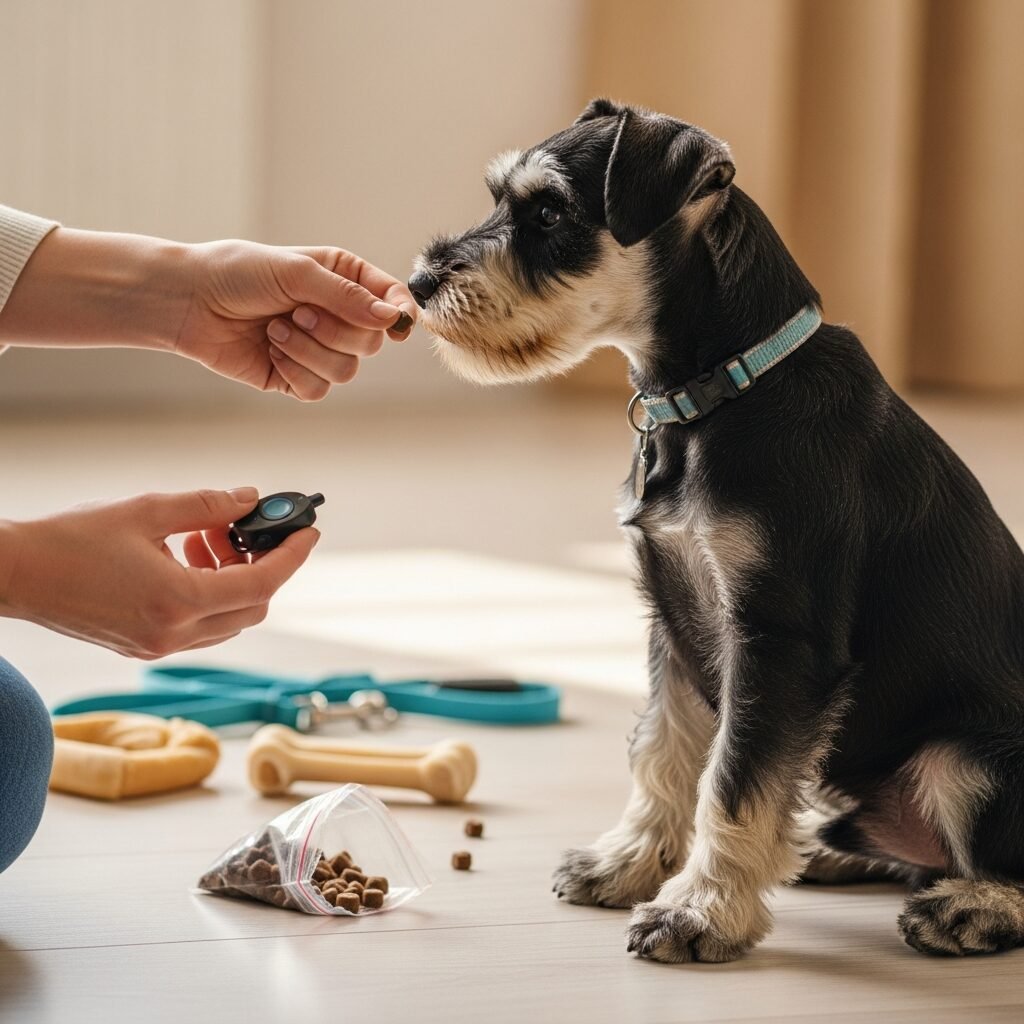
Consistency and patience are the bedrock of all successful dog training, and they are especially important for a smart, sometimes headstrong breed like the Miniature Schnauzer.
Consistency is Key
Imagine if sometimes “sit” meant put your bottom on the floor, and other times it meant roll over. Your dog would be totally confused! This is why consistency is so vital. Everyone in the household needs to use the same commands, hand signals, and rules.
Decide on house rules, like whether your dog is allowed on furniture, and stick to them. If one family member allows something and another doesn’t, your Schnauzer will be unsure of what is expected. Regular, even short, training sessions daily are far more effective than infrequent, long ones.
Patience is a Virtue
Training takes time, effort, and a good deal of patience. There will be days when your Schnauzer seems to forget everything they learned, or they might just decide they’d rather do their own thing. It’s important not to get frustrated or angry. Dogs don’t learn well when they are scared or stressed.
Always try to end every training session on a positive note, even if it’s just with a simple command they know well. Celebrate small successes and remember that every dog learns at their own pace. A calm, patient approach strengthens your bond and makes training a positive experience for both of you.
Tip 3: Use Positive Reinforcement
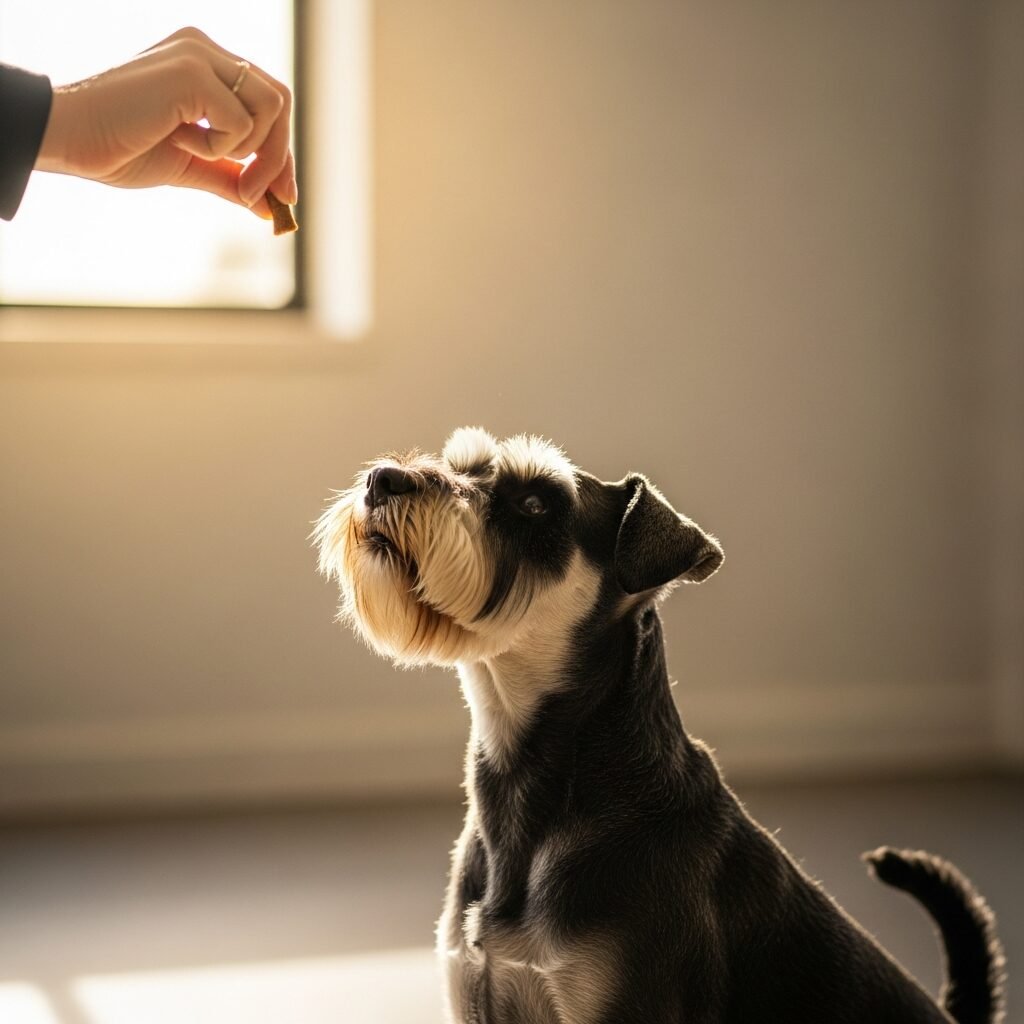
Positive reinforcement is by far the most effective and humane way to train your Miniature Schnauzer. It builds trust and makes learning enjoyable for your dog.
What is Positive Reinforcement?
Positive reinforcement means rewarding your dog for performing the desired behavior. When your dog does something you like, you immediately give them something they value – usually a high-value treat, enthusiastic praise, or a favorite toy. This makes your dog more likely to repeat that behavior in the future because they associate it with something good.
This method encourages your Schnauzer to want to work with you and avoids the need for harsh corrections or punishment, which can damage your relationship and create fear.
Effective Rewards
To make positive reinforcement work best, you need to know what motivates your individual Schnauzer.
High-Value Treats: Small, soft, smelly treats like bits of cooked chicken, cheese, or specialized training treats are often very motivating. Save these special treats only for training.
Enthusiastic Praise: A happy, upbeat “Yes!” or “Good dog!” combined with a gentle scratch behind the ears can be a powerful reward.
Favorite Toys: For some Schnauzers, a quick game of fetch or tug with a favorite toy is the ultimate reward.
The timing of your reward is incredibly important. The reward must be given within 1-3 seconds of your Schnauzer performing the desired action so they can clearly connect their behavior with the treat or praise.
Tip 4: Master Basic Commands First
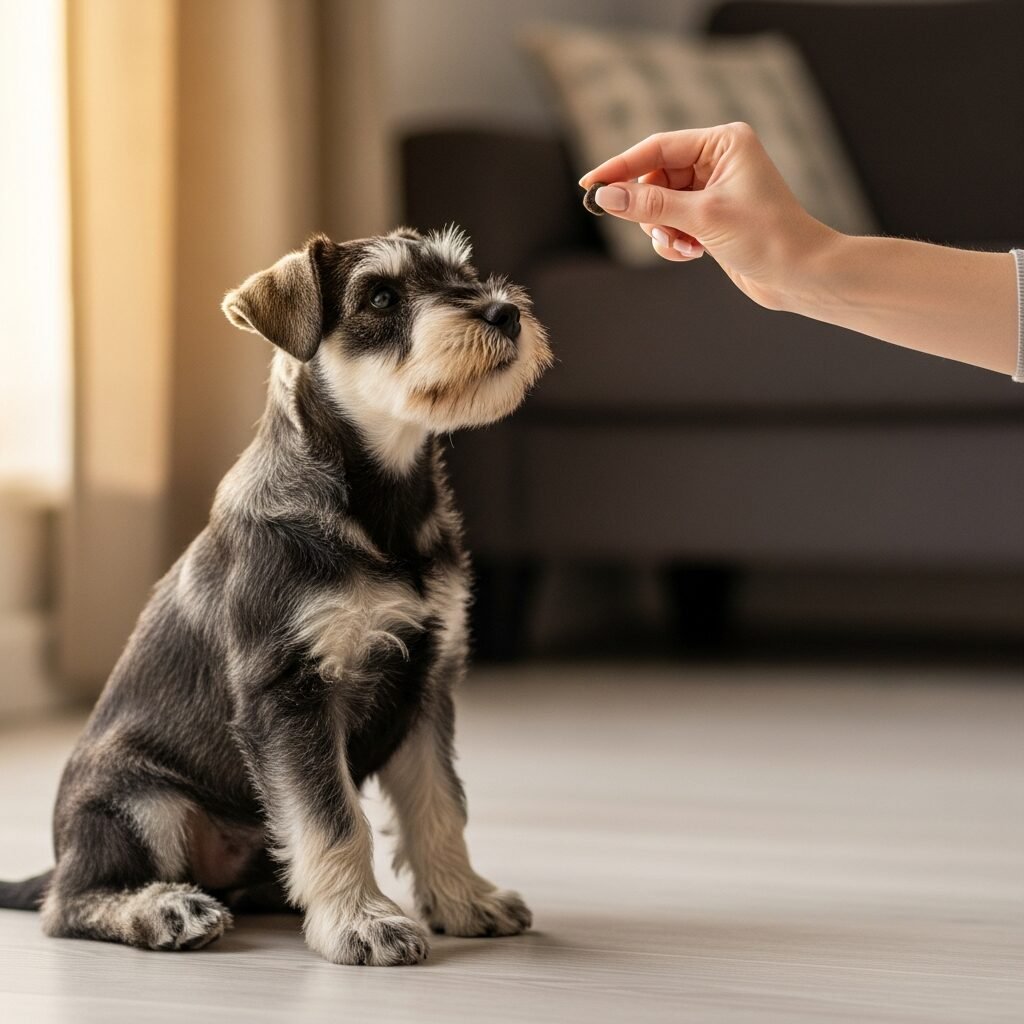
Before moving on to fancy tricks or addressing complex behavior issues, ensure your Miniature Schnauzer has a solid grasp of fundamental obedience commands. These commands are not just tricks; they are essential for your dog’s safety and your ability to communicate effectively.
Essential Commands for Every Schnauzer
Focus on teaching these basic commands until your Schnauzer responds reliably, even with distractions.
Sit: A fundamental command that helps with impulse control and polite greetings.
Stay: Crucial for safety, keeping your dog in place when needed.
Come (Recall): Potentially life-saving, ensuring your dog returns to you when called.
Down: A more submissive and relaxed position, great for calming an excited dog.
Leave It: Helps prevent your dog from picking up dangerous items or stealing food.
Drop It: Teaches your dog to release an item from their mouth on command.
How to Teach “Sit” (Example)
Let’s walk through teaching “Sit” as an example of positive reinforcement in action:
1. Get Ready: Stand in front of your Schnauzer with a tasty treat in your hand.
2. Lure: Hold the treat near your dog’s nose. Slowly move your hand (and the treat) up and back over their head.
3. Command and Action: As their nose follows the treat, their bottom will naturally lower to the ground. As soon as their bottom touches the floor, say “Sit!”
4. Reward: Immediately give them the treat and lavish them with praise.
5. Repeat: Practice in short sessions several times a day. Once they understand the action, you can gradually fade out the treat lure.
Tip 5: Manage Nuisance Barking
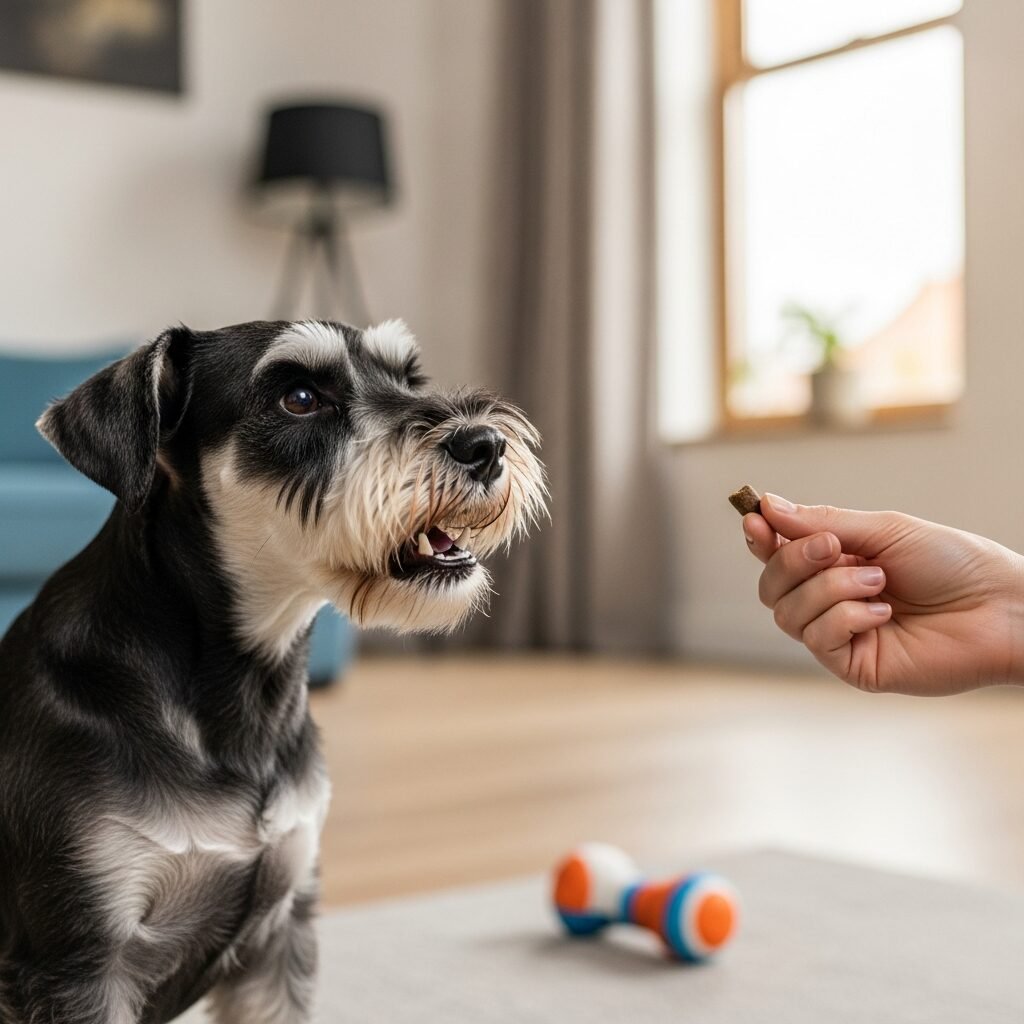
Miniature Schnauzers are natural watchdogs, and their alert nature means they can be prone to barking. While some barking is normal, excessive barking can become a nuisance.
Understanding Why Schnauzers Bark
To address barking, you first need to understand why your Schnauzer is doing it. Common reasons include:
Alert Barking: Warning you of visitors, noises, or things outside the window.
Attention-Seeking: Barking to get you to play, feed them, or acknowledge them.
Boredom or Loneliness: Barking when under-exercised or left alone for too long.
Anxiety: Barking due to separation anxiety or general fear.
Excitement: Barking during playtime or when greeting people.
Strategies to Reduce Barking
Once you identify the cause, you can implement targeted strategies:
Address the Cause: If bored, increase exercise and mental stimulation. If anxious, consult a professional trainer for guidance.
Teach a “Quiet” Command: Let your dog bark 2-3 times at a trigger, then say “Quiet!” and put a high-value treat in front of their nose. The moment they stop barking to sniff the treat, reward them. Gradually increase the time they need to be quiet before getting the treat.
Manage Triggers: Close curtains if they bark at people walking by, use white noise or a fan to block out external sounds, or bring them inside if they bark excessively in the yard.
Avoid Reinforcing: Do not yell at your dog for barking, as this can be perceived as you barking with them. Do not give in to attention-seeking barking; ignore it until they are quiet, then reward the silence.
Tip 6: Crate Training for Safety and Housebreaking
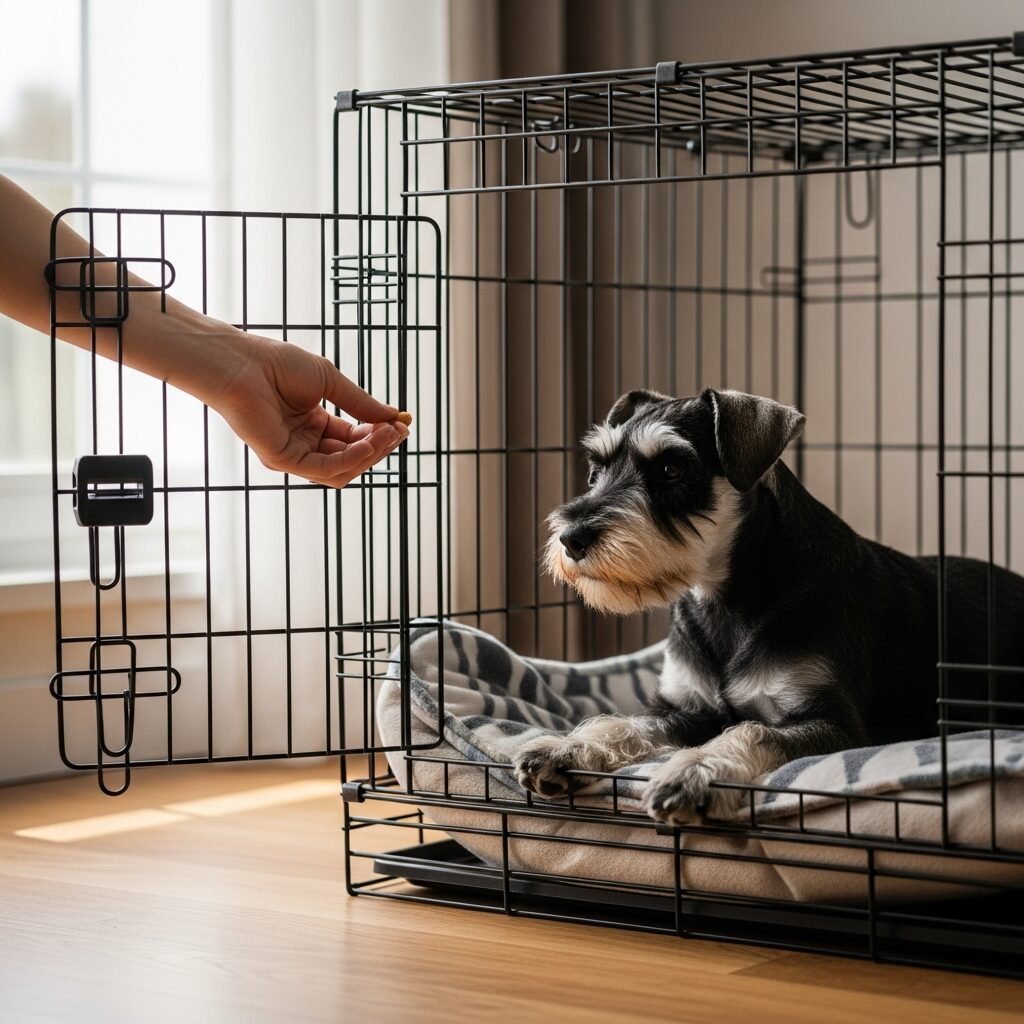
Crate training is a highly effective tool for Miniature Schnauzers, offering benefits for both housebreaking and providing your dog with a safe, personal space.
Benefits of Crate Training
When introduced properly, a crate becomes a positive den for your Schnauzer.
Aids in House Training: Dogs are naturally clean animals and usually won’t soil their sleeping area. This instinct makes the crate an excellent aid for teaching bladder and bowel control.
Provides a Safe Haven: The crate can be a secure and comfortable retreat for your dog when they need to rest, feel overwhelmed, or just want some quiet time.
Prevents Destructive Behavior: When you can’t supervise your Schnauzer, crating them can prevent them from chewing on furniture, shoes, or other household items.
Travel Safety: A crate makes car travel much safer and less stressful for your dog.
Making the Crate a Positive Place
The key to successful crate training is to make the crate a positive and inviting space, never a punishment.
Introduce Gradually: Place the crate in a busy area of your home. Leave the door open, put a comfy bed inside, and toss in some treats or toys.
Positive Association: Feed meals inside the crate. Give special chew toys that your dog only gets when they are in their crate.
Short, Positive Stays: Start with very short periods, such as 5-10 minutes, while you are nearby. Gradually increase the time as your Schnauzer becomes comfortable.
Never Use as Punishment: The crate should never be associated with negative experiences. If your dog misbehaves, redirect them or use a time-out in a pen, but keep the crate a positive place.
Tip 7: Provide Plenty of Exercise and Mental Stimulation
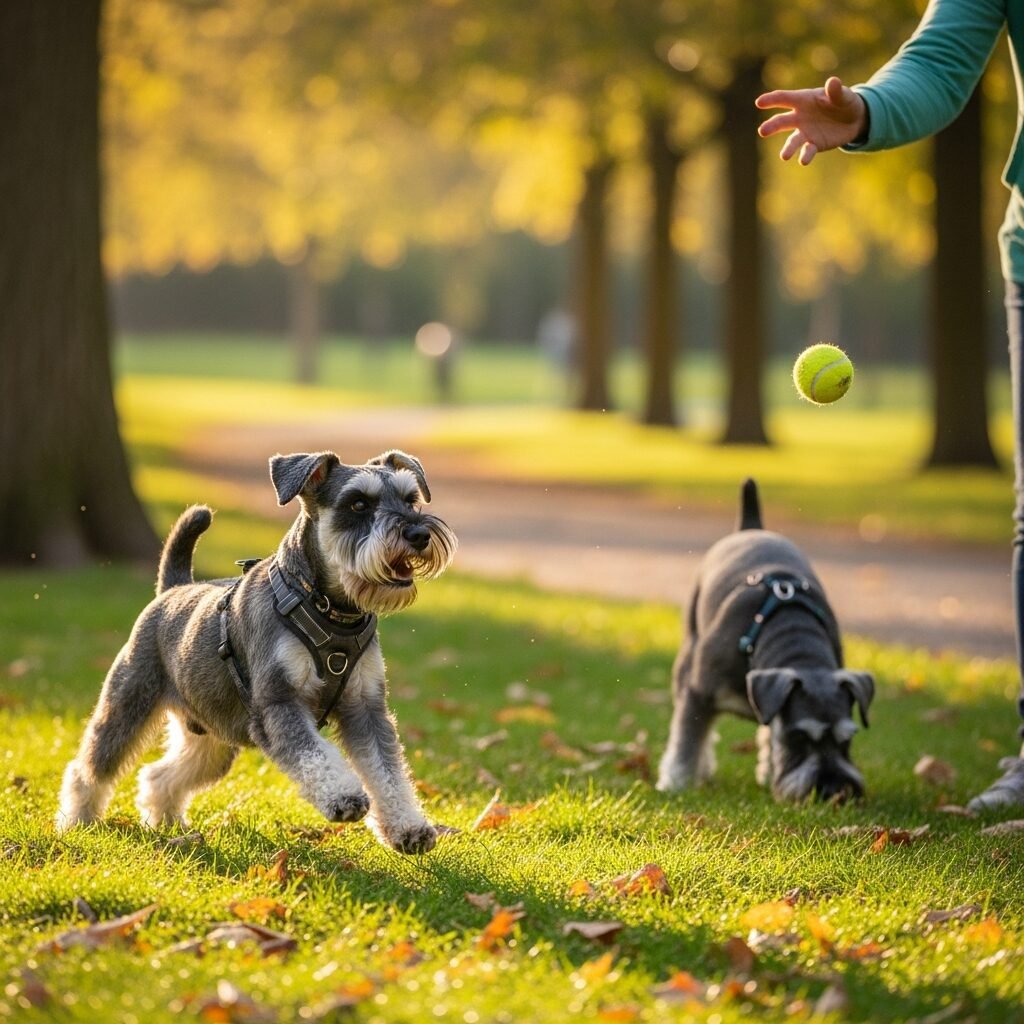
Miniature Schnauzers are spirited dogs with both physical and mental energy to spare. Neglecting these needs can lead to boredom, anxiety, and unwanted behaviors.
The Importance of Physical Activity
Despite their compact size, Miniature Schnauzers need regular exercise to stay healthy and happy.
Daily Walks: Aim for at least 30-60 minutes of active exercise each day, split into two or three walks. These don’t have to be strenuous hikes, but they should be brisk enough to get their heart rate up.
Playtime: Incorporate play sessions with toys like fetch or tug in a secure area. This helps burn off excess energy and strengthens your bond.
Preventing Destructive Behavior: A tired Schnauzer is a good Schnauzer. Sufficient physical activity helps prevent boredom-related behaviors like excessive barking, chewing, or digging.