Is your beloved canine companion turning your favorite sofa into their personal chew toy? Worn down by gnawed table legs and frayed rug edges? You’re not alone. Many dog parents face the frustrating challenge of a dog who loves to chew, and unfortunately, sometimes that love extends to our household furniture.
It can feel disheartening to see your home slowly being redecorated by your dog’s teeth. Beyond the damage, there’s often a worry about your dog’s safety if they ingest pieces of wood, fabric, or other materials. The good news is that with understanding, patience, and the right strategies, you can guide your dog toward more appropriate chewing habits.
In this article, we’ll explore the common reasons why dogs chew furniture and, more importantly, share six effective and humane ways to put an end to this destructive behavior. Let’s get your home (and your sanity) back on track!
Understanding Why Your Dog Chews Furniture
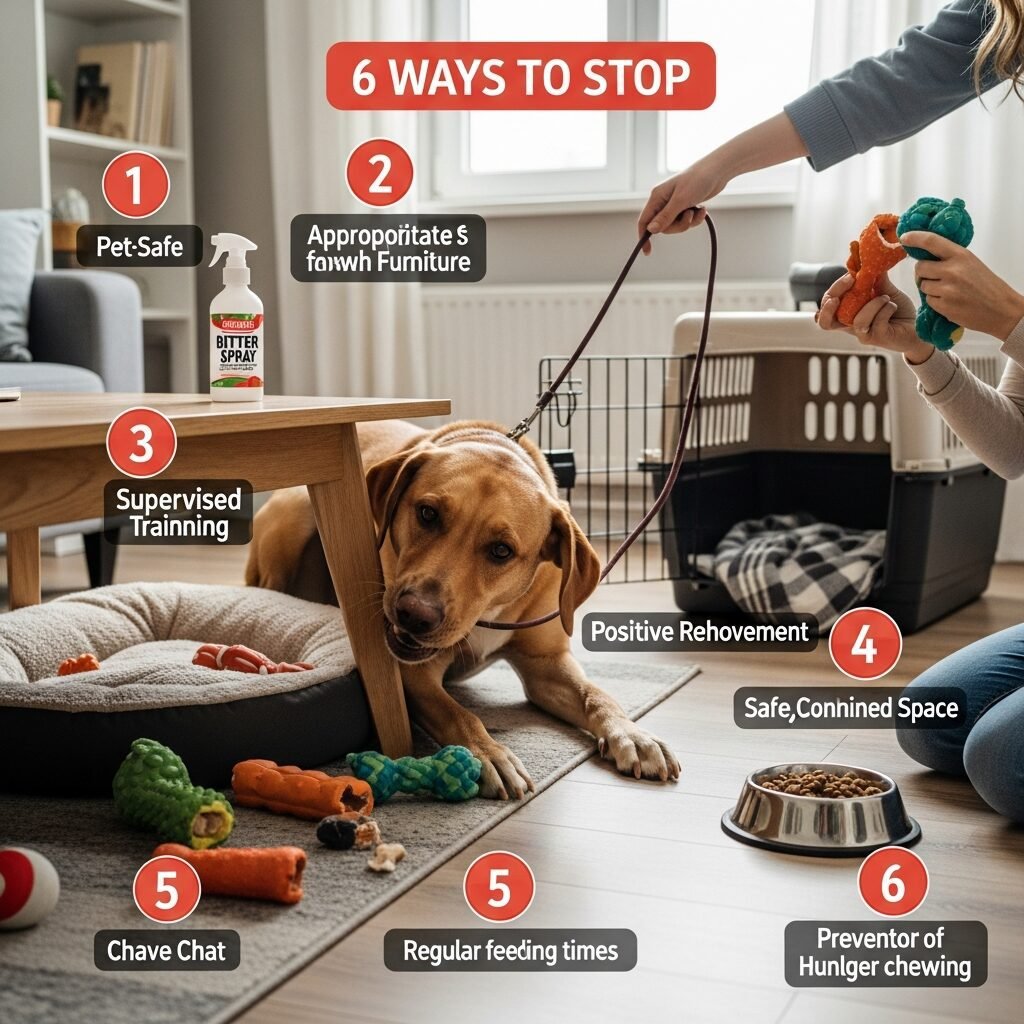
Before we dive into solutions, it’s helpful to understand the “why” behind your dog’s chewing habits. Chewing is a perfectly natural and necessary behavior for dogs. It helps them explore the world, relieve stress, clean their teeth, and fulfill an instinctive need. When they chew furniture, it’s often a sign that an underlying need isn’t being met or they haven’t learned what’s appropriate.
Common Reasons for Chewing
Dogs don’t chew your furniture to spite you; they do it for a variety of reasons. Pinpointing the cause can help you choose the best approach to stop the behavior.
Teething Puppies
For puppies, chewing is primarily about exploring their world and relieving discomfort from erupting teeth. Much like human babies, puppies feel relief when they chew on things during this stage, and your furniture might just be the most accessible target.
Boredom and Lack of Mental Stimulation
An under-exercised or bored dog is a destructive dog. If your dog isn’t getting enough physical activity or mental engagement, they might turn to chewing furniture as a way to entertain themselves and burn off excess energy.
Anxiety or Stress
Dogs experiencing anxiety, especially separation anxiety, often resort to destructive chewing. It’s a self-soothing mechanism to cope with stress when they’re left alone or feel overwhelmed by a situation.
Learned Behavior or Attention Seeking
If your dog has learned that chewing on furniture gets your attention (even if it’s negative attention like scolding), they might repeat the behavior. They might also chew out of habit if it’s gone uncorrected for too long.
Exploration
Young dogs, regardless of teething, use their mouths to investigate new objects and textures. Your furniture offers interesting textures, smells, and sometimes even tastes that capture their curiosity.
The 6 Ways to Stop Chewing Furniture
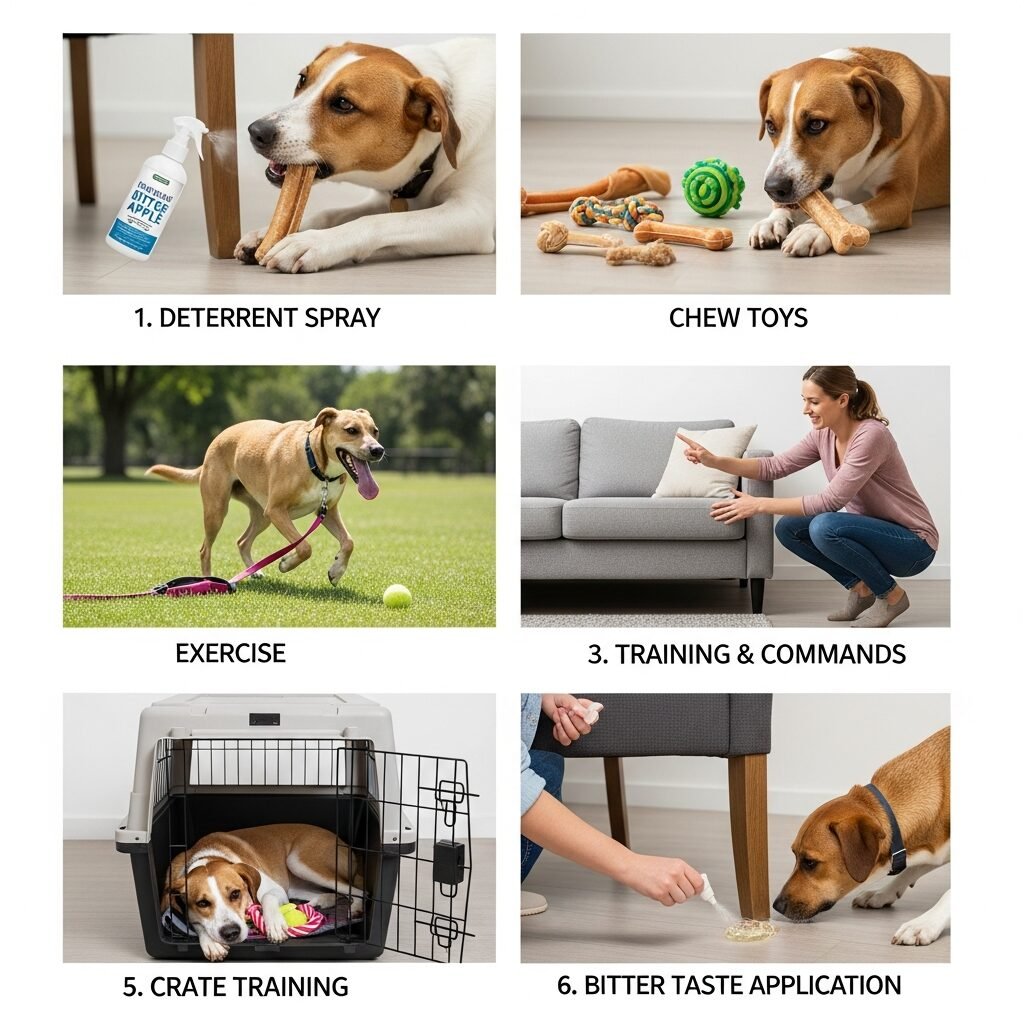
Now that we understand the potential reasons, let’s explore practical, effective strategies to redirect your dog’s chewing instincts away from your precious furniture.
Way 1: Provide Appropriate Chew Toys and Outlets
This is perhaps the most fundamental solution. If you don’t want your dog chewing your furniture, you must provide them with appealing alternatives.
Variety is Key
Don’t just offer one type of chew toy. Dogs, like people, enjoy variety. Offer a range of textures, shapes, and durability levels. This could include rubber toys, rope toys, sturdy plush toys, and natural chews.
Rotate Toys
Keep a selection of toys available and rotate them regularly. This keeps things fresh and exciting for your dog, making their designated chew toys more appealing than your furniture.
Interactive Chew Toys
Consider toys that can be stuffed with treats, like Kongs. These provide both a chewing outlet and mental stimulation as your dog works to get the treat out. They are excellent for keeping your dog occupied when you can’t actively supervise them.
Safe and Durable Options
Always choose toys appropriate for your dog’s size and chewing strength. Supervise your dog, especially with new toys, to ensure they don’t break off and ingest pieces. Consult your vet about the best types of chews for your dog, especially if they are a power chewer.
Way 2: Increase Physical Exercise and Mental Stimulation
A tired dog is a good dog, and a mentally stimulated dog is even better. Many furniture chewing problems stem from pent-up energy or boredom.
Daily Walks and Playtime
Ensure your dog gets adequate physical exercise for their breed and age. This could mean brisk walks, runs, fetch in the park, or active play sessions in the yard. Aim for at least 30-60 minutes of vigorous exercise daily, often more for high-energy breeds.
Brain Games and Puzzles
Physical exercise alone might not be enough. Engage your dog’s mind with puzzle toys, snuffle mats, or hide-and-seek games with treats or toys. Learning new tricks also offers great mental stimulation.
Obedience Training Sessions
Short, regular training sessions are an excellent way to mentally tire your dog. Even 10-15 minutes of working on basic commands can be surprisingly effective at burning mental energy.
Way 3: Dog-Proof Your Home (Management is Crucial)
Prevention is always better than cure. While you’re working on training and redirecting, it’s essential to manage your dog’s environment to prevent opportunities for furniture chewing.
Block Access to Tempting Items
If you know your dog has a particular favorite chair leg, block it off. Use baby gates to restrict access to certain rooms, or put tempting items away or out of reach. If you have a puppy, keep them in a confined, safe, and chew-proof area when you can’t actively supervise.
Use Crate Training Effectively
A crate, when introduced properly and positively, can be a safe haven for your dog. It’s a space where they can relax and are unable to chew on furniture. Never use the crate as punishment, and ensure it’s not used for excessively long periods.
Apply Deterrents (Taste Aversion Sprays)
For specific items your dog targets, consider using a taste aversion spray. These sprays contain bitter but non-toxic ingredients that dogs find unpleasant. Apply them liberally to furniture legs, corners, or fabrics. Always test a small, inconspicuous area first to ensure it doesn’t stain.
Way 4: Teach “Leave It” and Redirection
Teaching your dog simple commands can be incredibly powerful in managing unwanted behaviors. “Leave It” is one of the most useful commands for preventing chewing.
How to Teach “Leave It”
1. Start with a low-value treat in your hand.
2. Hold it out and say “Leave It.” When your dog tries to get it, close your hand.
3. As soon as they back away or stop trying, open your hand and reward them with a different, higher-value treat from your other hand (not the one they left).
4. Gradually increase the challenge by placing the treat on the floor, then a few feet away, always rewarding for leaving it alone.
5. Practice with various objects, including things similar to furniture.
The Redirection Technique
When you catch your dog chewing on something inappropriate, calmly interrupt them with a verbal cue like “Ah-ah!” or “No chew!” Then, immediately redirect their attention to an approved chew toy. Praise them enthusiastically when they start chewing on the right item.
Consistency is Important
Everyone in the household needs to be consistent with these commands and redirection techniques. Inconsistency will only confuse your dog and make the behavior harder to correct.
Way 5: Address Underlying Anxiety or Stress
If you suspect anxiety is the root cause of your dog’s furniture chewing, directly addressing their stress is paramount.
Identify Triggers
Pay attention to when and where the chewing occurs. Is it only when you leave? During thunderstorms? After a specific event? Understanding the triggers helps you develop targeted strategies.
Create a Calm Environment
For dogs with separation anxiety, make your departures and arrivals low-key. Provide calming music, a comfort item with your scent, or a favorite interactive toy. For general anxiety, ensure they have a quiet, safe space to retreat to.
Consult a Vet or Trainer
If anxiety is severe or persistent, it’s crucial to seek professional help. Your veterinarian can rule out any medical issues and might suggest calming supplements or medication. A certified professional dog trainer or behaviorist can develop a tailored plan to address anxiety and modify behavior.
Way 6: Implement a Consistent Routine and Supervision
Dogs thrive on routine. A predictable schedule provides security and helps manage energy levels, reducing the likelihood of destructive behavior.
Predictable Schedules
Establish a consistent daily routine for feeding, walks, playtime, and potty breaks. This helps your dog feel secure and understand when their needs will be met. A dog who knows when they’ll get exercise is less likely to find their own “entertainment” by chewing.
Active Supervision
When your dog is out and about in the house, especially during the training period, actively supervise them. Keep an eye on their activities, and be ready to redirect them if they start eyeing the furniture. Use a leash indoors if necessary to keep them close and easily manageable.
Positive Reinforcement
Always use positive reinforcement. When your dog chews on their designated toys, praise them, give them a treat, or engage in a short play session. This teaches them that chewing appropriate items leads to good things, reinforcing the desired behavior. Never punish them after the fact; they won’t understand why they’re being disciplined.
What NOT to Do When Your Dog Chews

Knowing what to avoid is just as important as knowing what to do. Certain reactions can worsen the problem or damage your relationship with your dog.
Avoid Punishment After the Fact
If you come home to a chewed furniture leg and scold your dog, they will not connect your anger to an action they performed hours ago. They will only learn to fear your return or your presence, which can lead to more anxiety and potentially more destructive behavior.
Don’t Scold Without Offering Alternatives
If you catch your dog in the act and scold them without immediately providing an appropriate alternative, you’re not teaching them what they should do instead. You’re just teaching them that chewing is bad, but not how to fulfill their natural chewing instinct in an acceptable way.