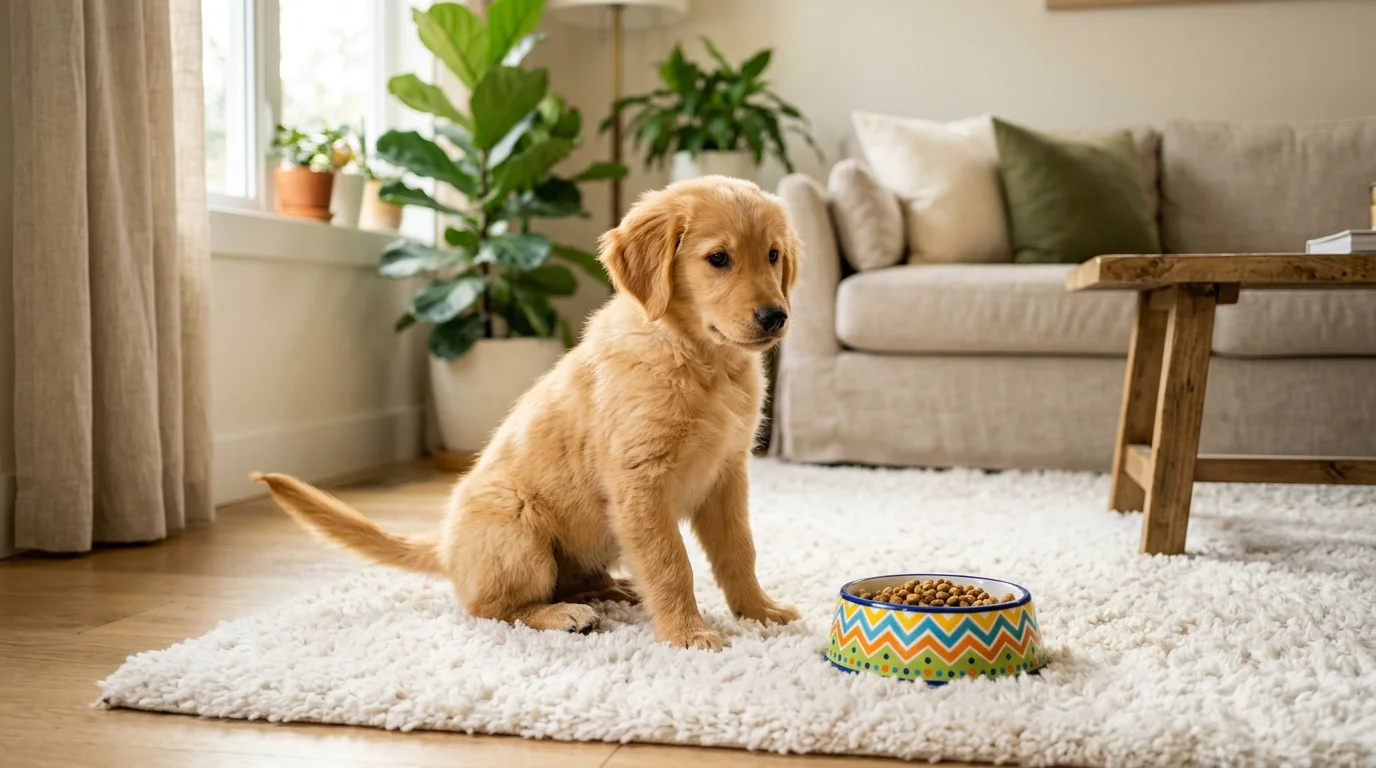
15 Baby Dog Care Tips for First-Time Owners
Welcoming a “baby dog” into your home is one of life’s most joyful milestones. That tiny ball of fur brings endless energy, wet kisses, and a fair share of chaos. For first-time owners, the transition can feel overwhelming. Puppies aren’t just small dogs; they are developing organisms with specific nutritional, emotional, and physical needs. Navigating the first few months successfully sets the foundation for a well-adjusted adult dog. This guide breaks down the essential steps to ensure your new best friend thrives.
1. Puppy-proofing
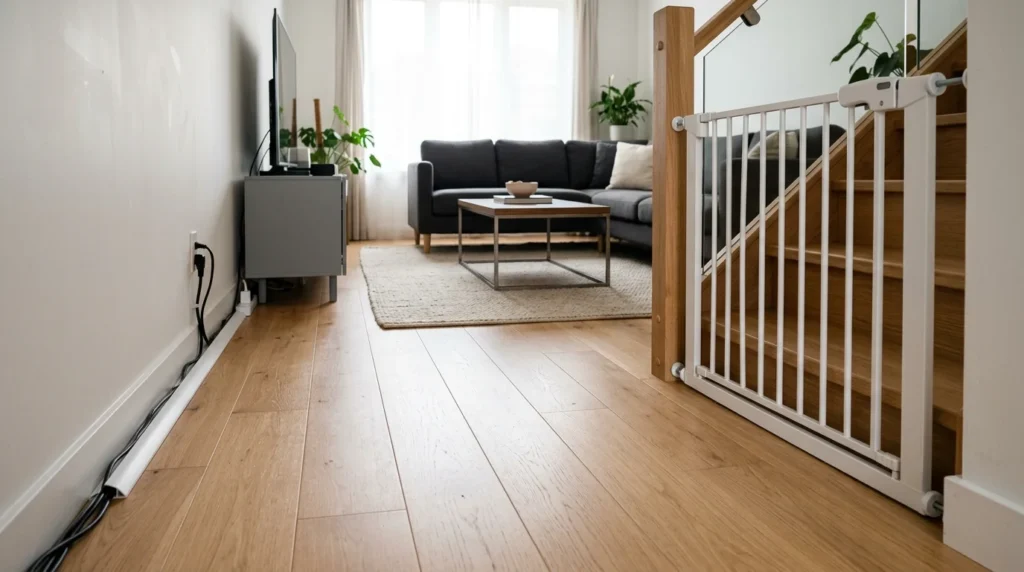
Before your puppy even sets a paw inside, you must see the world from their level—literally. Get down on your hands and knees and look for hazards. To a puppy, a dangling electrical cord is a chew toy, and a dropped grape is a snack.
- Secure Cords: Use cord protectors or tuck them behind furniture.
- Lock Cabinets: Puppies are inquisitive. Use child-proof locks on low cabinets containing cleaning supplies.
- Remove Toxic Plants: Ensure houseplants like lilies, azaleas, or sago palms are out of reach or removed.
- Small Objects: Legos, coins, and hair ties are choking hazards that puppies find irresistible.
2. Nutrition
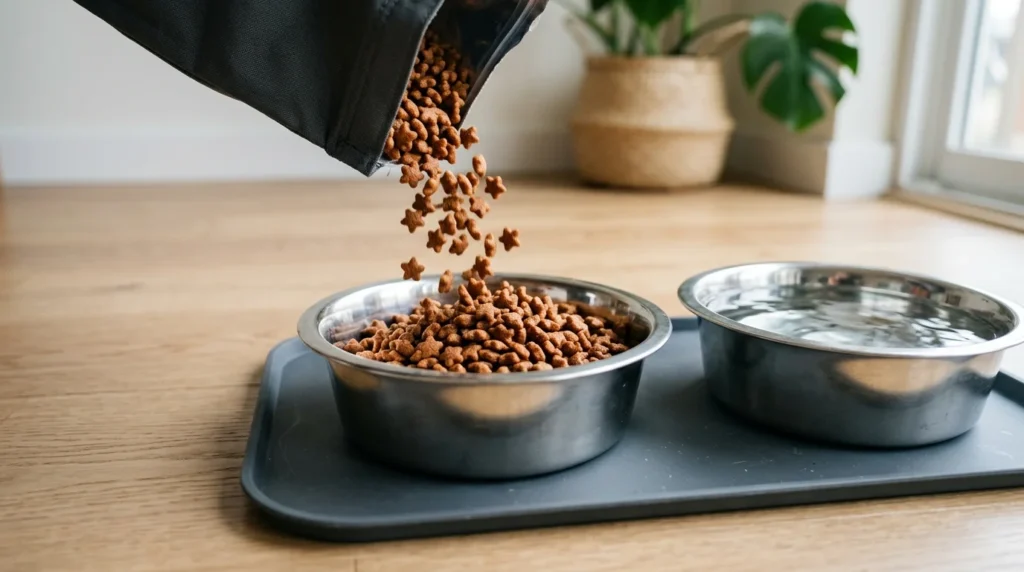
Puppies grow at an incredible rate, sometimes doubling their weight in a matter of weeks. They require a diet specifically formulated for growth, which contains higher levels of protein, calcium, and phosphorus than adult dog food.
- Choose Quality: Look for “Puppy Formula” on the label. High-quality animal protein should be the first ingredient.
- Portion Control: Follow the feeding chart on the bag, but adjust based on your puppy’s activity level and your vet’s advice.
- Avoid Human Food: Many human foods (like chocolate, onions, and xylitol) are toxic. Stick to puppy-safe treats.
3. Routine
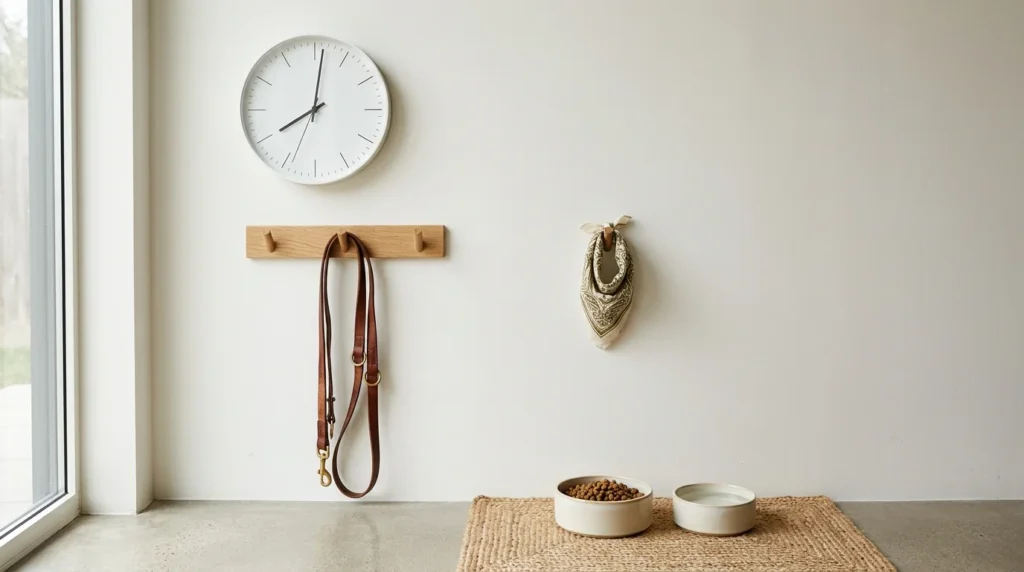
Puppies crave predictability. A consistent routine helps reduce anxiety and speeds up the housebreaking process. When a puppy knows when they will eat, sleep, and go outside, they feel more secure in their new environment.
- Consistent Timing: Feed your puppy at the same times every day.
- Bathroom Breaks: Take them out immediately after waking up, after eating, and after play sessions.
- Bedtime: Establish a “lights out” time to help regulate their internal clock.
4. Crating
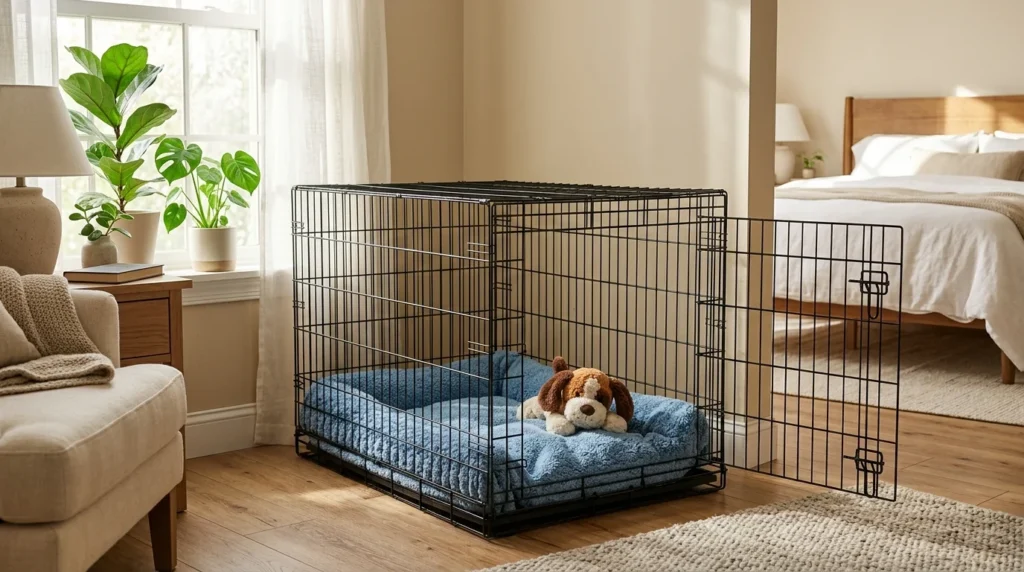
Many new owners feel guilty about using a crate, but dogs are naturally den animals. A crate provides a safe haven where your puppy can retreat when they feel overwhelmed. It is also an invaluable tool for potty training, as puppies naturally avoid spoiling the area where they sleep.
- Size Matters: The crate should be large enough for them to stand, turn around, and lie down, but not so large that they can use one corner as a bathroom.
- Positive Association: Never use the crate as a punishment. Throw treats inside and let them explore it at their own pace.
5. Socialization
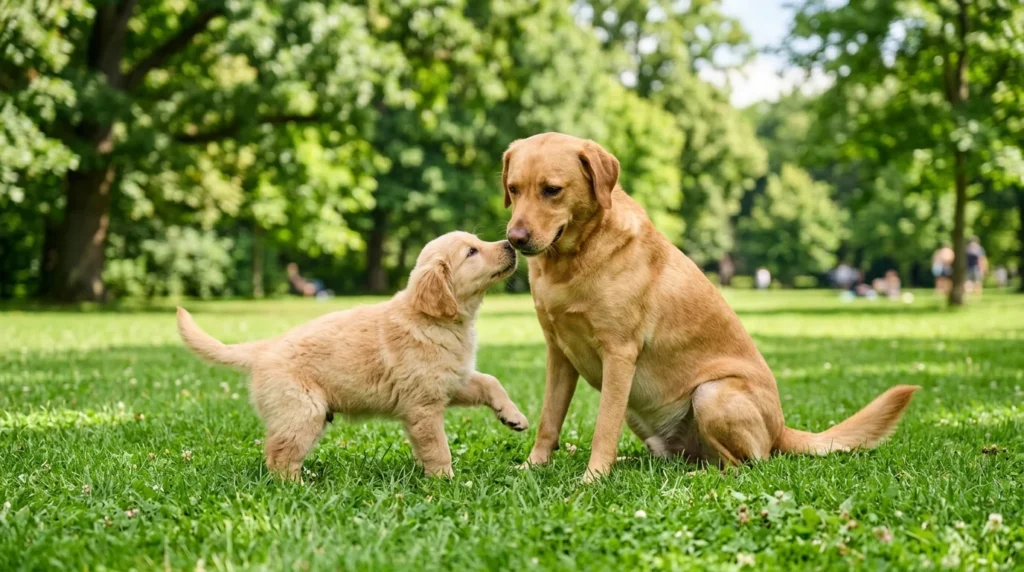
The “socialization window” for puppies is relatively short, typically closing around 16 weeks. During this time, it is vital to expose them to various sights, sounds, people, and other animals in a positive way.
- Controlled Exposure: Introduce them to umbrellas, vacuum cleaners, and people wearing hats or glasses.
- Puppy Classes: Enrolling in a “puppy social” is a great way to let them play with other vaccinated dogs in a safe environment.
- Go Slow: Don’t overwhelm them. If they seem scared, give them space and try again later with treats.
6. Vet Visits
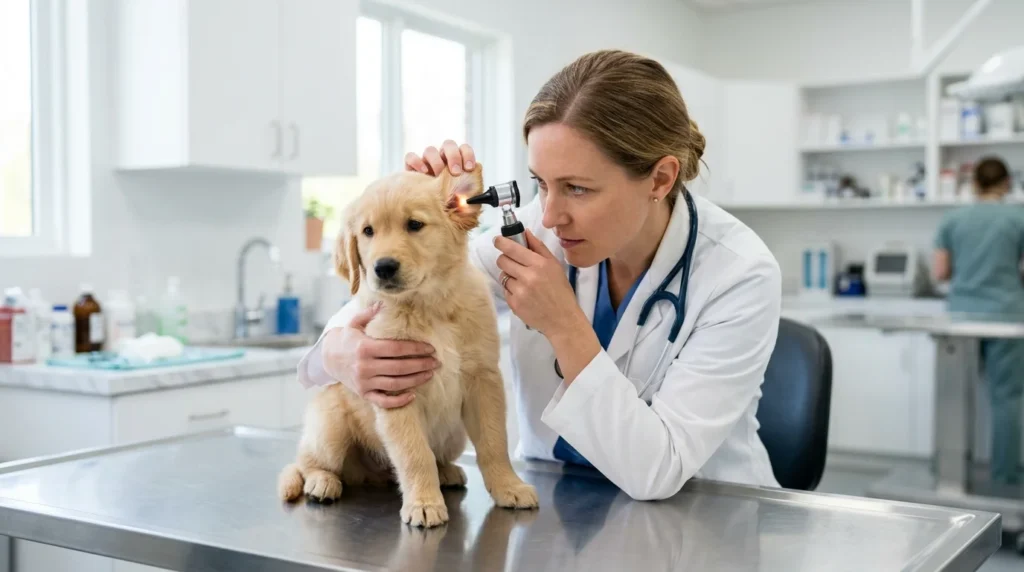
Your veterinarian is your greatest ally in puppy care. Puppies require a series of vaccinations (Distemper, Parvovirus, Rabies) and regular deworming during their first few months.
- Initial Exam: Schedule a checkup within the first 48 hours of bringing your puppy home.
- Parasite Prevention: Discuss heartworm, flea, and tick prevention early on.
- Microchipping: Ensure your puppy is microchipped during a vet visit to increase the chances of being reunited if they ever get lost.
7. Potty Training
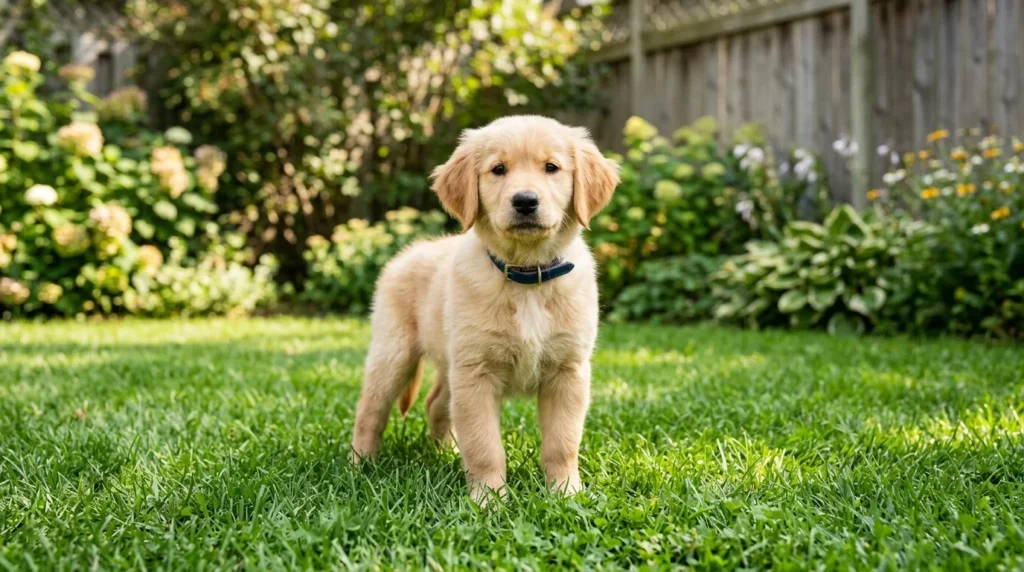
Consistency and patience are the keys to potty training. Most puppies can only hold their bladder for one hour for every month of age (e.g., a 2-month-old can wait about 2 hours).
- The Power of Praise: When they go outside, throw a “puppy party” with verbal praise and a high-value treat.
- Watch for Signs: Circling, sniffing the floor, and whining are cues that it’s time to go out.
- Accidents Happen: Never yell or rub a puppy’s nose in an accident. Clean it with an enzymatic cleaner to remove the scent so they don’t return to the same spot.
8. Teething
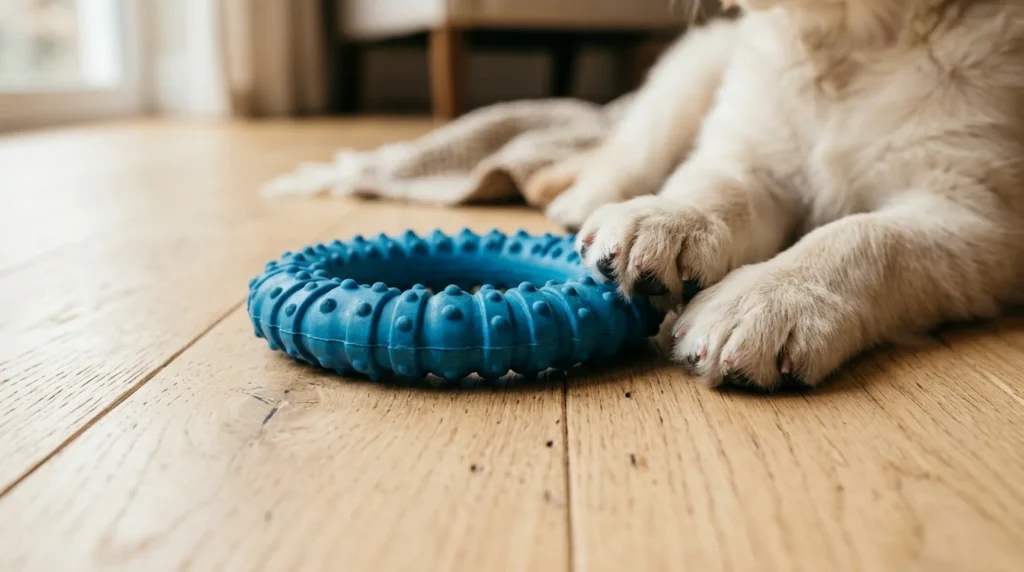
Puppies lose their baby teeth and grow adult teeth between 3 and 6 months of age. This process is uncomfortable, and they will chew on anything to soothe their gums—including your furniture and fingers.
- Appropriate Toys: Provide a variety of textures, such as rubber rings and soft plush toys.
- Cold Relief: Wet a washcloth, twist it, and freeze it. The cold helps numb sore gums.
- Redirecting: If they bite your hand, give a high-pitched “Ow!” and immediately offer a chew toy instead.
9. Grooming
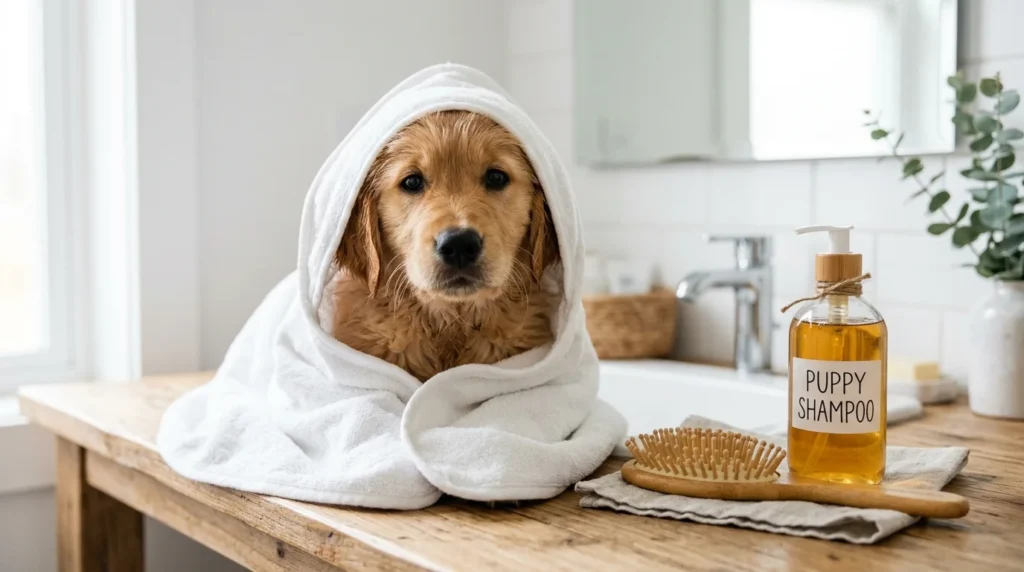
Starting a grooming routine early helps your puppy become comfortable with being handled. This makes future trips to the groomer or vet much less stressful.
- Paw Handling: Regularly touch their paws and nails so they get used to the sensation before their first nail trim.
- Brushing: Even if they have short hair, daily brushing helps remove loose fur and allows you to check for skin issues.
- Ear Cleaning: Check ears weekly for redness or odor, which could indicate an infection.
10. Exercise
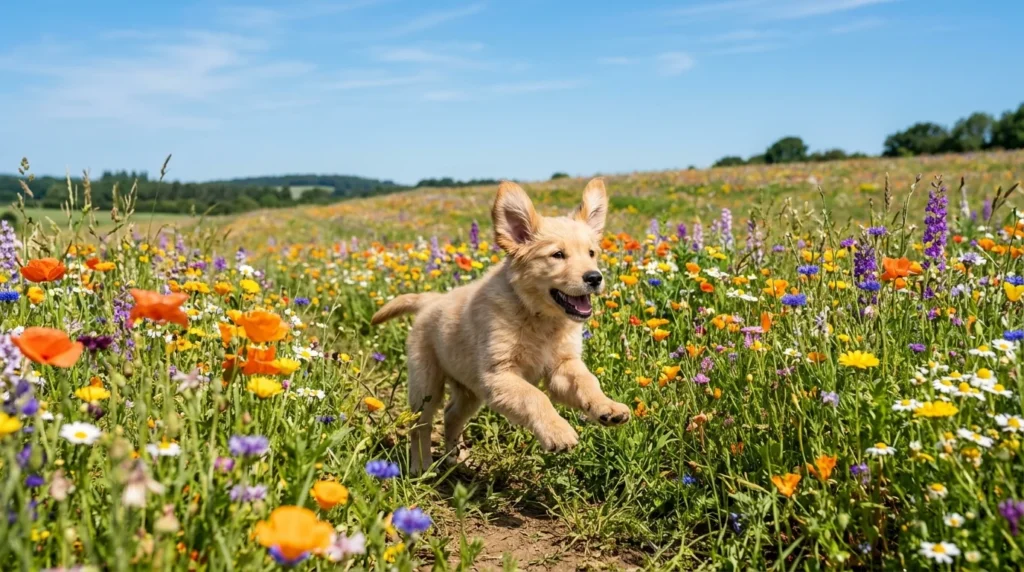
Puppies have “zoomies”—bursts of intense energy followed by long naps. While exercise is important, avoid high-impact activities like long runs on pavement until their growth plates have fused.
- Short Bursts: Several short walks are better than one long trek.
- Playtime: Interactive games like fetch or “find the toy” are excellent for burning off energy.
- Mental Fatigue: Remember that mental exercise can be just as tiring as physical exercise!
11. Puzzles
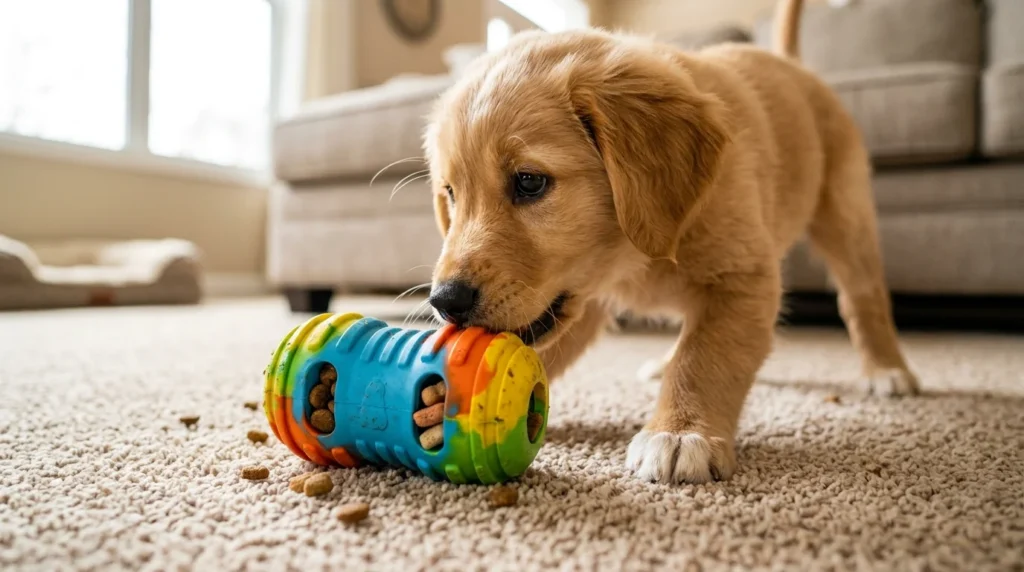
A bored puppy is often a destructive puppy. Mental stimulation is crucial for brain development and helps prevent problem behaviors like excessive barking or chewing.
- Food Puzzles: Use slow-feeders or treat-dispensing toys for mealtime.
- Nose Work: Hide treats around the room and encourage your puppy to “find it.”
- Variety: Rotate their toys every few days so they stay “new” and exciting.
12. Commands
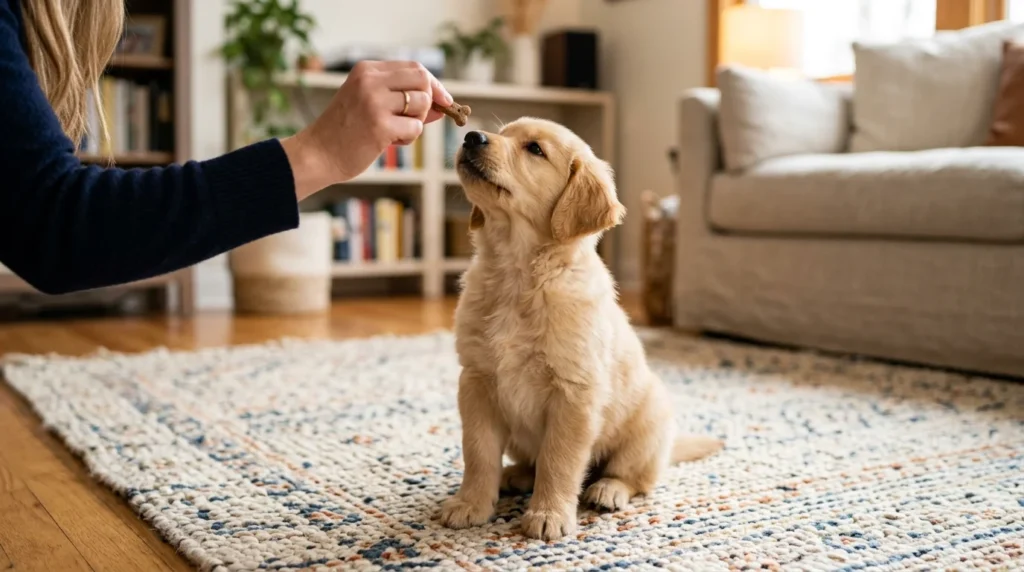
Teaching basic obedience is about more than just tricks; it’s about communication and safety. Start with “Sit,” “Stay,” and “Come.”
- Positive Reinforcement: Use treats, toys, and praise to reward good behavior. Avoid physical corrections.
- Short Sessions: Puppies have very short attention spans. Keep training sessions to 5–10 minutes, several times a day.
- Be Patient: Learning a new language (human!) takes time.
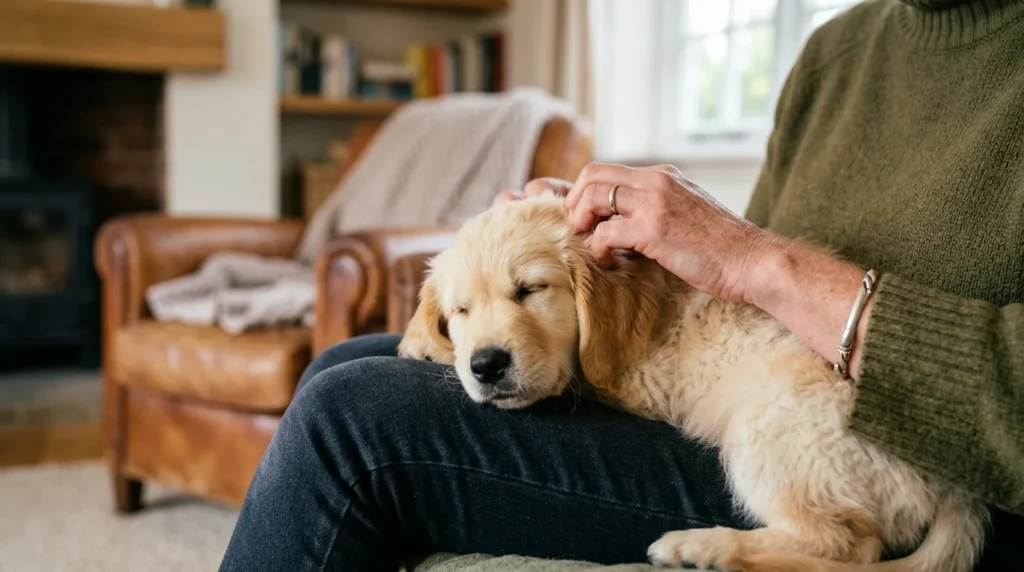
13. Bonding
The bond you form now will last a lifetime. Spend quality time with your puppy that doesn’t involve training or chores.
- Cuddle Time: Physical affection helps puppies feel secure and loved.
- Ground Level Play: Get down on the floor to play at their level.
- Gentle Touch: Stroke their belly, ears, and tail to desensitize them to touch and build trust.
14. Identification
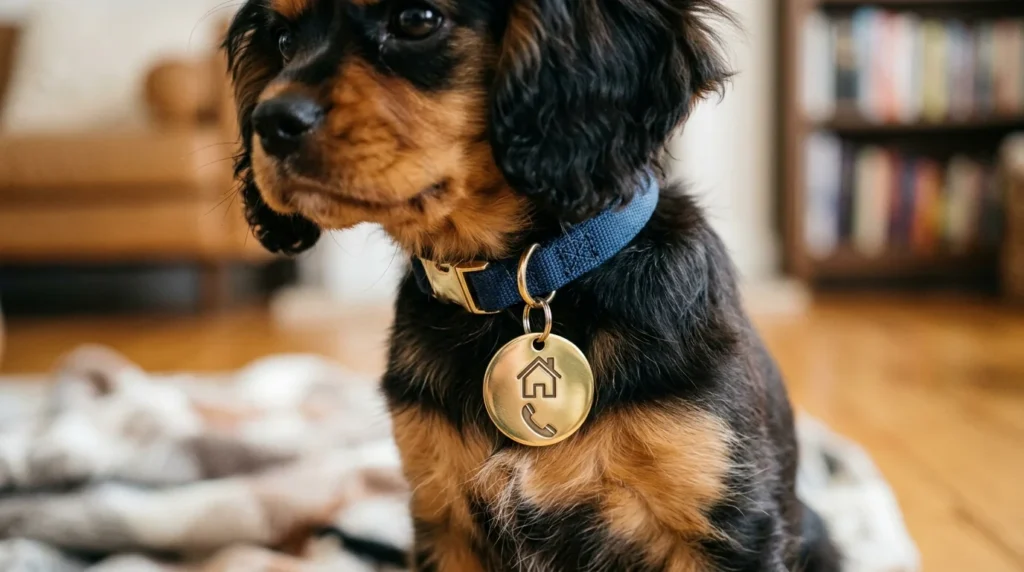
Even the most careful owner can have a puppy slip out of a door or a collar. Proper identification is a lifesaver.
- ID Tags: Ensure your puppy wears a collar with a tag containing your current phone number.
- Update Info: If you move or change your number, update the microchip registry immediately.
- Recent Photos: Keep a clear, recent photo of your puppy on your phone in case they ever go missing.
15. Patience
The “puppy blues” are real. There will be nights of interrupted sleep and days when you find your favorite shoes chewed to pieces. Remember that your puppy is just a baby learning how to navigate a human world.
- Take Breaks: It’s okay to put the puppy in their crate or a safe room for a nap so you can have a moment of peace.
- Celebrate Small Wins: Did they go a whole day without an accident? Celebrate it!
- Enjoy the Phase: They stay small for such a short time. Amidst the training and the mess, don’t forget to enjoy the puppy breath and the wagging tails.


