Traveling with your furry best friend can be one of life’s greatest joys, but the thought of flying can often bring a wave of anxiety for many dog parents. The bustling airport, the confined spaces, and the unfamiliar sounds can be overwhelming for both you and your canine companion. But what if flying with your dog could be a calm, manageable, and even enjoyable experience? It absolutely can be! With the right preparation and a few clever hacks, you can ensure your dog feels safe, secure, and relaxed throughout your journey. Let’s dive into seven essential airline travel hacks that will make your next flight a breeze for everyone.
Hack 1 – Master Airline Pet Policies and Early Planning
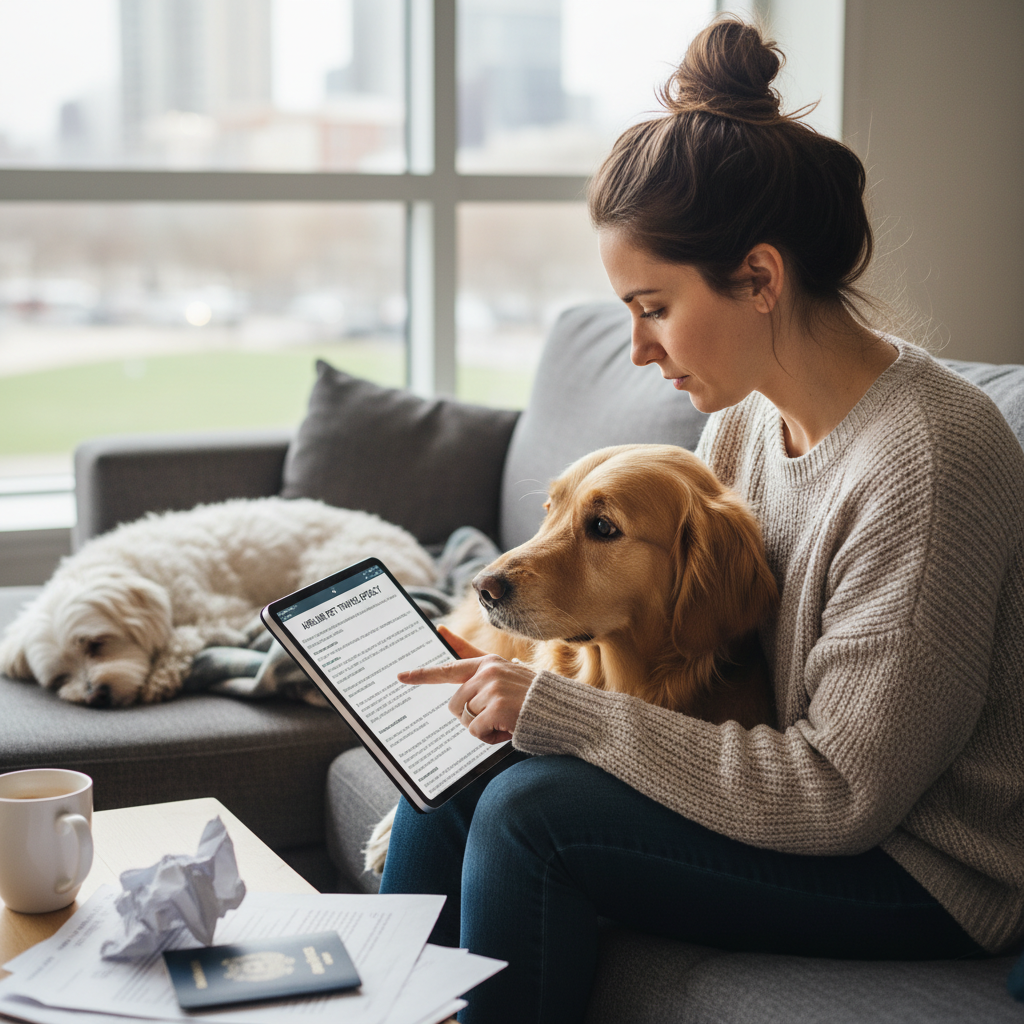
The golden rule of flying with your dog is to start planning early. Every airline has its own unique set of rules and restrictions when it comes to pet travel, and these can vary significantly. Some airlines only allow small dogs in the cabin, while others have strict weight or breed limitations. Cargo travel, while necessary for larger breeds, comes with its own set of considerations and risks that require thorough investigation.
Key Planning Steps
- Research thoroughly Start by identifying airlines that are pet-friendly and align with your travel route. Look into their specific requirements for carrier dimensions, vaccination records, health certificates, and booking procedures.
- Book in advance Pet spots on flights are often limited, especially in the cabin. Book your dog’s spot as soon as your travel plans are firm to avoid disappointment.
- Understand costs Be aware of the fees associated with pet travel, as these can add up. Factor them into your overall travel budget.
- Check destination rules Don’t forget to research the pet import regulations of your destination country or state. Some places have quarantine periods or specific documentation requirements.
Hack 2 – Prioritize Crate Training and Carrier Comfort
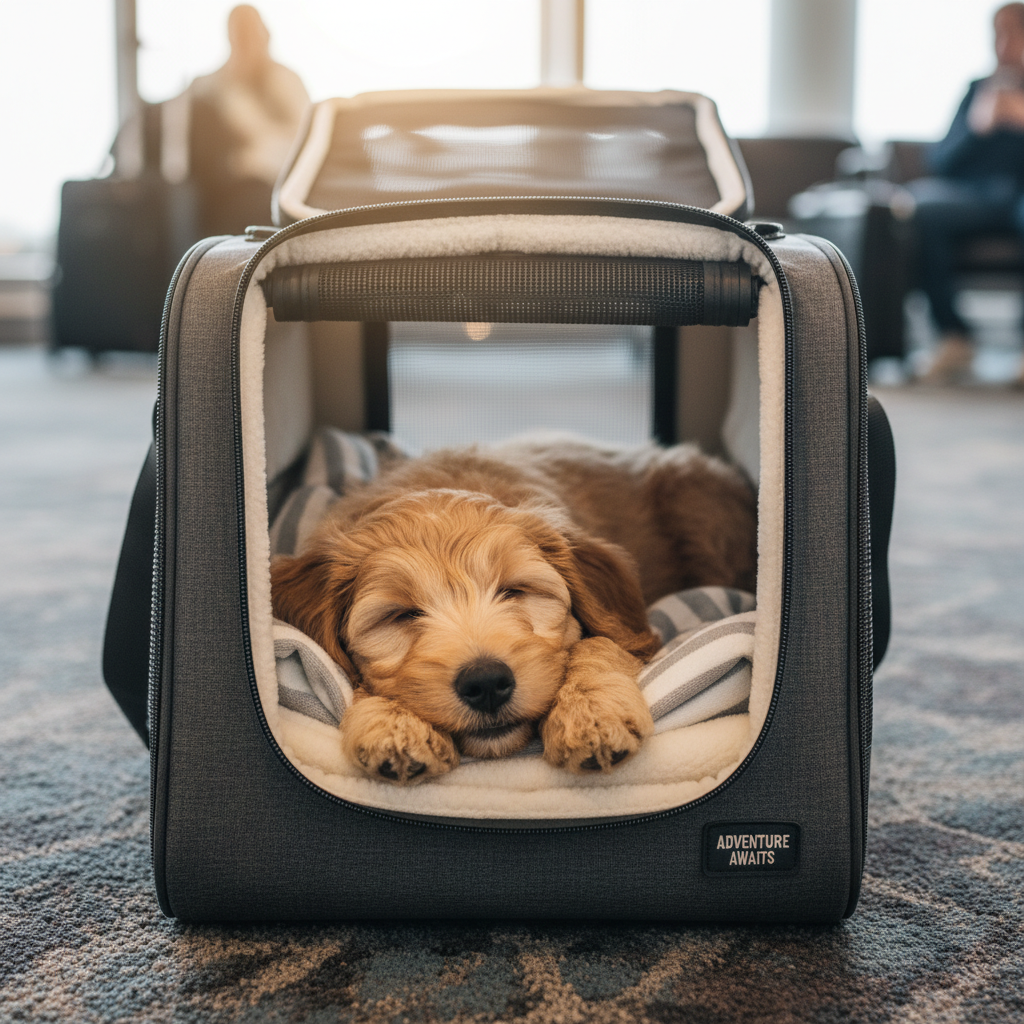
Your dog’s carrier will be their safe haven during the flight, so it’s crucial that they view it as a comfortable and positive space, not a punishment. This is where dedicated crate training comes in handy.
Making the Carrier a Cozy Retreat
- Start early Introduce the carrier weeks or even months before your trip. Leave it open in a common area of your home, allowing your dog to explore it at their leisure.
- Positive association Place favorite toys, treats, and a familiar blanket inside the carrier. Feed your dog meals near or inside the carrier to build positive associations.
- Gradual acclimation Begin with short periods of time with your dog inside the carrier, gradually increasing the duration. Practice zipping it up and carrying it around your home.
- Airline-approved carrier Ensure your carrier meets airline specifications for size, ventilation, and leak-proof design. For in-cabin travel, soft-sided carriers are often more flexible.
Hack 3 – Implement Smart Pre-Flight Preparation
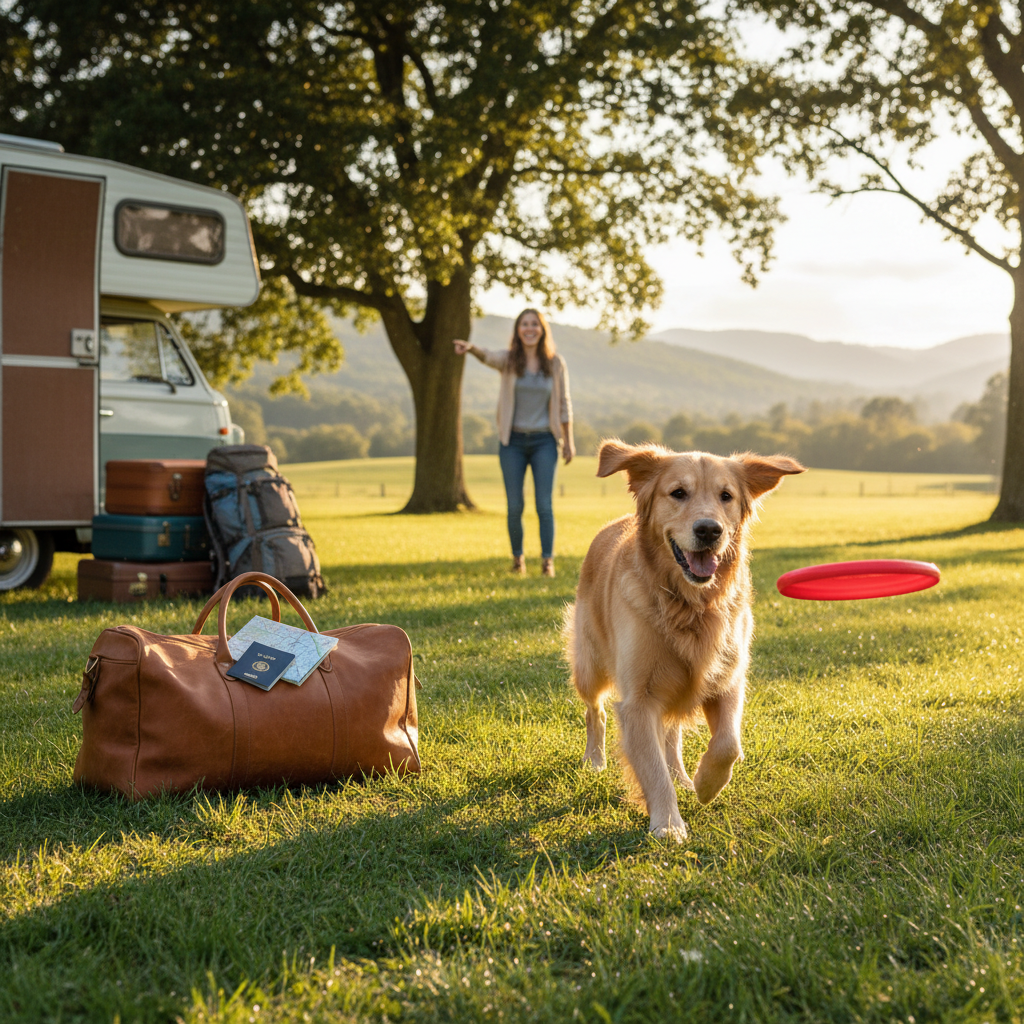
The day before and the day of travel are critical for setting the tone for a calm flight. A well-exercised and properly fed dog is less likely to be anxious.
Pre-Flight Checklist
- Plenty of exercise On the day of travel, give your dog a long walk or an energetic play session a few hours before heading to the airport. Burning off excess energy will help them settle down later.
- Potty breaks galore Ensure your dog has multiple opportunities to relieve themselves just before you leave for the airport and again at the airport’s designated pet relief areas.
- Light meal Feed your dog a light meal 3-4 hours before the flight. Avoid feeding them too close to departure to prevent an upset stomach.
- Hydration Offer water regularly, but avoid over-hydrating right before the flight.
- Limit new experiences Try to keep the days leading up to the flight as routine as possible to minimize stress.
Hack 4 – Pack a Smart Travel Kit for Your Canine
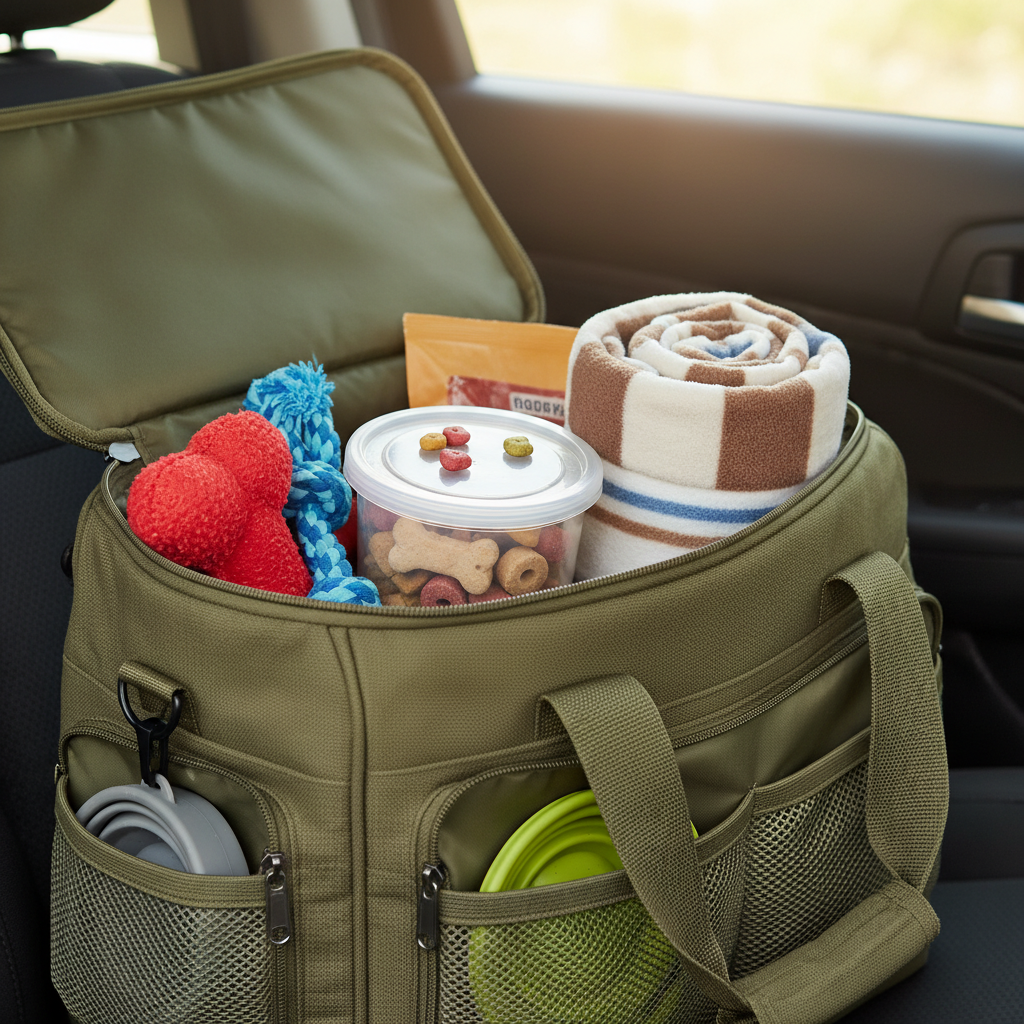
Just like you pack a carry-on for yourself, prepare a dedicated travel kit for your dog. Having their essentials easily accessible will make a world of difference.
What to Include
- Familiar blanket or toy A scent of home can provide immense comfort.
- Portable water bowl A collapsible bowl is perfect for quick sips.
- Small bag of food and treats For meals and positive reinforcement.
- Waste bags Always be prepared for potty breaks.
- Wipes and paper towels For quick clean-ups.
- Medication (if needed) Any prescription medications should be easily accessible.
- Health certificate and vaccination records Keep these in a waterproof pouch with your travel documents.
- Calming aids Consult your vet about natural calming treats or pheromone sprays if your dog is prone to anxiety. Never use sedatives without veterinary guidance.
Hack 5 – Navigate the Airport with Calm Confidence
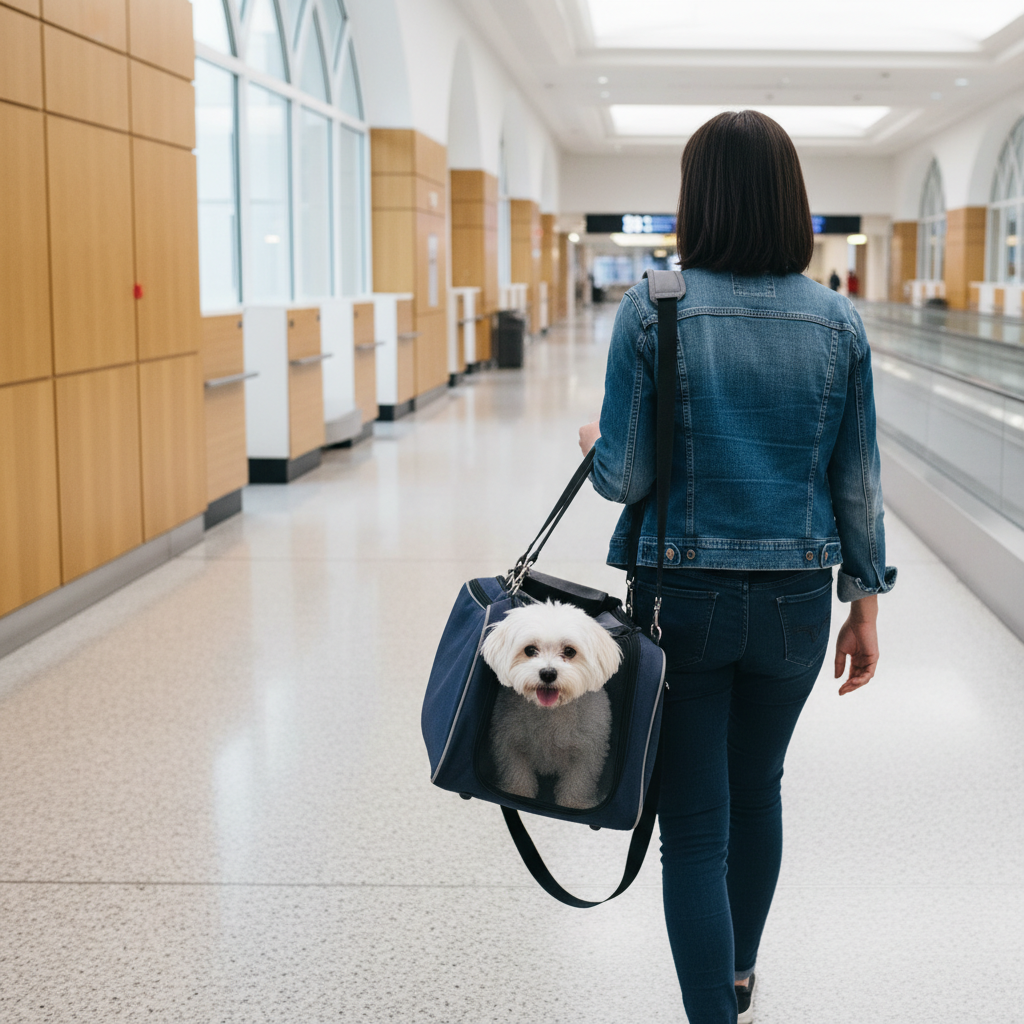
Airports can be chaotic, but your calm demeanor will heavily influence your dog’s state of mind. Project confidence and reassurance.
Airport Strategies
- Arrive early Give yourself ample time to check in, find pet relief areas, and navigate security without feeling rushed.
- Pet relief areas Locate these areas beforehand using airport maps. Allow your dog to stretch their legs and relieve themselves one last time.
- Security screening Be prepared to remove your dog from their carrier and carry them through the metal detector while the carrier goes through the X-ray machine.
- Find quiet spots If you have a long layover, try to find a quieter gate or corner away from the main hustle and bustle where your dog can rest.
Hack 6 – Master In-Flight Management for Comfort
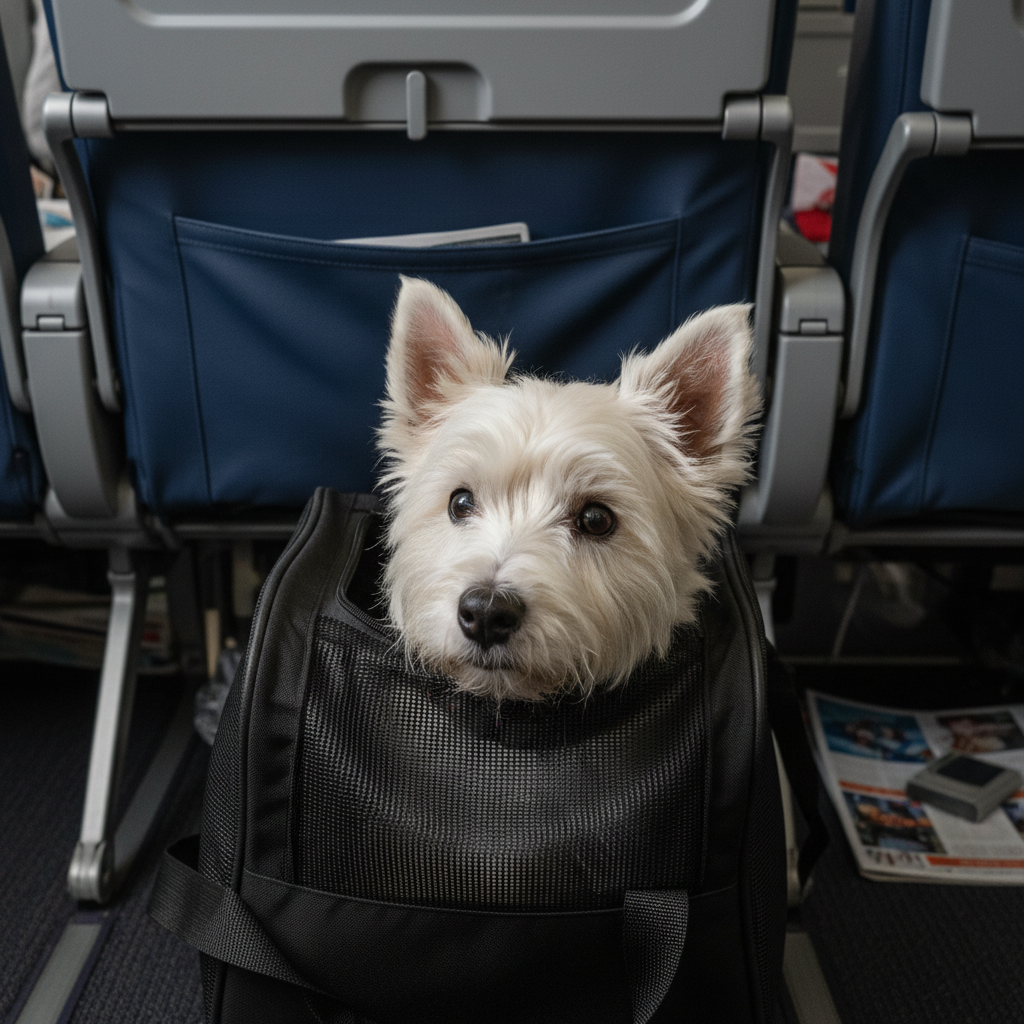
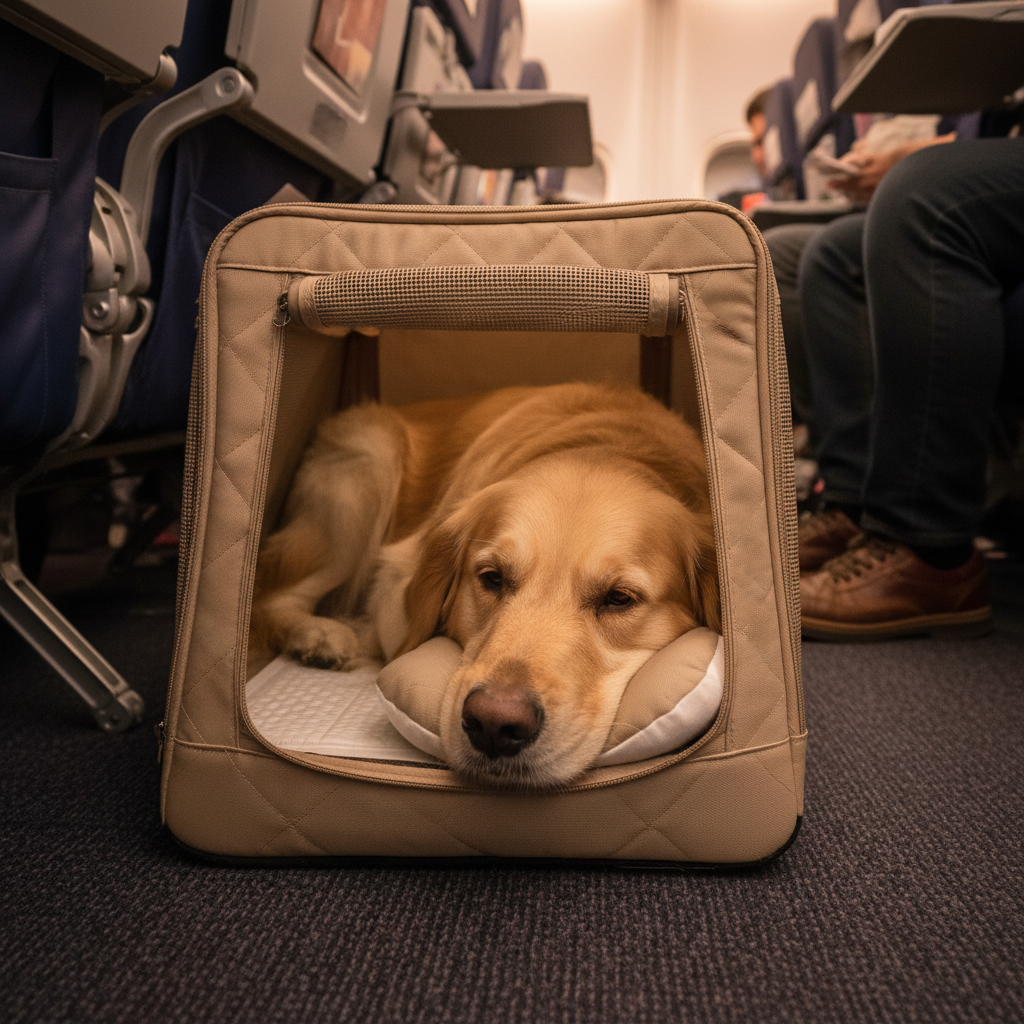
Once on board, your main goal is to keep your dog comfortable and minimize any disturbances. Remember, your dog’s carrier must remain under the seat in front of you for the entire flight.
During the Flight
- Reassurance Speak to your dog in a soft, soothing voice. You can gently reach into the carrier to offer a comforting pet if allowed and appropriate.
- Hydration Offer sips of water during longer flights, especially if the cabin air is dry. A small, spill-proof water bottle can be helpful.
- Quiet activities If your dog enjoys chewing, a small, durable chew toy can keep them occupied and help alleviate ear pressure during ascent and descent.
- Avoid sedatives unless vet-prescribed Over-the-counter sedatives can have unpredictable effects at altitude and should only be used under strict veterinary guidance.
Hack 7 – Ensure a Smooth Post-Flight Adjustment
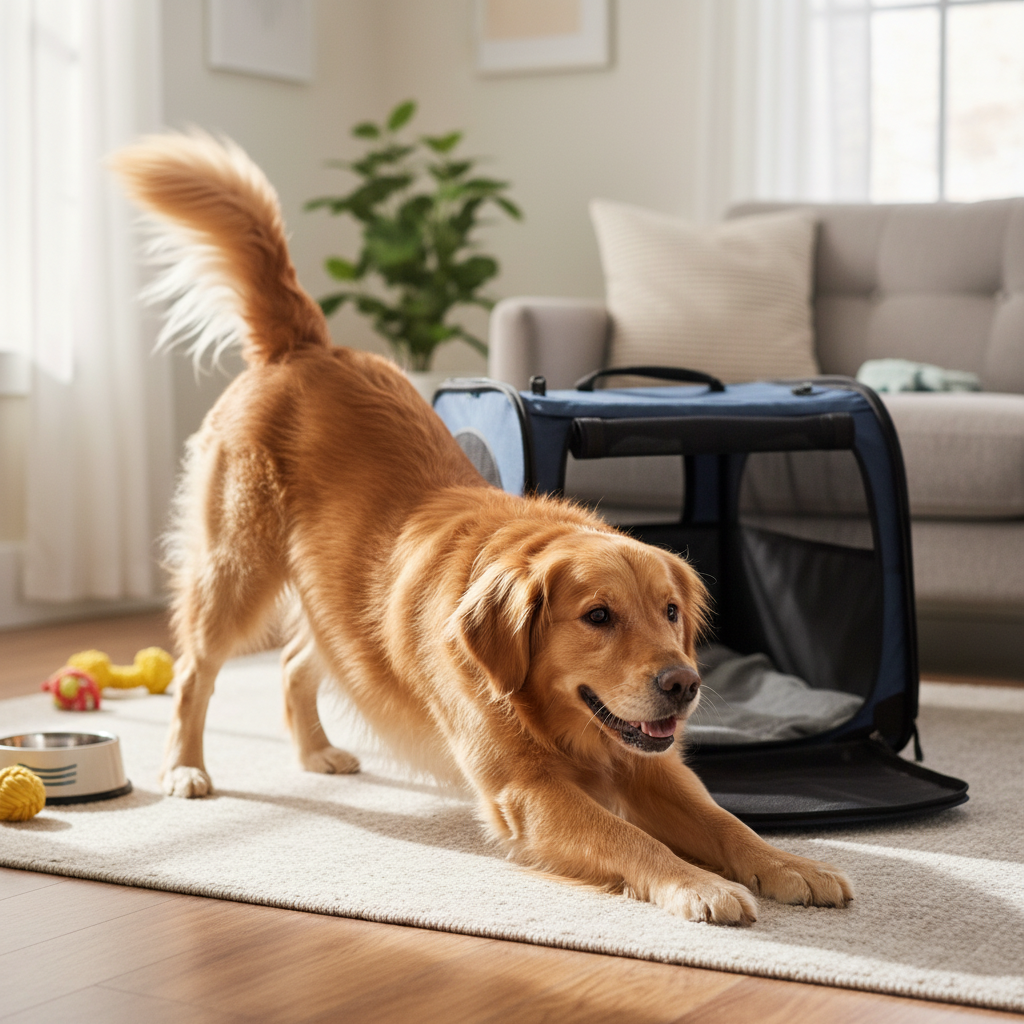
The journey doesn’t end when the plane lands. Helping your dog adjust immediately after the flight is crucial for their well-being.
After Landing
- Immediate potty break Head straight for the nearest pet relief area after deplaning. Your dog will be eager to stretch their legs and relieve themselves.
- Familiarization walk If time permits, take a short walk to allow your dog to sniff around and get accustomed to the new environment.
- Food and water Offer a meal and plenty of water once you’ve settled into your accommodation.
- Re-establish routine As quickly as possible, try to re-establish your dog’s regular feeding, walking, and sleeping routine. This consistency will help them feel secure in their new surroundings.
- Plenty of love Shower your dog with affection and praise for being such a good traveler.
Flying with your dog doesn’t have to be a source of stress. By meticulously planning, prioritizing their comfort, and using these proven travel hacks, you can transform a potentially daunting experience into a smooth and calm journey. Your dog trusts you to keep them safe and happy, and with these tips, you’ll be well-equipped to provide them with a peaceful flying experience, creating wonderful memories together wherever your adventures take you.