
Boston Terriers are known for their charming personalities, intelligence, and playful spirit. As loving companions, they thrive on interaction and learning. While they might have a reputation for being a bit stubborn at times, with the right approach and consistent training, your Boston Terrier can become a wonderfully obedient and well-mannered family member. This guide will walk you through six beginner-friendly techniques designed to set you and your furry friend up for success, building a strong bond based on trust and understanding.
Understanding Your Boston Terrier’s Unique Personality

Before diving into specific techniques, it’s helpful to appreciate what makes Boston Terriers special. They are often described as ‘the American Gentleman’ due to their dapper appearance and generally good nature. However, beneath that tuxedo coat lies a lively dog with a strong will. They are intelligent and eager to please those they love, but can also be sensitive and easily distracted. Patience, positive reinforcement, and short, engaging training sessions are key to unlocking their full potential.
The Foundation of Training – Positive Reinforcement
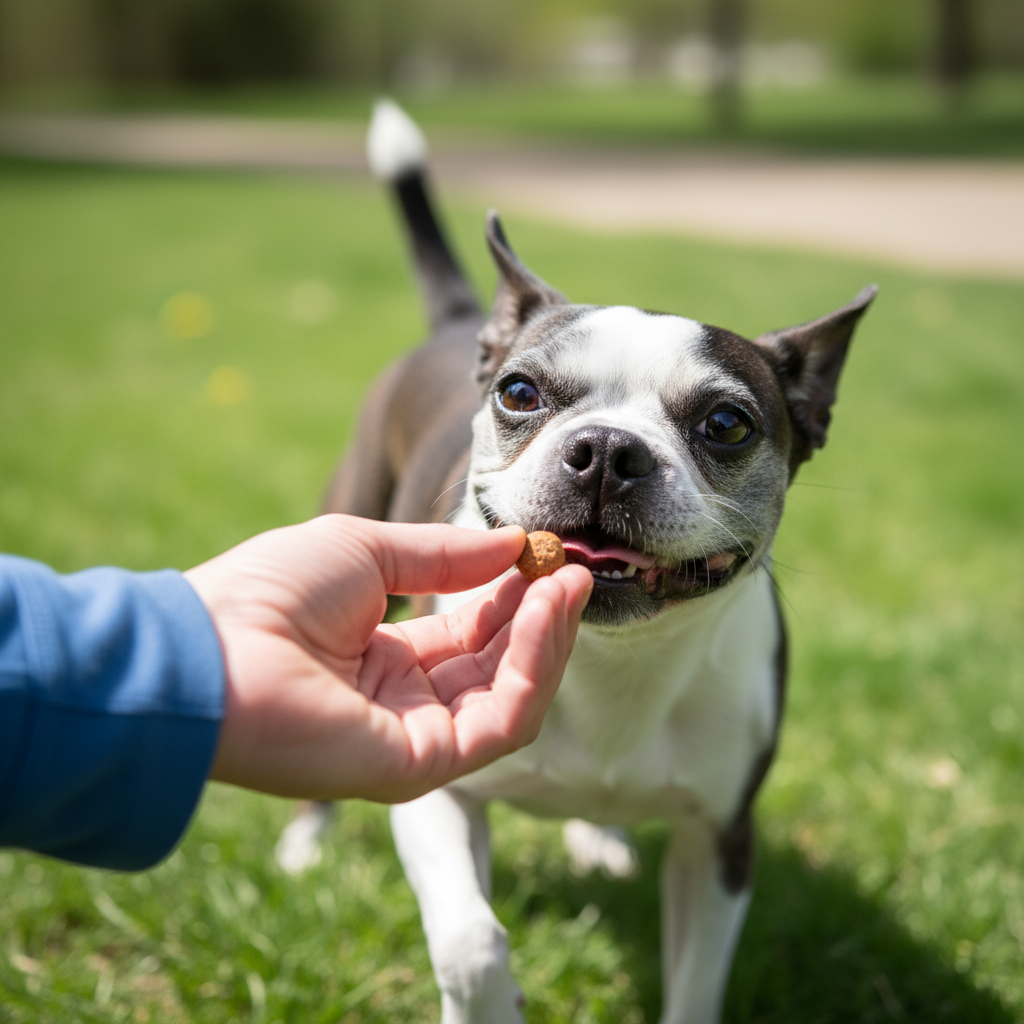
The most effective way to train a Boston Terrier, or any dog, is through positive reinforcement. This means rewarding desired behaviors with something your dog loves – treats, praise, toys, or a favorite game. Positive reinforcement builds a positive association with training, making your Boston Terrier eager to learn and repeat good behaviors. Avoid punishment, as it can lead to fear, anxiety, and a breakdown of trust.
- High-Value Treats: Small, soft, and delicious treats work best.
- Enthusiastic Praise: Use a happy, upbeat voice.
- Timing is Everything: Reward immediately (within 1-2 seconds) after the desired action.
- Keep it Fun: Training should be a bonding experience, not a chore.
Technique 1 – Sit and Stay – Building Basic Control
Teaching “Sit”
The ‘sit’ command is fundamental. It’s often the first command a puppy learns and is useful in countless situations, from greeting guests calmly to waiting for dinner.
- Hold a treat close to your Boston Terrier’s nose.
- Slowly move the treat up and over their head, towards their tail. As their nose follows the treat, their rear end will naturally lower into a sit.
- The moment their bottom touches the ground, say “Sit” clearly and enthusiastically, then immediately give them the treat and praise.
- Repeat this a few times in short sessions. Practice in different locations once they understand the command.
Mastering “Stay”

Once your Boston Terrier reliably sits, you can introduce ‘stay’. This command teaches impulse control and is crucial for safety.
- Ask your Boston Terrier to “Sit”.
- Hold your hand up, palm facing them, and say “Stay” in a calm voice.
- Take one small step back. If they remain sitting, immediately step back to them, reward, and praise.
- Gradually increase the distance and duration. If they break the stay, calmly guide them back to the original spot and start again. Keep early sessions very short.
Technique 2 – Come When Called – Essential for Safety
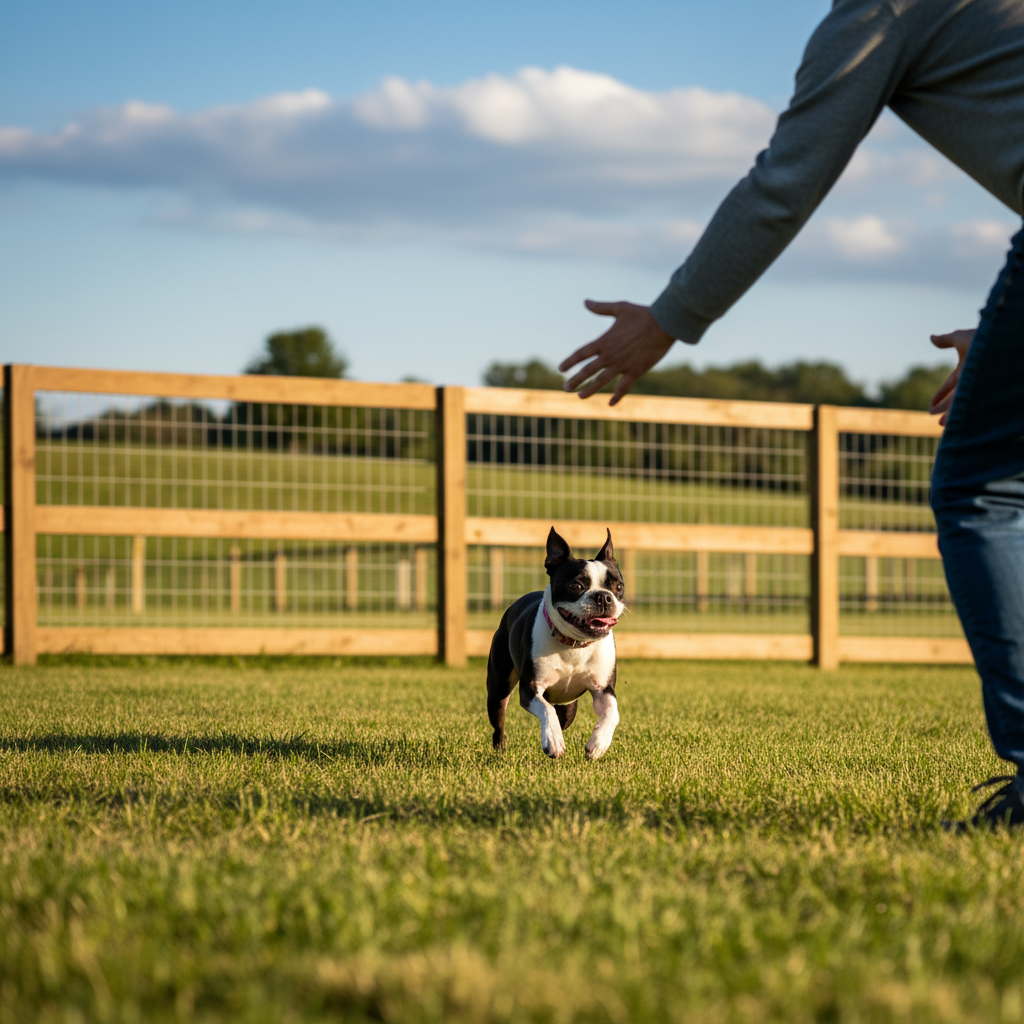
The ‘come’ command is perhaps the most important for your dog’s safety. It can prevent dangerous situations and is vital for off-leash reliability.
- Start in a quiet, distraction-free environment.
- Get down to your Boston Terrier’s level, open your arms, and in a happy, excited voice, say “Come!” or “Here!”
- As they approach, offer a high-value treat and lots of praise.
- If they hesitate, gently back away to encourage them to follow. Never chase them.
- Practice frequently, gradually introducing minor distractions once they are reliable. Always make coming to you a positive experience.
Technique 3 – Leash Training – Enjoying Walks Together
Introducing the Leash
Leash training is vital for safe and enjoyable walks. Start early to get your Boston Terrier comfortable with a collar or harness and leash.
- Let your puppy wear their collar/harness for short periods, supervised, so they get used to the feeling.
- Attach the leash and let them drag it around indoors for a few minutes while you supervise.
- Pick up the leash and offer treats and praise while they are wearing it.
Walking Politely
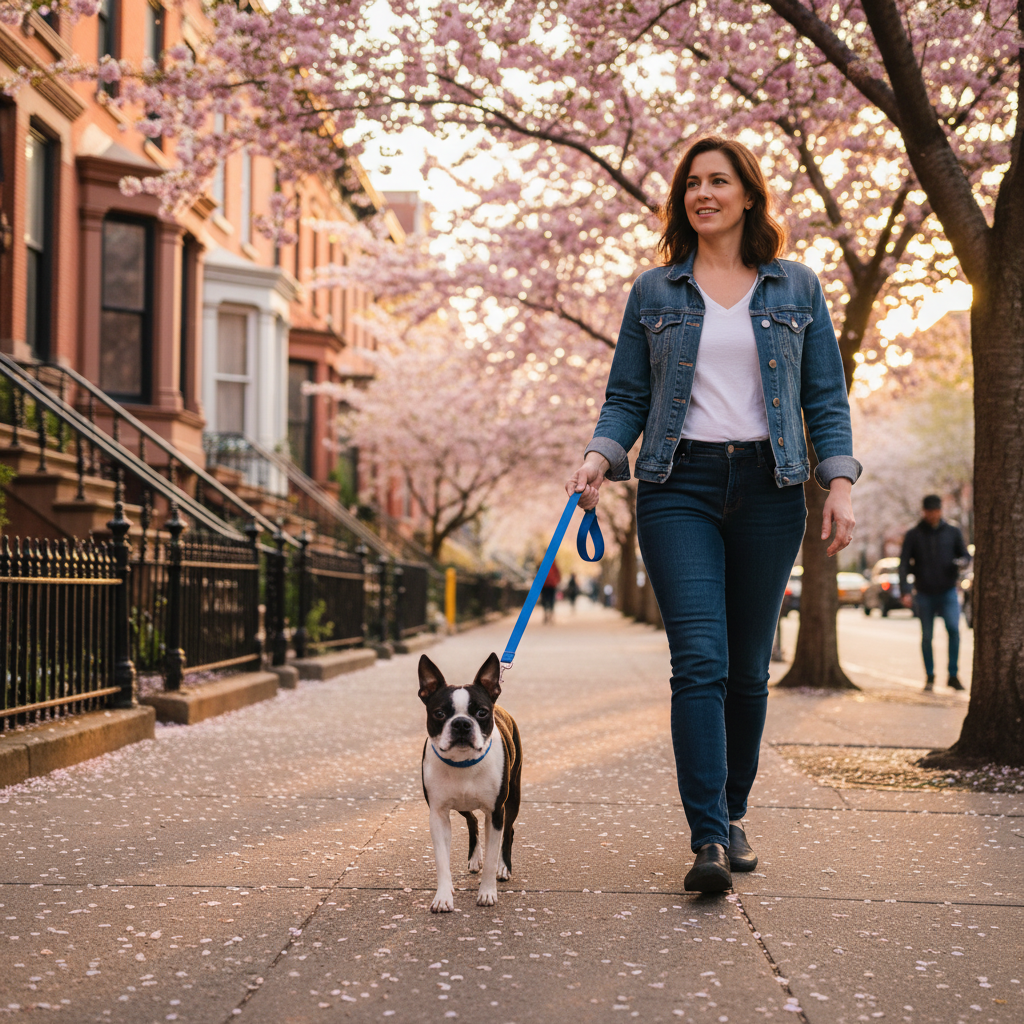
Teaching your Boston Terrier to walk politely on a leash without pulling makes walks a joy for both of you.
- Start in a low-distraction area.
- Hold the leash comfortably, with some slack.
- When your Boston Terrier walks nicely beside you, reward them with treats and praise.
- If they pull, stop immediately. Wait for the leash to slacken, or for them to look back at you, then reward and continue walking.
- Be consistent. If you always stop when they pull, they will quickly learn that pulling gets them nowhere.
Technique 4 – Crate Training – A Safe Haven

Crate training, when done correctly, provides your Boston Terrier with a safe, comfortable den and aids in house-training and managing destructive behaviors. Never use the crate as punishment.
- Choose a crate that’s just big enough for your Boston Terrier to stand, turn around, and lie down comfortably.
- Make the crate inviting with soft bedding and favorite toys.
- Toss treats inside the crate to encourage them to enter voluntarily.
- Feed meals inside the crate with the door open initially, then with the door closed for short periods.
- Gradually increase the time spent in the crate, always ensuring it’s a positive experience.
Technique 5 – Potty Training – Establishing Good Habits

Potty training requires consistency, patience, and a predictable schedule. Boston Terriers can be quick learners with the right routine.
- Establish a regular potty schedule: first thing in the morning, after waking from naps, after meals, after play, and before bedtime.
- Take your Boston Terrier to the designated potty spot every time.
- Reward immediately with praise and a treat the moment they finish doing their business outside.
- Supervise indoors. If you can’t supervise, use the crate (for short periods) or a confined puppy-proof area.
- Clean up accidents thoroughly with an enzymatic cleaner to eliminate odors that attract them back to the same spot.
Technique 6 – Stop Nipping and Chewing – Redirecting Energy
Dealing with Nipping
Puppies explore the world with their mouths, and nipping is a natural behavior. It’s crucial to teach bite inhibition early.
- When your Boston Terrier nips too hard, let out a sharp “Ouch!” and immediately withdraw attention. Stop playing and turn away.
- If the nipping continues, calmly leave the room for 30-60 seconds. This teaches them that biting makes the fun stop.
- Redirect their attention to appropriate chew toys whenever they start to mouth you.
Managing Chewing

Boston Terriers, like many dogs, love to chew. Provide plenty of appropriate, durable chew toys to save your furniture and shoes.
- Ensure your Boston Terrier has a variety of safe chew toys that match their chewing style.
- Rotate toys to keep them interesting.
- If you catch them chewing something inappropriate, calmly interrupt, say “No,” and immediately redirect them to an approved chew toy, then praise them for taking it.
- Puppy-proof your home by removing tempting items from their reach.
Common Training Challenges and How to Overcome Them
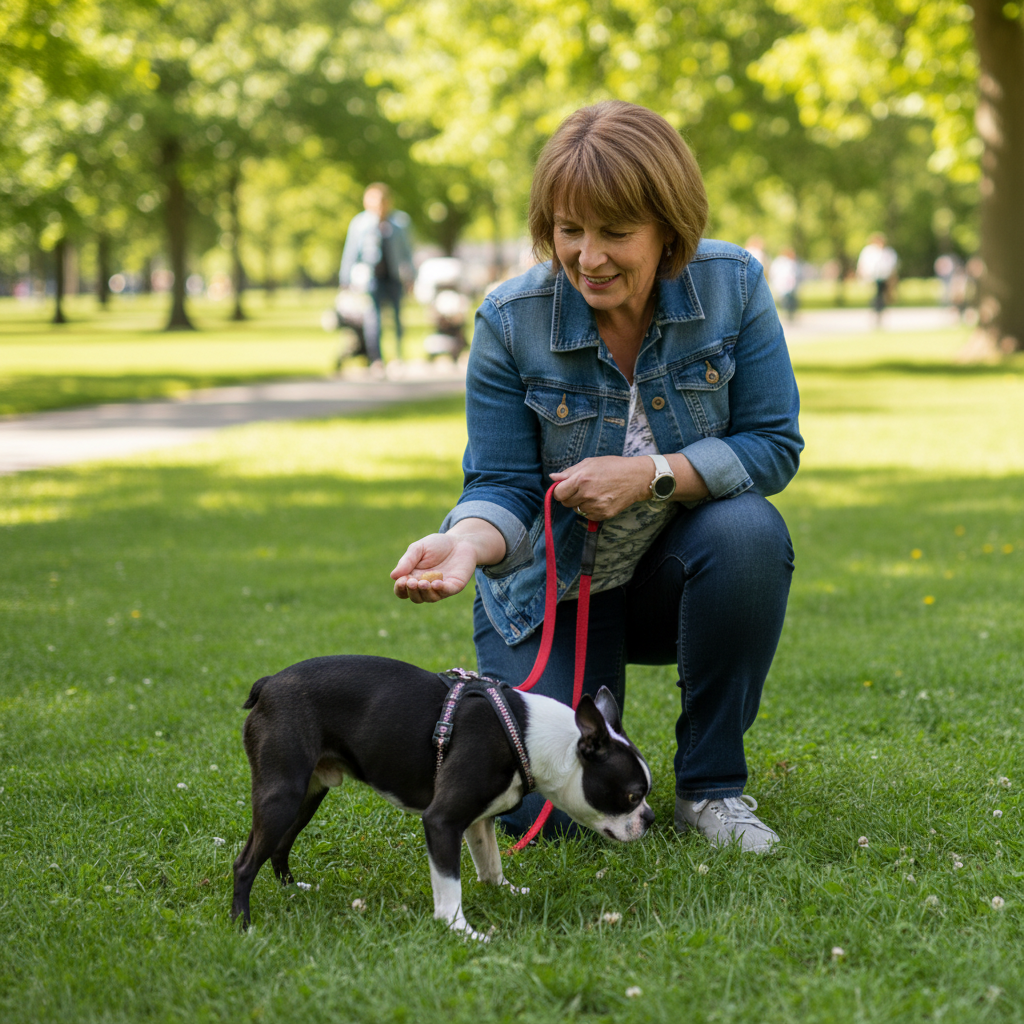
Even with the best intentions, you might encounter bumps in the road. Boston Terriers can sometimes be a bit stubborn or easily distracted. The key is consistency and patience.
- Distraction: Start training in quiet areas, then gradually introduce more distractions as your dog masters commands.
- Short Attention Span: Keep training sessions brief (5-10 minutes) and fun to maintain engagement.
- Stubbornness: Use high-value treats and enthusiastic praise to motivate them. If they’re not responding, simplify the command or take a break.
- Inconsistency: Ensure everyone in the household uses the same commands and methods. Dogs thrive on routine.
- Regression: If your Boston Terrier seems to forget a command, go back to basics and practice in a less distracting environment.
Remember, every dog learns at their own pace. Celebrate small victories and enjoy the journey of teaching your Boston Terrier.
Conclusion
Training your Boston Terrier is one of the most rewarding journeys you’ll embark on together. By consistently applying these six beginner-friendly obedience techniques, you’re not just teaching commands; you’re building a deeper bond, fostering trust, and ensuring your beloved companion is a well-behaved and happy member of your family. Embrace the process with patience, love, and plenty of positive reinforcement, and watch your Boston Terrier blossom into the amazing dog you always knew they could be. Your efforts will result in a lifetime of joy, understanding, and companionship.