There’s nothing quite like the feeling of a freshly bathed dog – soft, clean, and smelling wonderful. But let’s be honest, getting to that point can sometimes feel like a wrestling match with a sudsy, four-legged escape artist. Bath time doesn’t have to be a dreaded chore for you or your beloved canine companion.
As devoted dog parents, we want what’s best for our furry friends, and that includes keeping them clean and comfortable. A proper bath not only helps maintain their hygiene but also contributes to their skin and coat health. The good news is, with a few essential tips and a little patience, you can transform bath time into a much more positive and even enjoyable experience for everyone involved.
In this guide, we’ll walk you through six indispensable dog bathing tips that every owner needs to know. From setting up your bathing station to making the post-bath dry-off a breeze, we’ll cover everything you need to make your dog’s next bath a success. Let’s dive in and make bath time a splash of fun!
Tip 1 – Preparation is Key for a Smooth Bath
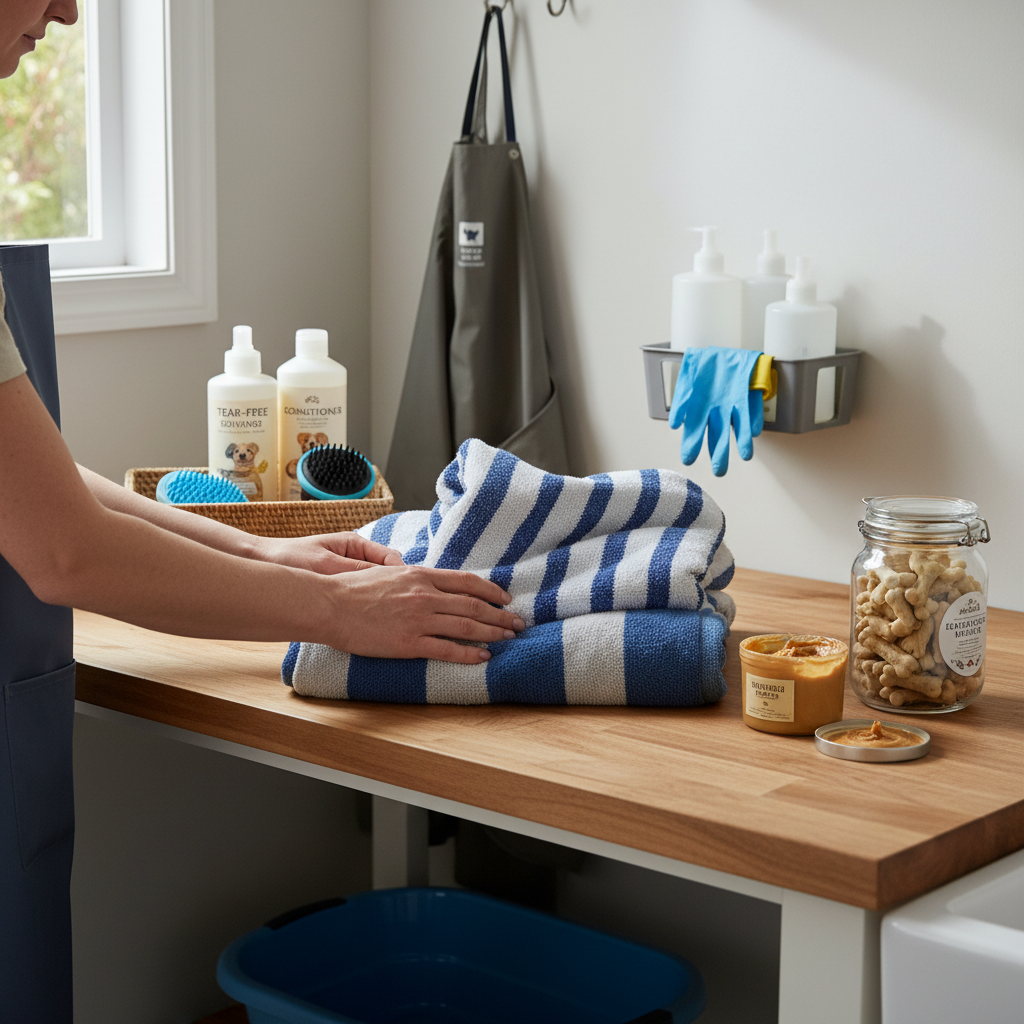
Before you even think about turning on the water, thorough preparation is your secret weapon against chaos. A well-organized bathing station reduces stress for both you and your dog, making the process much smoother and faster.
Gather All Your Supplies First
Imagine having a sudsy dog in one hand and realizing you forgot the towel! Avoid this by having everything within arm’s reach. Here’s a checklist of what you’ll need:
- Dog-Specific Shampoo and Conditioner: Never use human products, as they can irritate your dog’s skin.
- Plenty of Towels: Have at least two or three large, absorbent towels ready.
- Rubber Mat or Non-Slip Surface: Essential for preventing slips in the tub or sink.
- Brush or Comb: To pre-brush your dog’s coat.
- Cotton Balls: To gently place in their ears to prevent water entry.
- Treats: High-value treats for positive reinforcement.
- A Cup or Handheld Sprayer: For rinsing.
- Old Clothes for You: You’re going to get wet!
Pre-Brush Your Dog’s Coat
Before any water touches their fur, give your dog a good brush. This helps to remove loose hair, dirt, and any mats or tangles. Mats tend to tighten when wet, making them much harder to remove after a bath and potentially causing discomfort for your dog.
Tip 2 – Choose the Right Products for Your Dog’s Needs
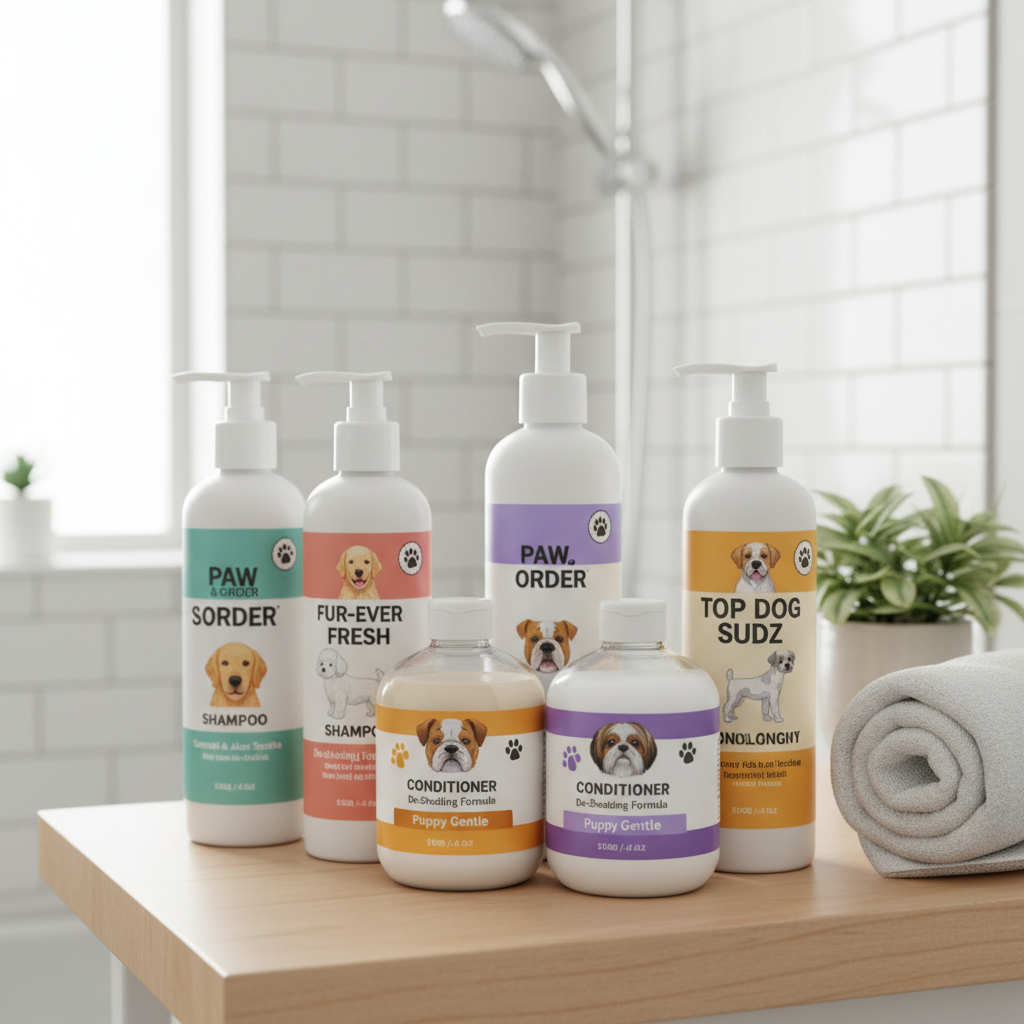
Just as humans use different shampoos for different hair types, dogs benefit from specific formulas tailored to their skin and coat. The market is flooded with options, so choosing the right one can feel overwhelming. Focus on what truly benefits your pup.
Why Dog-Specific Products Matter
Your dog’s skin has a different pH level than human skin. Using human shampoo can strip their natural oils, leading to dryness, irritation, and even skin problems. Always opt for shampoos and conditioners specifically formulated for dogs.
Consider Your Dog’s Skin and Coat Type
Does your dog have sensitive skin? Is their coat prone to dryness? Do they have allergies? Look for products that address these specific concerns:
- Sensitive Skin: Hypoallergenic, fragrance-free, or oatmeal-based shampoos.
- Dry or Itchy Skin: Shampoos with moisturizing ingredients like aloe vera or shea butter.
- Puppies: Tearless puppy shampoos are gentle and mild.
- Oily Coats: Degreasing shampoos can help manage excess oil.
- Flea and Tick Shampoos: Use these only when necessary and always follow instructions carefully.
When in doubt, consult your veterinarian for product recommendations, especially if your dog has underlying skin conditions.
Tip 3 – Master the Bathing Technique
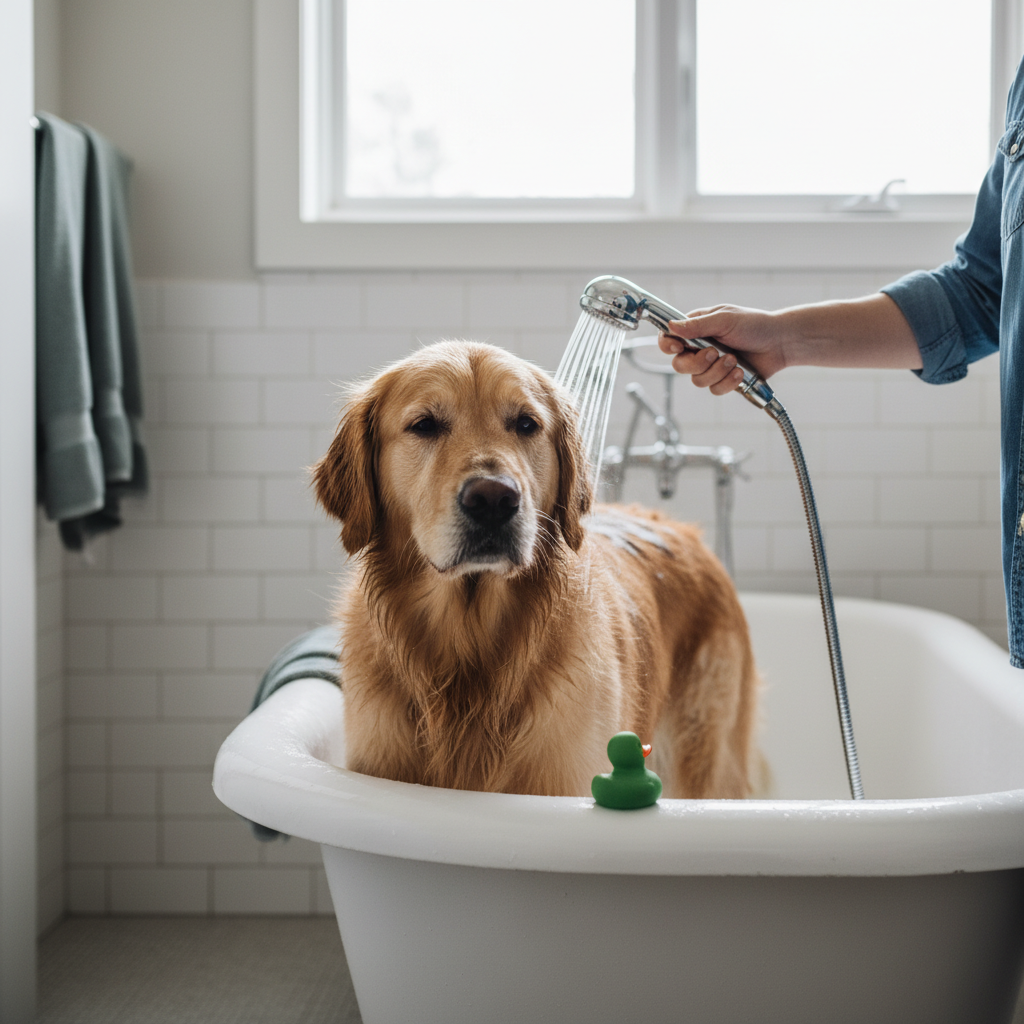
Once you have your supplies and the right products, it’s time for the actual bathing. The technique you use can significantly impact your dog’s comfort and the effectiveness of the bath. Patience and a gentle approach are key.
Wet Your Dog Thoroughly
Start by thoroughly wetting your dog’s coat with lukewarm water. Use a handheld sprayer if you have one, or a cup if not. Begin from the neck down, making sure to wet their entire body, paying close attention to their underbelly and legs. Avoid spraying water directly into their face, as this can be startling and uncomfortable.
Apply Shampoo and Lather Gently
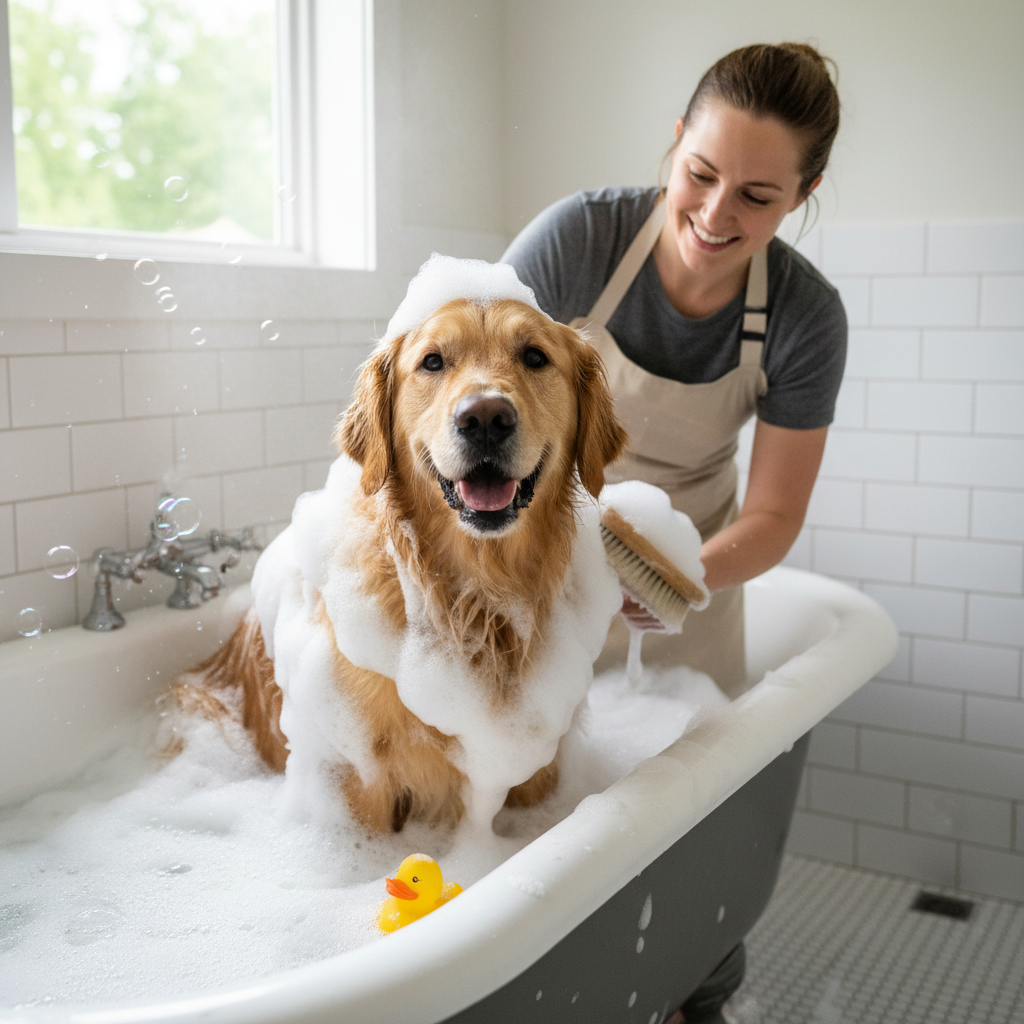
Dispense a small amount of shampoo into your hands and work it into a lather before applying it to your dog’s coat. Start from the neck and work your way down to the tail, massaging the shampoo gently into their fur and skin. Be careful around their eyes, ears, and nose. Use cotton balls in their ears to help prevent water from entering.
A Gentle Face Wash
For their face, use a damp washcloth with a tiny drop of shampoo, or simply plain water, to gently wipe around their eyes and mouth. This is a much less stressful approach than trying to rinse their face directly.
Tip 4 – Rinse Thoroughly – It’s More Important Than You Think
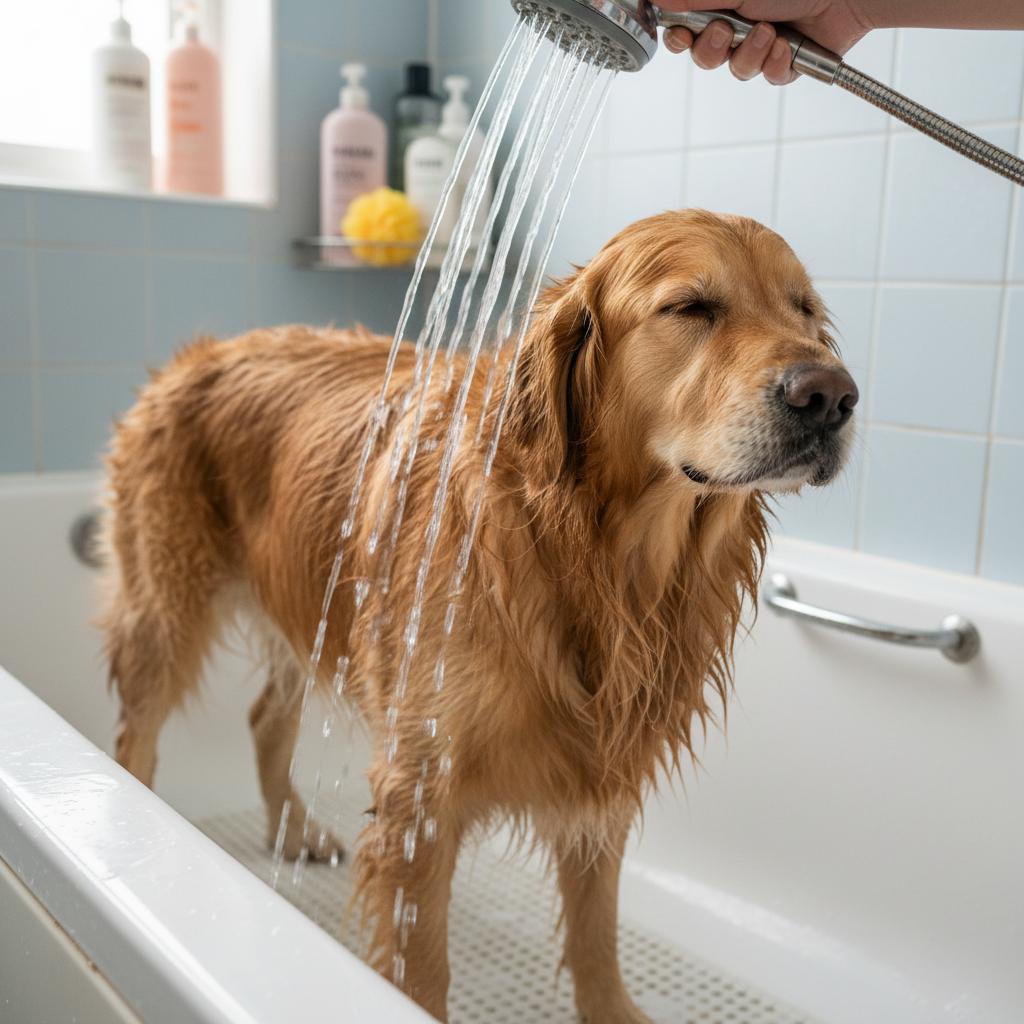
This is arguably the most crucial step in preventing skin irritation and ensuring a truly clean dog. Any shampoo residue left behind can cause dryness, itching, flaking, and even skin infections. Take your time with rinsing.
Rinse Until the Water Runs Clear
Using your handheld sprayer or cup, systematically rinse your dog’s coat. Start from the head (being careful around the face) and work your way down. Lift their legs, tail, and any folds of skin to ensure all areas are thoroughly rinsed. Keep rinsing until you can no longer see any suds and the water running off their coat is completely clear.
The Squeaky Clean Test
A good way to tell if your dog is fully rinsed is by feeling their fur. If it feels “squeaky” when you rub it, that’s a good sign! If it still feels slippery, there’s likely shampoo residue left, and you need to continue rinsing.
Condition if Needed
If you’re using a conditioner, apply it after rinsing the shampoo, following the product’s instructions for application and dwell time. Then, rinse the conditioner out just as thoroughly as you did the shampoo.
Tip 5 – The Drying Dilemma – Getting Your Dog Dry Safely
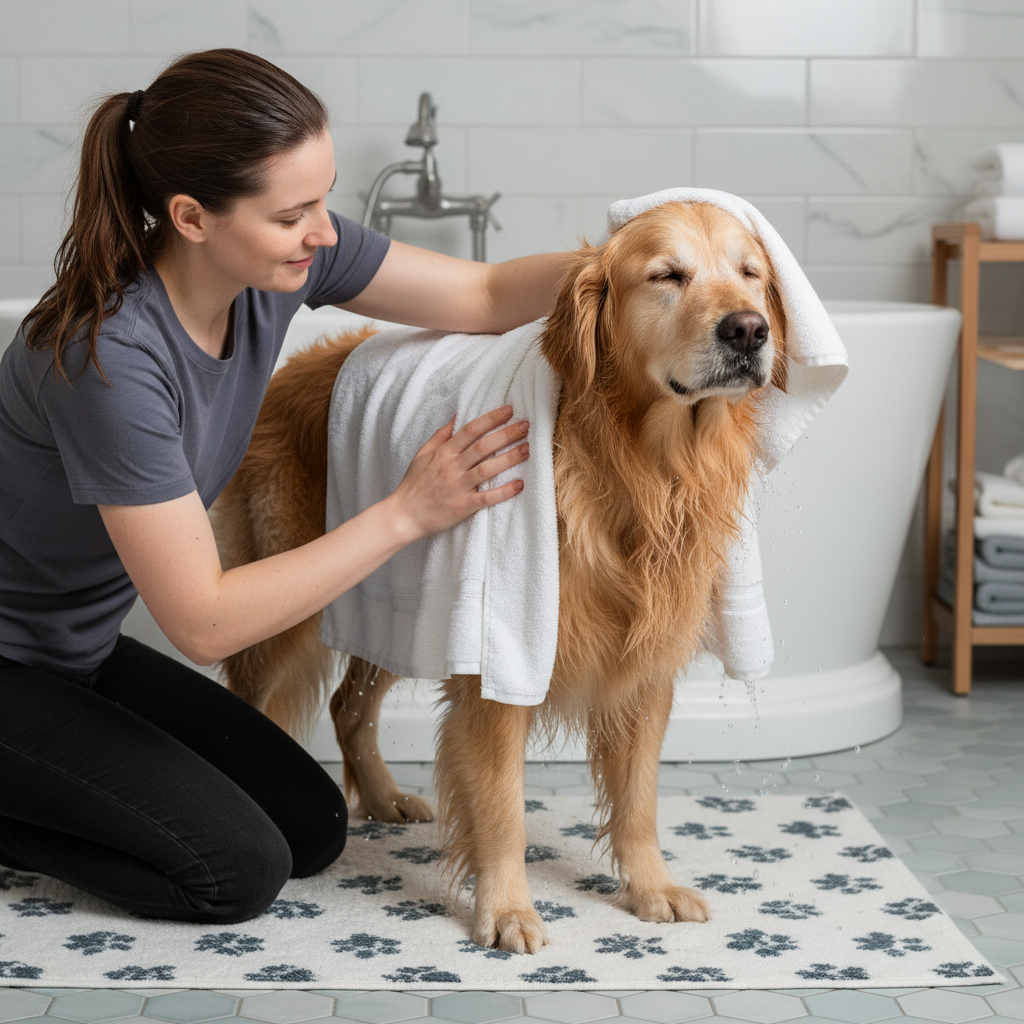
Once the bath is over, the drying process begins. Proper drying is essential to prevent skin issues like hot spots and to keep your dog from getting chilled, especially in cooler weather.
Towel Drying – The First Step
As soon as your dog is out of the tub, wrap them in a large, absorbent towel. Gently squeeze and pat their fur to remove as much excess water as possible. Avoid vigorous rubbing, which can tangle their fur and irritate their skin. Have a second or even third towel ready to swap out as the first becomes saturated.
Air Drying or Blow Drying
For many dogs, especially those with shorter coats, a good towel dry followed by air drying in a warm, draft-free room is sufficient. For dogs with longer or thicker coats, a blow dryer designed for pets can be very helpful.
- Pet-Specific Blow Dryers: These are designed to use lower heat settings and powerful airflow, which is safer for your dog’s skin and coat.
- Temperature Check: Always use the coolest or lowest heat setting. Continuously move the dryer, never focusing on one spot for too long, to prevent burns.
- Acclimation: Introduce your dog to the sound and sensation of the blow dryer gradually, using treats and praise.
- Brush While Drying: For long-haired breeds, gently brushing as you dry can help prevent mats and ensure a smoother finish.
Tip 6 – Make it a Positive Experience with Patience and Praise
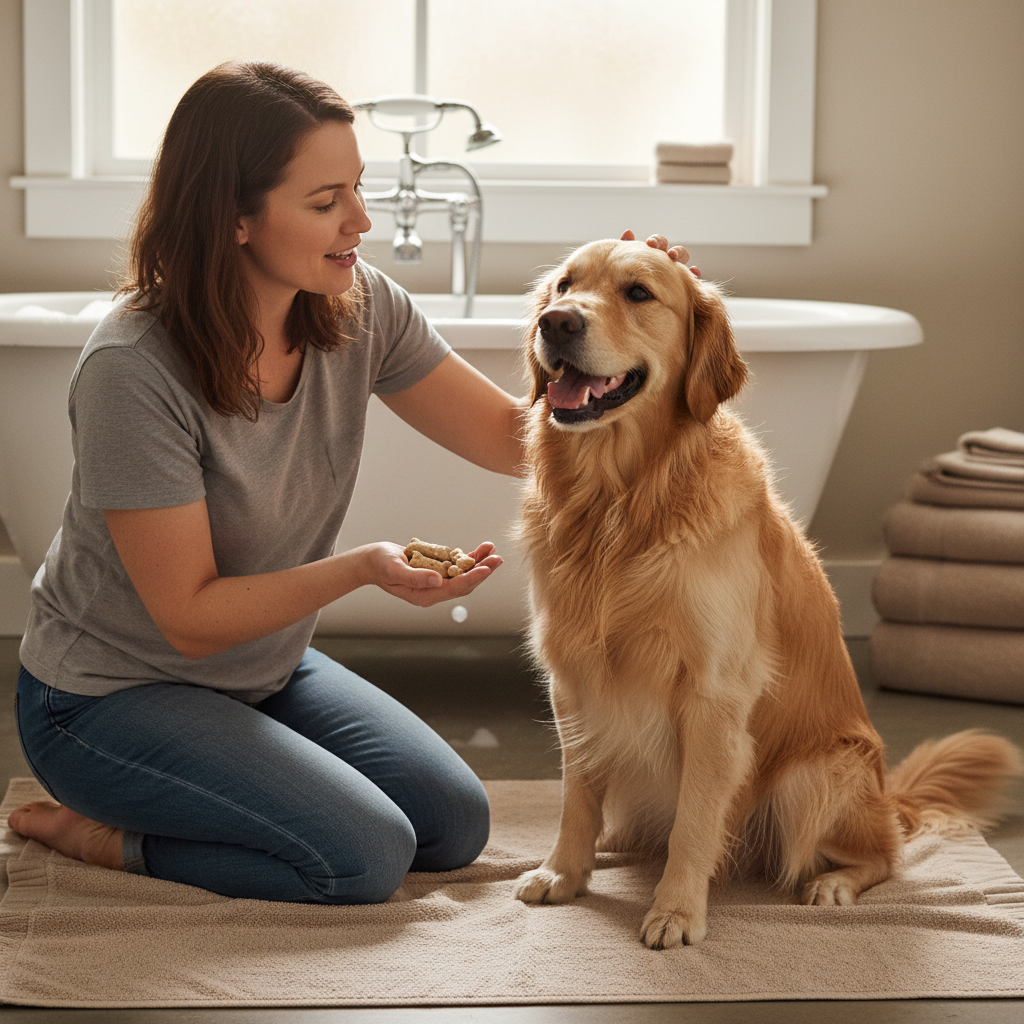
Ultimately, the goal isn’t just a clean dog, but a happy, well-adjusted one. If bath time is a constant battle, both you and your dog will dread it. Turn it into a positive, bonding experience.
Start Early and Be Patient
If you have a puppy, start introducing them to baths early on. Even if it’s just getting their paws wet and offering treats, positive early experiences are invaluable. For older dogs, patience is paramount. Don’t rush the process.
Use Treats and Praise Liberally
Positive reinforcement is incredibly powerful. Offer high-value treats throughout the bathing process – before, during (if they’re calm), and especially after. Use a calm, reassuring voice and plenty of praise to let them know they’re doing a great job.
Keep it Short and Sweet
Especially for dogs who are not fond of baths, aim for efficiency. The faster you can get through the process while still being thorough, the better. As they become more comfortable, you can gradually extend the time if needed.
Post-Bath Rewards and Cuddles
Once your dog is dry, celebrate their accomplishment with extra cuddles, playtime, or a favorite chew toy. This helps them associate bath time with positive outcomes and strengthens your bond.
Conclusion – A Clean Dog is a Happy Dog
Bathing your dog is an essential part of responsible pet ownership, contributing to their overall health, hygiene, and comfort. While it might sometimes feel like a daunting task, remembering these six essential tips can transform the experience from a struggle into a manageable and even enjoyable routine.
From meticulous preparation and choosing the right products to mastering gentle techniques and ensuring thorough rinsing, each step plays a vital role. Most importantly, approaching bath time with patience, positive reinforcement, and plenty of love will not only result in a beautifully clean pup but also strengthen the trusting bond you share.
So, gather your supplies, take a deep breath, and approach your dog’s next bath with confidence. With these tips in your arsenal, you’re well-equipped to make bath time a positive and refreshing experience for your beloved furry family member. Your clean, happy dog will thank you with wagging tails and sloppy kisses!