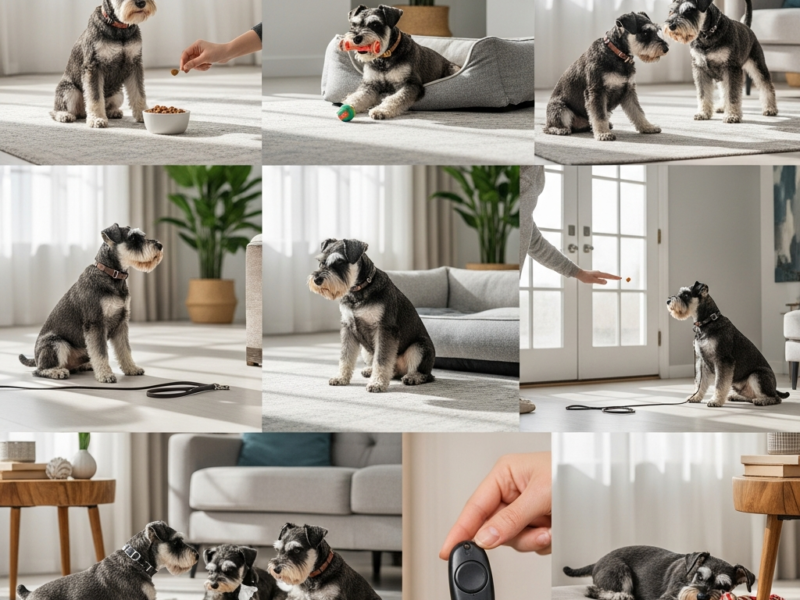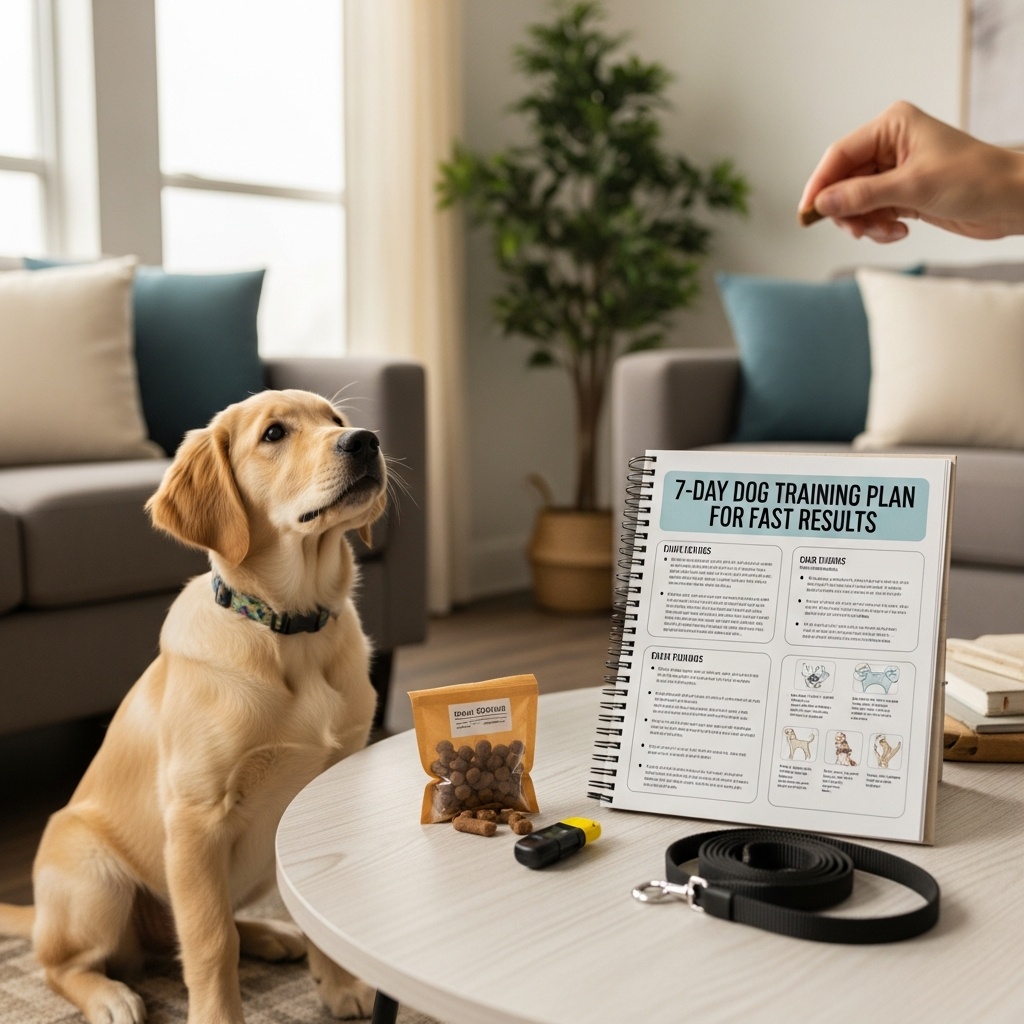
Dreaming of a dog who walks politely, comes when called, and understands what you’re asking? It might sound like a far-off goal, but with a focused, consistent approach, you can see amazing progress in just seven days. This isn’t about magic; it’s about building a strong foundation and strengthening the wonderful bond you share with your furry friend.
This 7-day plan is designed to kickstart your dog’s learning journey, bringing fast, noticeable results in key areas. We’ll cover essential commands, tackle common challenges, and empower you with the tools to continue this positive training long-term. Let’s get ready to transform your dog’s behavior and your shared life!
Why a 7-Day Plan? Understanding the Approach
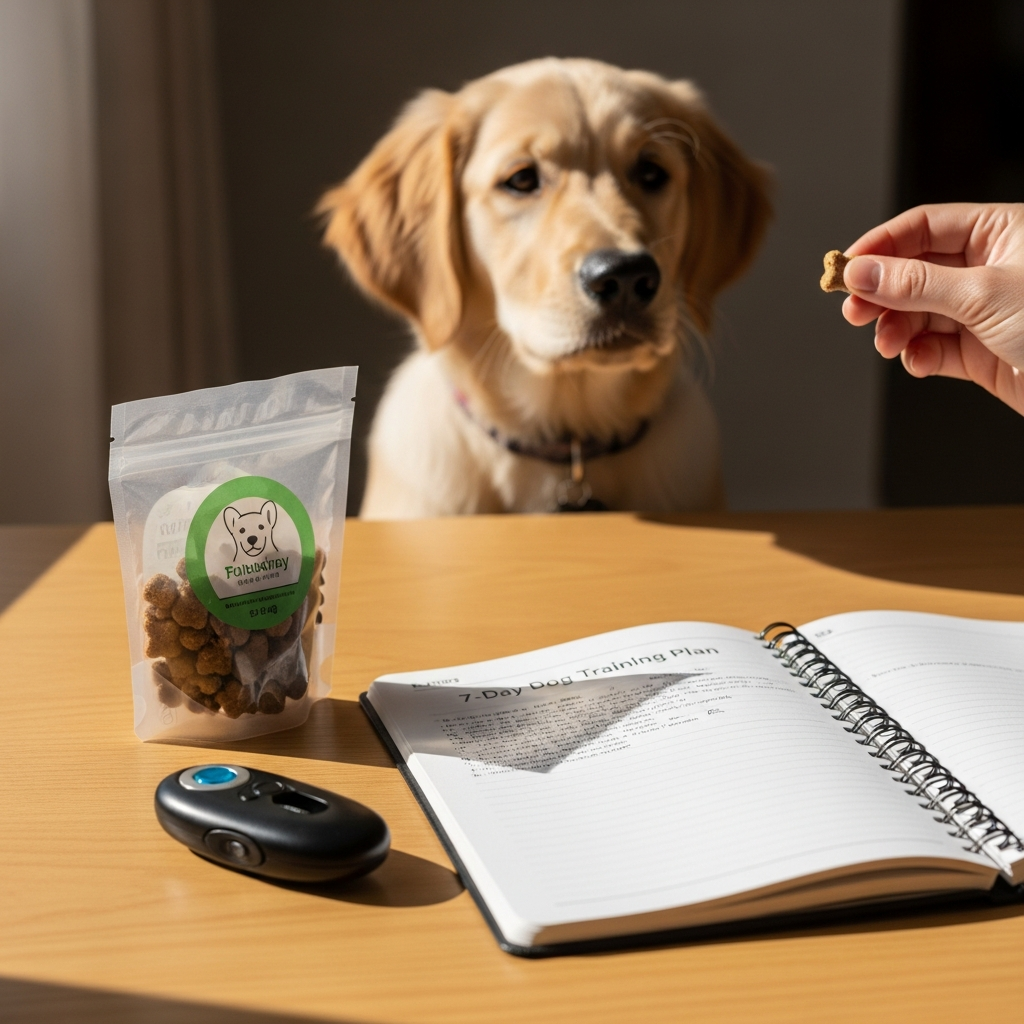
You might wonder if seven days is truly enough to make a difference. The answer is a resounding yes! While true mastery takes time, a structured short-term plan is incredibly effective for establishing good habits and basic commands quickly.
Building Foundation
In just one week, you can introduce fundamental commands and start teaching your dog how to learn. This plan focuses on core behaviors that are crucial for a well-mannered dog and a harmonious home. Think of it as laying the groundwork for a lifetime of good behavior.
Consistency is Key
The beauty of a 7-day plan is the built-in consistency. Daily, focused sessions help cement new behaviors rapidly. Dogs thrive on routine and clear expectations, and this plan provides exactly that. Short, frequent practice is far more effective than long, sporadic sessions.
What “Fast Results” Means
“Fast results” doesn’t mean your dog will be a perfectly trained obedience champion in a week. Instead, it means you’ll see a noticeable improvement in their understanding of commands, their ability to focus on you, and a reduction in undesirable behaviors. It’s about visible progress and a solid starting point for continued learning.
Before You Begin: Essential Preparations
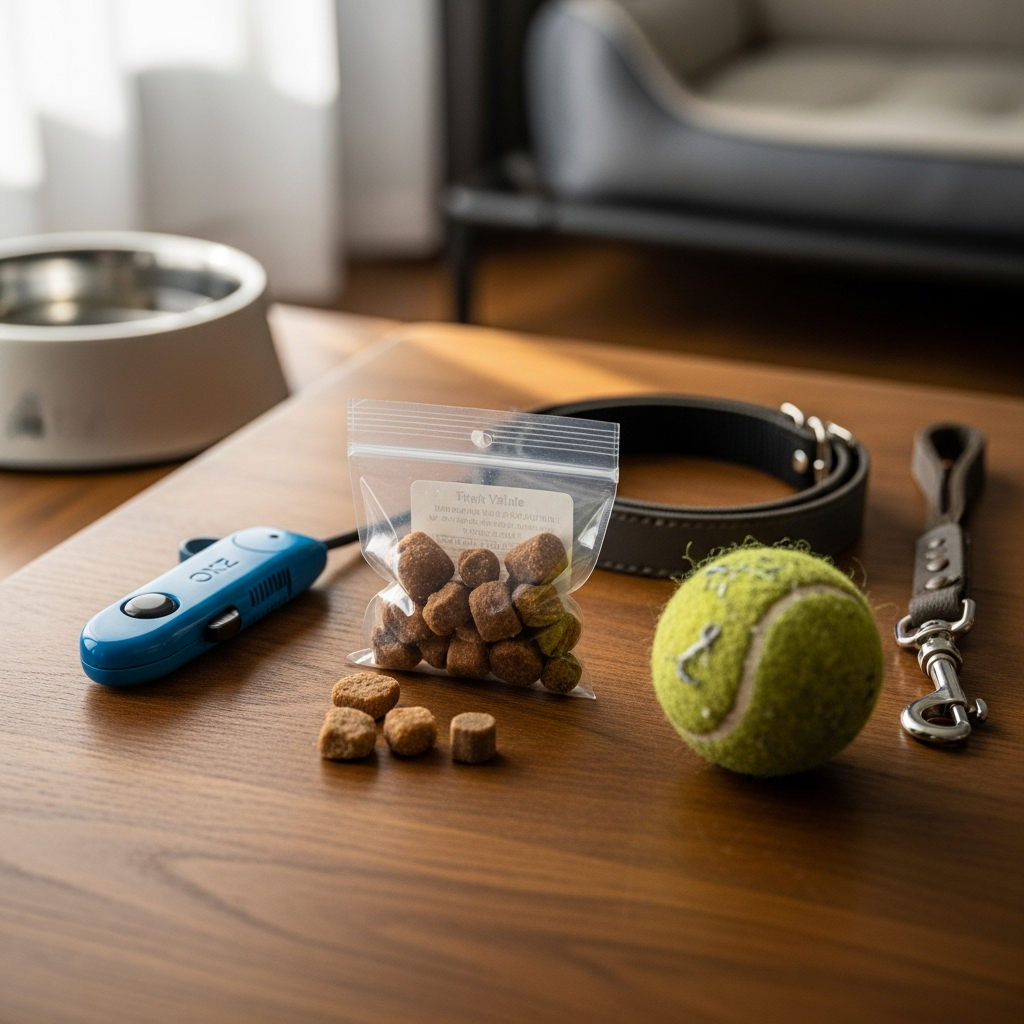
To make the most of our week together, a little preparation goes a long way. Gathering your supplies and setting the right environment will ensure smooth and effective training sessions.
Gather Your Tools
Having the right equipment on hand will make training easier and more enjoyable for both of you.
High-Value Treats
These are crucial! Use small, soft, smelly treats your dog absolutely loves. Think pieces of cooked chicken, cheese, or specialized training treats. Cut them into pea-sized bits so your dog isn’t getting full too quickly.
Leash and Collar/Harness
Ensure your dog has a comfortable, well-fitting collar or harness and a standard 4-6 foot leash. Avoid retractable leashes during training, as they don’t provide consistent control.
Clicker (Optional, but Recommended)
A clicker is a precise marker that tells your dog exactly when they’ve done something right. It can speed up learning significantly. If you’re new to clicker training, look up a quick guide on how to “charge” the clicker (pair the click with a treat).
Comfortable Training Space
Choose a quiet area in your home with minimal distractions to start. As your dog progresses, you can gradually introduce more challenging environments.
Set the Stage for Success
Your approach to training is just as important as the methods you use. A positive and patient mindset will make a huge difference.
Short, Frequent Sessions
Aim for 3-5 sessions a day, each lasting only 5-10 minutes. Dogs, especially puppies, have short attention spans. Keep it fun and end on a positive note.
Positive Reinforcement
This is the cornerstone of effective dog training. Reward desired behaviors immediately with treats, praise, and gentle petting. Avoid punishment, as it can damage your bond and make your dog fearful.
Manage Distractions
Begin training in a quiet room, then slowly increase distractions as your dog gets better. This helps them learn to generalize commands in different environments.
Know Your Dog’s Personality
Every dog is an individual. Some learn quickly, others need more repetition. Be patient and adjust your pace to suit your dog’s learning style. Celebrate small victories!
The 7-Day Training Schedule: Daily Breakdown
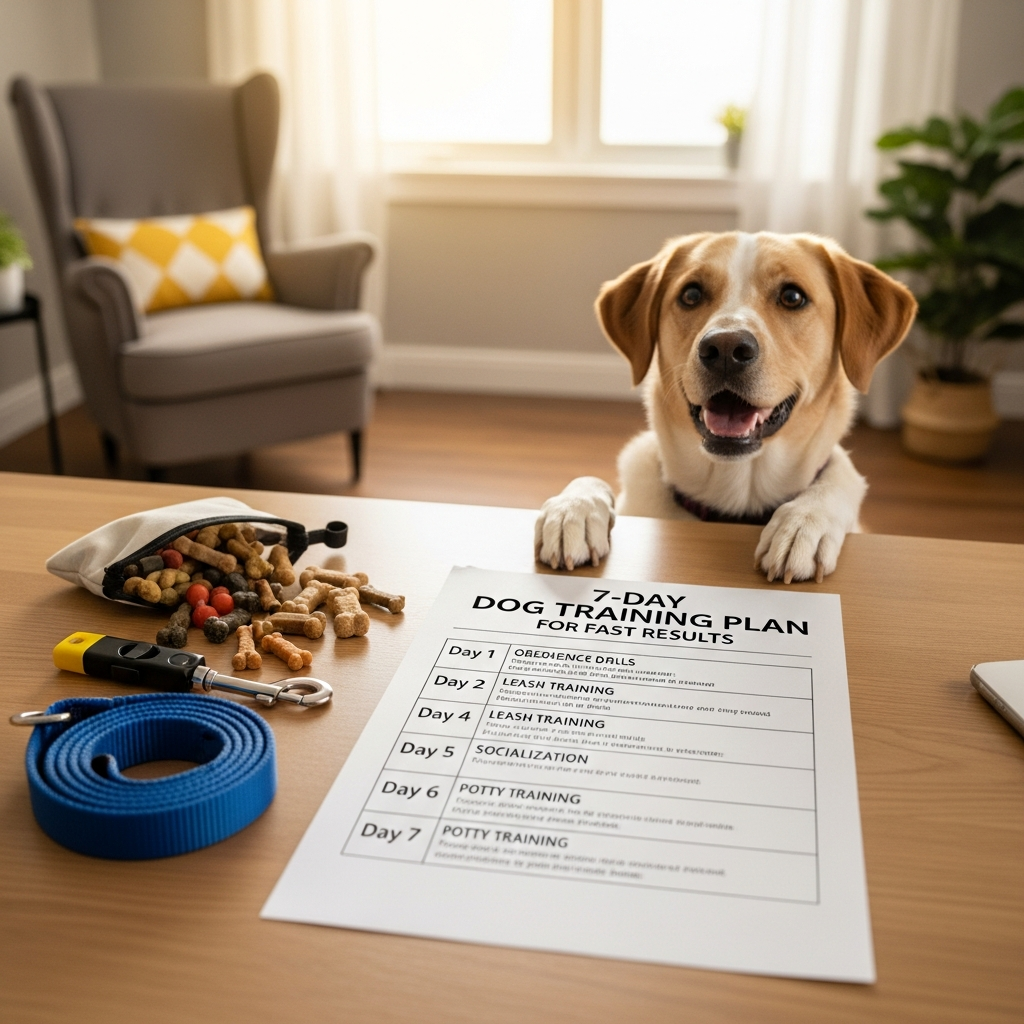
Here’s your day-by-day roadmap. Remember, consistency and positive reinforcement are your best friends throughout this journey.
Day 1: Foundation – Sit and Focus
We start with two fundamental skills: getting your dog to sit and teaching them to pay attention to you.
Learning “Sit”
This is often the first command a dog learns and forms the basis for many other behaviors.
* Hold a treat close to your dog’s nose.
* Slowly move the treat up and back over their head.
* As their nose follows the treat, their rear end will naturally lower into a sit.
* The moment their bottom touches the ground, say “Yes!” or click, and give them the treat.
* Repeat 5-10 times, then take a break.
* Once they’re reliably sitting, start adding the verbal cue “Sit” just as their bottom goes down.
“Watch Me” for Attention
Teaching your dog to look at you on command is invaluable for getting their attention, especially around distractions.
* Hold a treat near your eyes.
* When your dog looks at you, say “Yes!” or click, and give them the treat.
* Repeat several times.
* Once they reliably make eye contact, add the verbal cue “Watch Me” or “Look” as you hold the treat up.
Day 2: Building On – Down and Stay (Short)
Today, we’ll introduce the “down” command and begin very short “stays.”
The “Down” Command
“Down” is a submissive and calm position, great for settled behavior.
* Start with your dog in a “sit” position.
* Hold a treat to their nose and slowly move it down towards the floor, then slide it away from them along the ground.
* Their head should follow the treat, encouraging them to lie down.
* As soon as their elbows touch the ground, say “Yes!” or click and reward.
* Repeat several times. Once consistent, add the verbal cue “Down.”
Introducing “Stay” (Briefly)
We’re aiming for just a second or two of “stay” today.
* Ask your dog to “Sit.”
* Say “Stay” in a calm voice, hold your hand out like a stop sign.
* Take one step back, then immediately step back to your dog, say “Yes!” or click, and reward.
* Gradually increase the distance or duration by a second or two. If they break, just reset and try again. Don’t scold.
Day 3: Leash Manners – Loose Leash Walking
Walking your dog should be a pleasure, not a struggle. Today, we focus on polite leash walking.
Walking Nicely
The goal is a loose leash, where your dog isn’t pulling you.
* Start in a quiet area. When your dog pulls, immediately stop walking.
* Wait for the leash to slacken (your dog might look back at you, sit, or just pause).
* The moment the leash is loose, say “Yes!” or click, and resume walking.
* Reward frequently when the leash is loose, even if it’s just for a few steps.
Heel Position Basics
While “Heel” is an advanced command, we can start introducing the idea of walking nicely beside you.
* Walk with your dog on your left side.
* Hold a treat at your left seam, guiding them to stay close.
* Reward them for staying in that position for a step or two.
* Practice short bursts, changing direction to keep them engaged.
Day 4: Recall & Reliability – “Come” When Called
A reliable “Come” is one of the most important commands for safety and freedom.
The Life-Saving “Come”
Start in a low-distraction environment, like your living room or a fenced yard.
* Get down to your dog’s level, open your arms, and sound excited.
* Say “Come!” (or “Here!”), and back away from them.
* As they come towards you, praise enthusiastically.
* When they reach you, say “Yes!” or click, and give them a jackpot of treats.
* Never use “Come” to do something unpleasant (like give medicine or end playtime).
Practice in Low-Distraction Areas
Gradually increase the distance and introduce minor distractions, always rewarding heavily for success. If they don’t come, don’t chase them; instead, try to make yourself more exciting.
Day 5: Impulse Control – Leave It
“Leave It” teaches your dog to ignore tempting items, which can be a lifesaver for dangerous objects or dropped food.
Resisting Temptation
This command helps your dog resist picking up unwanted items.
* Place a low-value treat on the floor and cover it with your hand.
* When your dog tries to get it, say “Leave It.”
* Wait for them to look away from your hand. The moment they do, say “Yes!” or click, and then reward them with a *different*, higher-value treat from your other hand.
* Repeat, gradually moving your hand further away from the treat on the floor until you can place it down without covering it.
Practical “Leave It” Scenarios
Once they understand the concept, practice with other items like toys or even a dropped piece of kibble. Always reward for looking away from the “leave it” item.
Day 6: Advanced Stay & Place
Today, we’ll build on the “stay” and introduce the “place” command, teaching your dog to go to a designated spot.
Longer Stays
Increase the duration and distance of your “stays.”
* Ask your dog to “Sit” or “Down.”
* Say “Stay,” take a few steps back, and count to 5.
* Return to your dog, say “Yes!” or click, and reward.
* Gradually increase the time or distance. If they break, calmly return them to the original spot and try again.
“Go to Your Place”
This command is great for managing guests or keeping your dog settled.
* Choose a dog bed, mat, or crate as their “place.”
* Toss a treat onto the mat and say “Place!” as they go to get it.
* When they are on the mat, say “Yes!” or click, and give another treat.
* Repeat several times.
* Once they understand, start adding a “stay” cue once they are on their place.
Day 7: Review, Reinforce & Real-World Practice
Today is about bringing everything together and practicing in new, slightly more distracting environments.
Consolidating Skills
Go through all the commands you’ve worked on this week: Sit, Watch Me, Down, Stay, Come, Leave It, Loose Leash Walking, and Place.
* Practice each command in short, fun bursts.
* Vary the order to keep your dog engaged.
* Always end on a positive note.
Practice in New Environments
Take your training outdoors, to a quiet park, or a friend’s house. The goal is to help your dog understand that commands apply everywhere.
* Start with very low distractions.
* Reward heavily for success in these new places.
* If your dog struggles, go back to a less distracting environment.
Introduce a Fun New Trick (Optional)
If your dog is doing well, celebrate their progress by teaching a fun, simple trick like “Shake a Paw” or “High Five.” This keeps training engaging and reinforces your bond.
Important Training Principles for Lasting Results
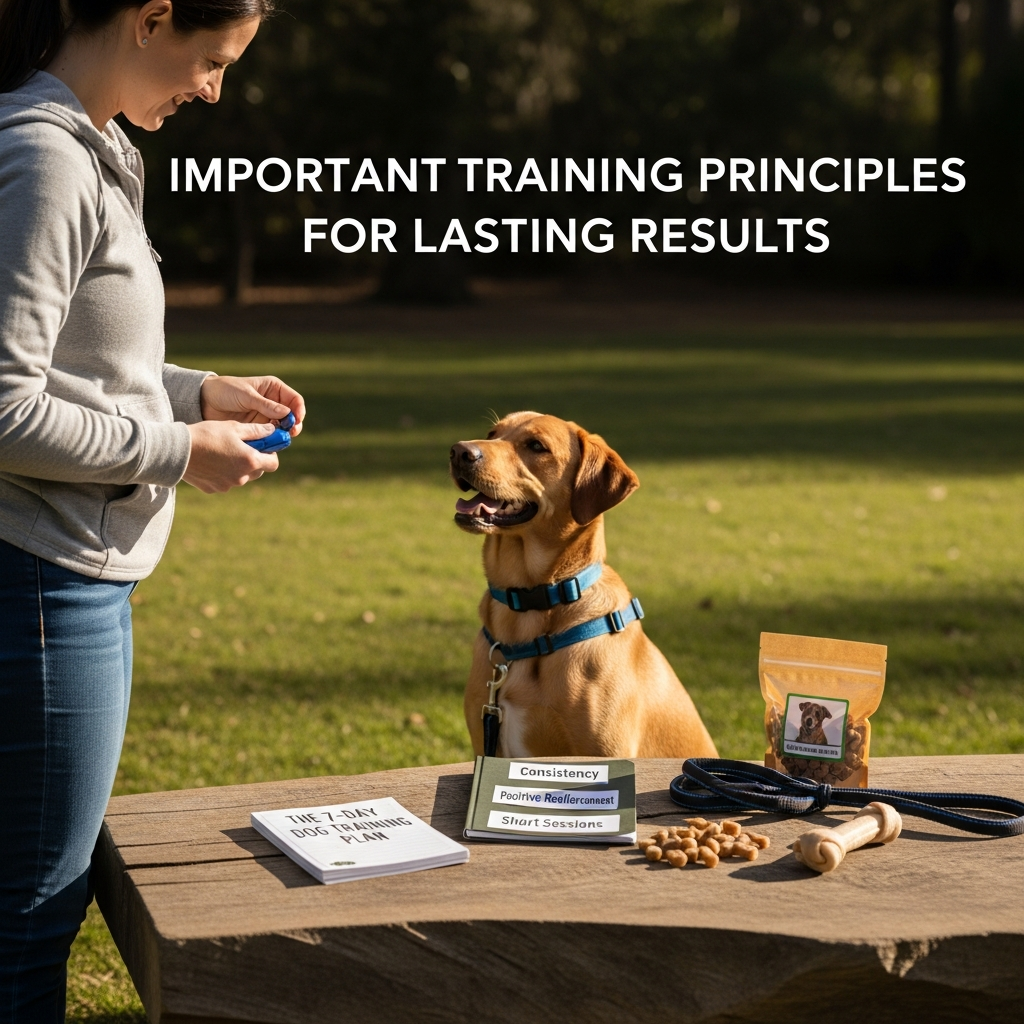
Training doesn’t end after seven days. These principles will ensure your dog continues to learn and grow into a well-behaved companion.
Positive Reinforcement Always
Always reward desired behaviors. This builds confidence and makes training a joyful experience for your dog.
Consistency and Repetition
Practice regularly, even if it’s just for a few minutes a day. The more your dog practices, the more ingrained the behaviors become.
Keep Sessions Short and Fun
Avoid long, tedious sessions. Short, engaging bursts of training keep your dog enthusiastic and eager to learn.
Manage Expectations and Be Patient
Every dog learns at their own pace. Some days will be better than others. Celebrate small successes and don’t get discouraged by setbacks.
Generalization (Practice in Different Places)
Once your dog understands a command at home, practice it in different rooms, in the yard, and eventually in public. This teaches them that “sit” means sit, no matter where they are.
When to Seek Professional Help
If you encounter persistent behavioral issues or feel stuck, don’t hesitate to consult a certified professional dog trainer or a veterinary behaviorist. They can provide tailored guidance and support.
Troubleshooting Common Training Challenges
Even with the best plan, you might hit a snag or two. Here are some common issues and how to approach them.
My Dog Isn’t Food Motivated
Try different types of treats until you find what they love. Cooked chicken, cheese, or even small pieces of hot dog can be incredibly motivating. If food still doesn’t work, use a favorite toy or enthusiastic praise and play as a reward.
Too Many Distractions
Start in the quietest room possible. Gradually introduce minor distractions (a soft sound, another person walking by) and reward heavily for maintaining focus. Increase the challenge very slowly.
Dog Gets Bored Easily
Keep sessions super short (1-2 minutes) and full of variety. Use a lot of praise and make it exciting. End on a high note before they lose interest.
Regression After a Good Session
This is normal! Learning isn’t linear. Your dog might be tired, overstimulated, or simply having an off day. Go back to basics for that command, in a very easy environment, and build back up. Don’t get frustrated.