Bringing a Labrador Retriever puppy into your home is an exciting, joyful experience. These intelligent, energetic, and affectionate dogs make wonderful family members. However, even the most well-meaning new puppy parents can unknowingly fall into common traps that can impact their furry friend’s development and well-being. Understanding these pitfalls early can make all the difference in raising a happy, well-adjusted Lab.
As a devoted dog parent, you want the best for your Labrador puppy. This guide will walk you through five surprising mistakes many owners make, offering practical advice and solutions to help you navigate puppyhood successfully. Let’s ensure your Lab gets the best start in life!
Mistake One – Over-Exercising Your Growing Puppy

Labrador Retrievers are known for their boundless energy, and it’s tempting to think they need endless hours of strenuous exercise. However, over-exercising a growing Labrador puppy is a common mistake that can lead to significant health problems down the line, particularly with their developing joints.
Why Too Much Exercise is Harmful
A puppy’s bones, joints, and growth plates are still soft and developing. High-impact activities like long runs, intense fetching sessions, or excessive jumping can put undue stress on these delicate structures. This can increase the risk of conditions like hip and elbow dysplasia, which are already prevalent in the breed.
The Right Approach to Puppy Exercise
Instead of intense workouts, focus on short, frequent, and controlled play sessions. The general rule of thumb is five minutes of exercise per month of age, twice a day. So, a three-month-old puppy would get 15 minutes of activity, twice daily. This includes walks, gentle play, and training sessions. Allow plenty of free play in a secure, soft area like a grassy yard, where your puppy can self-regulate their activity.
- Short walks on a leash.
- Gentle play with toys.
- Supervised exploration in a safe environment.
- Mental stimulation through training and puzzle toys.
Mistake Two – Neglecting Early Socialization and Exposure

Many new owners focus primarily on house-training and basic commands, sometimes overlooking the critical window for socialization. The period between 3 and 16 weeks is crucial for a puppy’s social development. Missing this window can lead to fear, anxiety, and aggression towards unfamiliar people, dogs, or environments later in life.
The Importance of Positive Experiences
Socialization isn’t just about letting your puppy meet other dogs. It’s about exposing them to a wide variety of sights, sounds, smells, people, and experiences in a positive and controlled manner. This helps them learn that the world is a safe and interesting place, building their confidence and resilience.
Effective Socialization Strategies
- Puppy Classes – Enroll in a well-run puppy class that emphasizes positive reinforcement and supervised play.
- Controlled Encounters – Arrange playdates with vaccinated, friendly adult dogs.
- New Environments – Take your puppy to different dog-friendly places (parks, pet stores, friends’ homes) where they can observe and interact calmly.
- Variety of People – Introduce them to people of different ages, genders, and appearances.
- Sounds and Sights – Expose them to everyday noises (vacuum, traffic, children playing) and objects (umbrellas, hats) without overwhelming them.
Always ensure these experiences are positive. If your puppy shows signs of fear, remove them from the situation and try again with less intensity.
Mistake Three – Inconsistent Training and Boundary Setting

Labradors are eager to please and highly trainable, but they thrive on consistency. A common mistake is being inconsistent with rules, commands, and expectations. One day the couch is allowed, the next it’s not. This sends mixed signals, confusing your puppy and making training much harder.
Why Consistency is Key
Dogs learn through association and repetition. If rules frequently change, your puppy won’t understand what’s expected of them, leading to frustration for both of you. Inconsistency can result in a less obedient dog and a more stressful household environment.
Building a Consistent Training Routine
- Family Agreement – Ensure everyone in the household uses the same commands, rules, and rewards.
- Clear Boundaries – Decide what is and isn’t allowed early on (e.g., no jumping on furniture, no begging at the table) and stick to it.
- Positive Reinforcement – Consistently reward desired behaviors with treats, praise, or toys.
- Short, Frequent Sessions – Keep training sessions brief (5-10 minutes), fun, and frequent throughout the day.
- Management – Use crates, gates, and leashes to prevent unwanted behaviors when you can’t supervise directly.
Mistake Four – Underestimating Their Need for Mental Stimulation
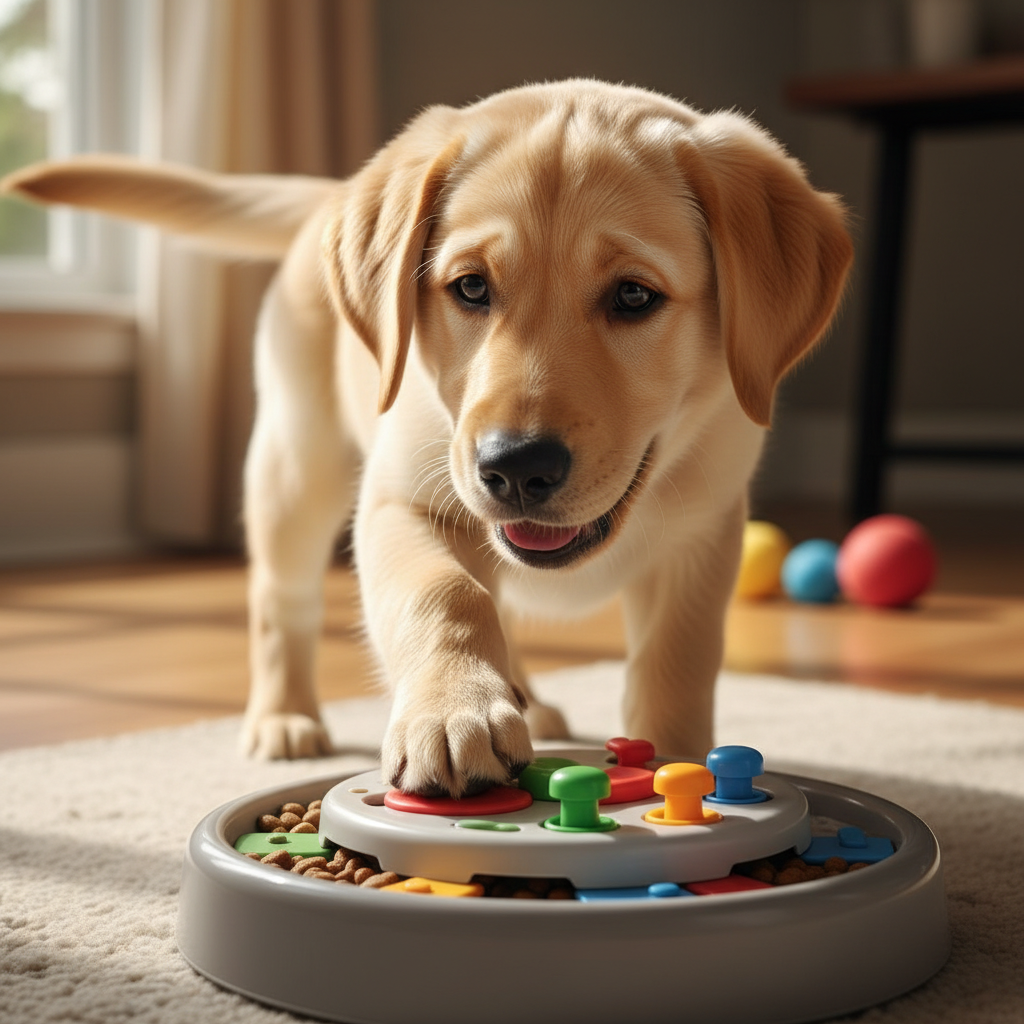
While physical exercise is important, Labradors are also highly intelligent working dogs who need significant mental stimulation. A common mistake is providing ample physical activity but neglecting their cognitive needs, leading to boredom and destructive behaviors.
The Consequences of Boredom
A bored Labrador puppy is a destructive Labrador puppy. They might chew furniture, dig holes, bark excessively, or engage in other undesirable behaviors simply because they’re not getting enough to do with their minds. Their intelligence needs an outlet.
Boosting Mental Engagement
Integrate mental exercises into your daily routine to keep your Lab’s mind sharp and satisfied:
- Puzzle Toys – Food-dispensing toys that require problem-solving to get treats.
- Training Games – Turn training into fun games, like hide-and-seek with treats or toys, or learning new tricks.
- Scent Work – Hide treats around the house and encourage your puppy to use their nose to find them.
- Interactive Play – Engage in games that require thinking, like ‘find it’ with a favorite toy.
- New Experiences – Continue exposing them to new sights and smells on walks, allowing them to investigate safely.
Mistake Five – Not Proactively Managing Chewing Habits

Labrador puppies are notorious chewers, and this isn’t just a phase; it’s a fundamental part of their development, especially during teething. A common mistake is not providing appropriate chewing outlets or failing to redirect unwanted chewing behavior effectively.
Why Chewing is Natural for Labs
Puppies explore the world with their mouths. Chewing helps relieve discomfort during teething, strengthens their jaws, and provides mental stimulation. If they don’t have appropriate things to chew, they will find their own—which often means your shoes, furniture, or remote controls.
Effective Chewing Management
Proactive management is key to saving your belongings and keeping your puppy happy:
- Provide a Variety of Chews – Offer a range of safe, durable chew toys with different textures (rubber, nylon, dental chews). Rotate them to keep interest high.
- Supervise Closely – Always supervise your puppy, especially when they have new toys, to ensure they are safe and not being ingested.
- Redirect Immediately – If your puppy starts chewing on something inappropriate, calmly say