As dog parents, we often wish our furry friends could just tell us what they’re thinking or feeling. While they may not use words, dogs are constantly communicating with us through a rich array of body language, vocalizations, and subtle cues. Learning to ‘speak dog’ can transform your relationship, deepen your understanding, and help you meet their needs more effectively.
This guide will help you decode eight clear signals your dog uses every day. Get ready to strengthen your bond and truly understand your best friend!
The Art of the Tail Wag – More Than Just Happiness
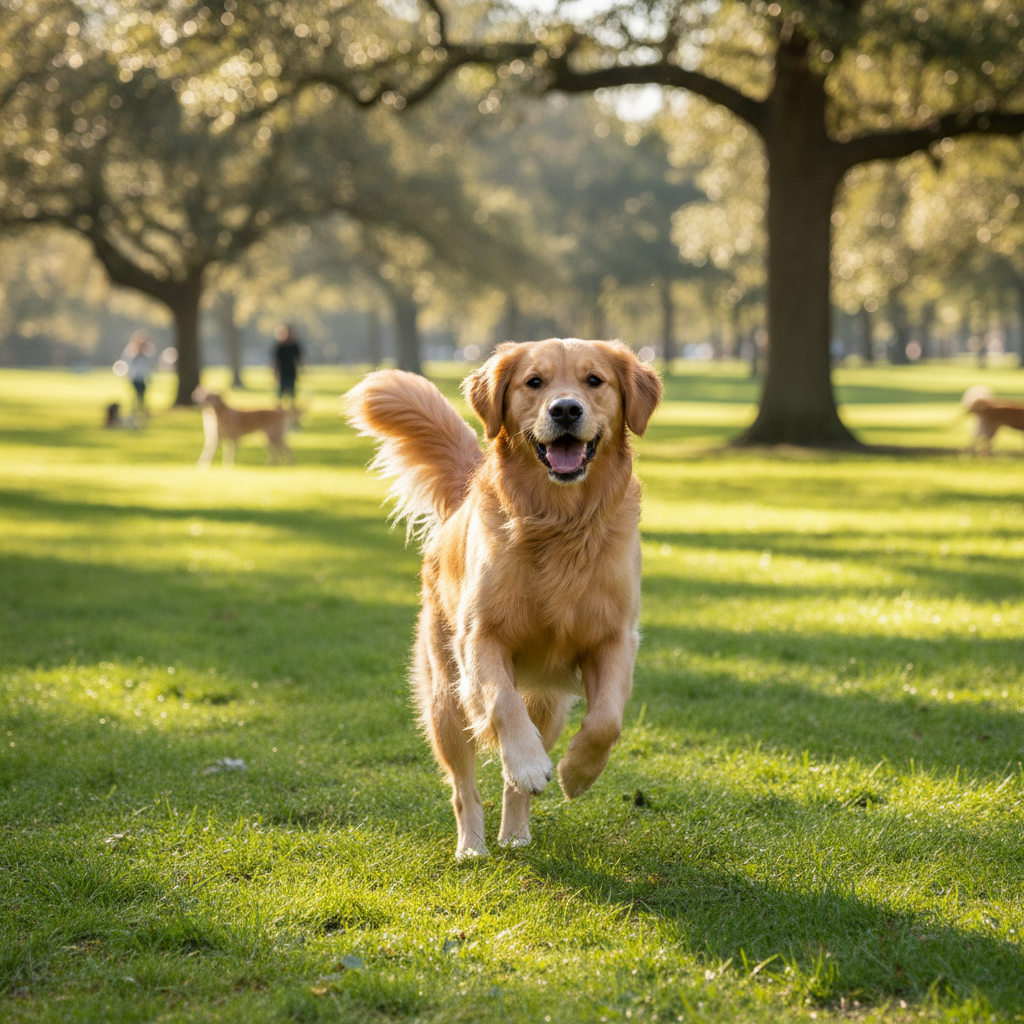
A wagging tail is often seen as the universal sign of a happy dog, but it’s much more nuanced than that. The speed, height, and even the direction of the wag can reveal a lot about your dog’s mood.
- Fast, High Wag– Often indicates excitement or high arousal. This could be positive (hello!) or negative (anxiety).
- Slow, Low Wag– Can suggest uncertainty, submission, or a cautious approach.
- Tail Tucked Between Legs– A clear sign of fear, anxiety, or submission.
- Tail Held High, Barely Wagging– May indicate confidence, alertness, or even aggression if combined with a stiff body.
- Wagging to the Right– Studies suggest this often indicates positive emotions.
- Wagging to the Left– Can sometimes signal negative emotions or apprehension.
Always observe the tail in conjunction with the rest of their body language.
Body Language Basics – Reading Their Stance

Your dog’s overall body posture provides a wealth of information. Is their body stiff or relaxed? Are they leaning forward or back?
- Relaxed Stance– A loose, easy posture with weight evenly distributed indicates comfort and contentment.
- Play Bow– Front end down, rear end up, tail wagging. An invitation to play!
- Cowering or Crouching– Often a sign of fear, submission, or an attempt to appear smaller and less threatening.
- Stiff, Forward Lean– Can signal alertness, territoriality, or potential aggression. Their body might be rigid, hackles raised.
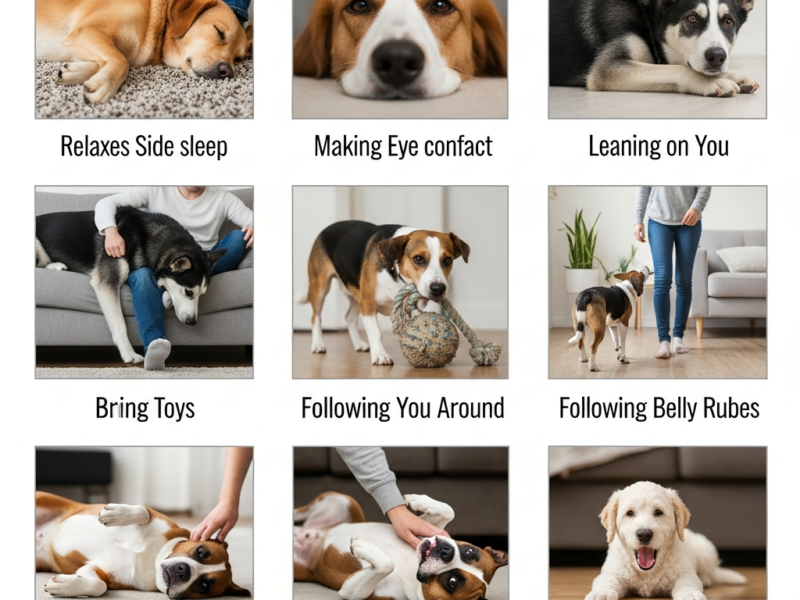
- Rolling Over, Exposing Belly– A strong sign of submission or a request for belly rubs from a trusted human.
Paying attention to their general posture can give you immediate insight into their emotional state.
Ears Speak Volumes – A Window to Their Mood
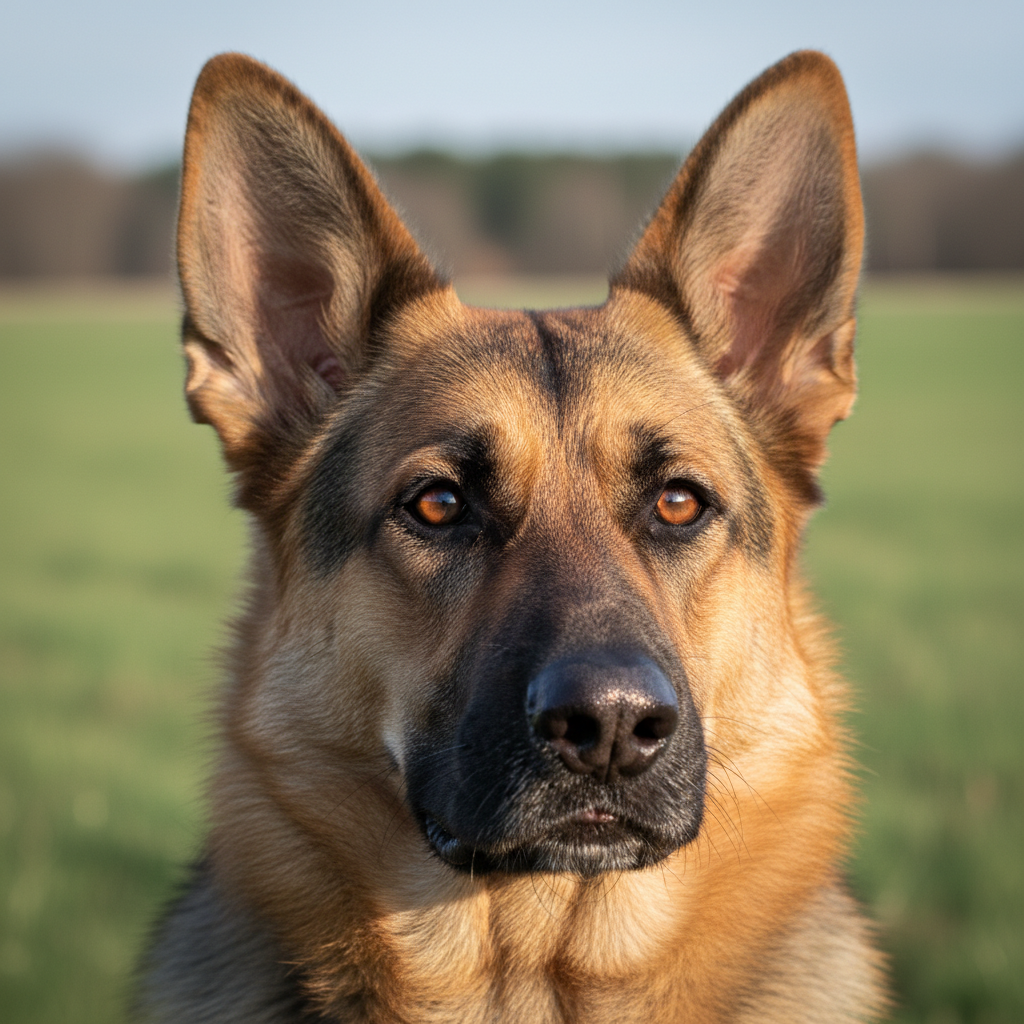
Dogs use their ears to pick up sounds and to express themselves. The position of their ears can change rapidly and convey different emotions.
- Ears Relaxed or Natural– When your dog is calm and comfortable, their ears will typically be in their natural resting position.
- Ears Perked Forward– Indicates alertness, curiosity, or focus on something in front of them. They might be listening intently.
- Ears Pinned Back Flat Against Head– A clear sign of fear, anxiety, or submission. They’re trying to make themselves seem less threatening.
- Ears Swiveling– Your dog is actively listening and trying to pinpoint the source of a sound.
Different breeds have different ear types, so learn your own dog’s natural ear positions first.
Eye Contact – Gaze Into Their Soul
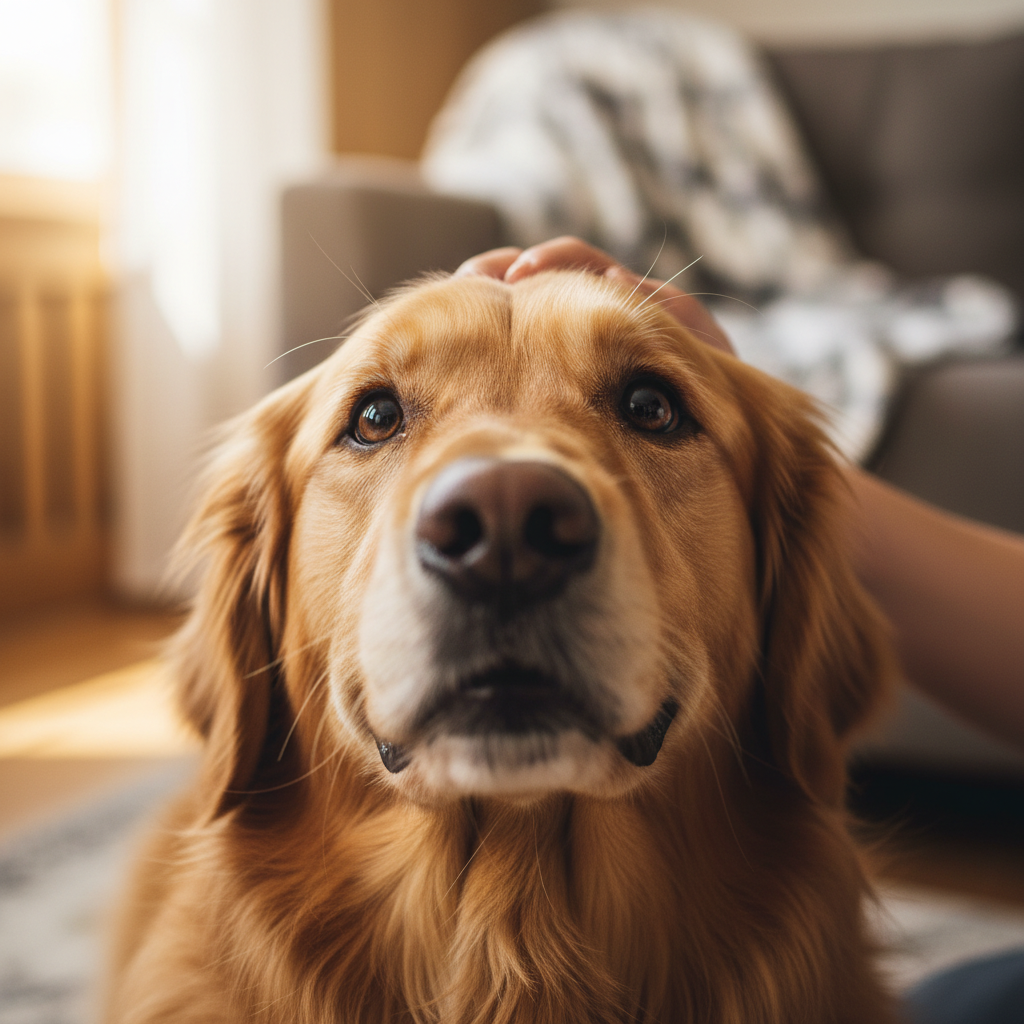
A dog’s eyes can communicate a surprising amount. Direct eye contact can mean different things depending on the context.
- Soft, Relaxed Gaze– When your dog looks at you with soft, slightly squinted eyes, it’s often a sign of affection, trust, and contentment.
- Hard Stare or Wide Eyes– Can indicate a challenge, fear, or aggression. Avoid staring back intensely, as this can be perceived as a threat.
- Averting Gaze– Looking away can be a sign of submission, discomfort, or an attempt to de-escalate a perceived threat.
- “Whale Eye”– When the whites of your dog’s eyes are visible around the iris, it often signals stress, fear, or anxiety.
- Squinting– Can indicate pain, discomfort, or simply relaxation.
Always consider the entire facial expression and body language when interpreting eye signals.
The Symphony of Sounds – Decoding Barks, Whimpers, and Growls
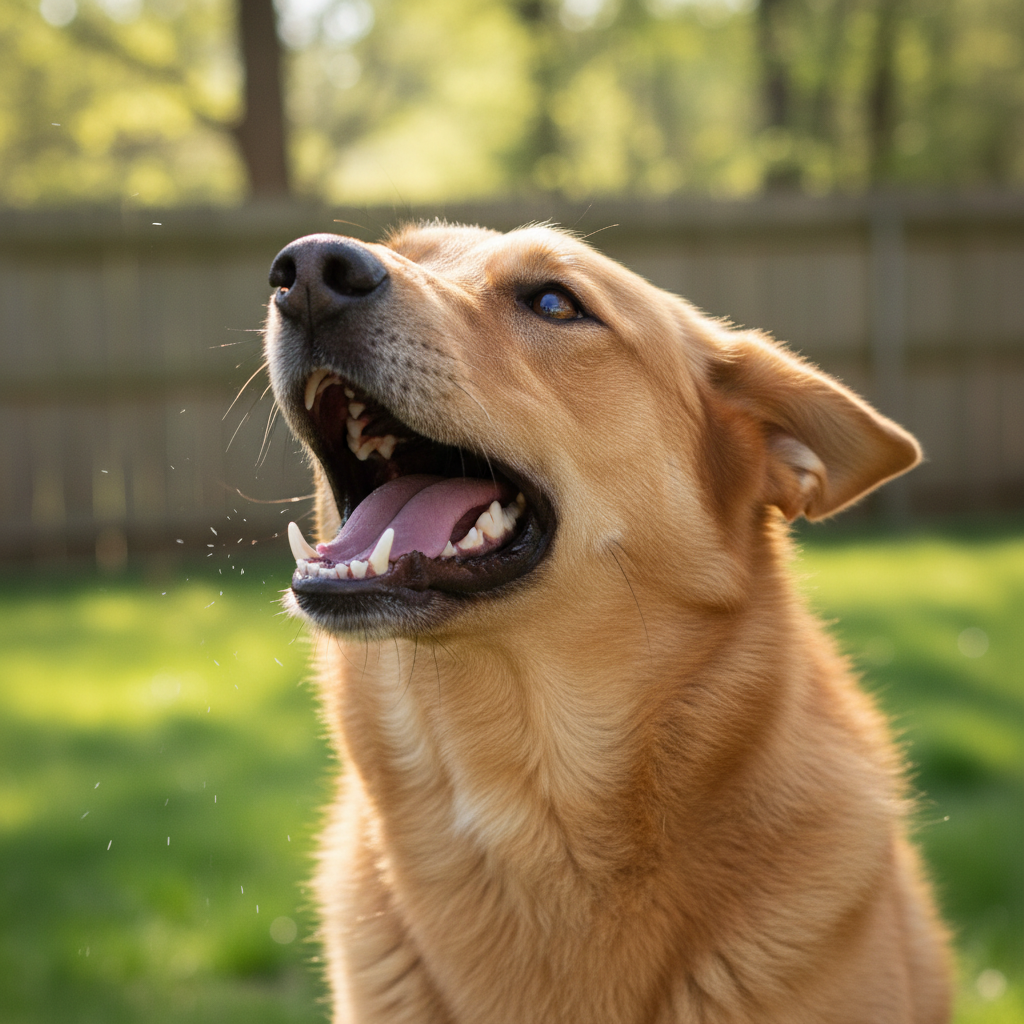
Vocalizations are a direct way your dog tries to get your attention or express a strong emotion. Understanding the context, pitch, and frequency is key.
- Barks– Can mean anything from a greeting, an alarm, an invitation to play, or even boredom. A sharp, high-pitched bark often signals excitement, while a low, sustained bark can be a warning.
- Whimpers or Cries– Usually indicate a need (potty, food, attention), pain, or anxiety. A soft whimper might be seeking comfort.
- Growls– Almost always a warning. It’s your dog saying, “Back off” or “I’m uncomfortable.” Never punish a growl, as it’s a crucial communication signal that prevents a bite.
- Howls– Often a sign of loneliness, seeking attention, or responding to other distant sounds.
- Sighs– Can mean contentment (if relaxed) or resignation (if frustrated).
Listen carefully to the nuances of their sounds. Is it a playful bark or an urgent one?
Mouth and Lip Signals – Subtle Cues You Might Miss
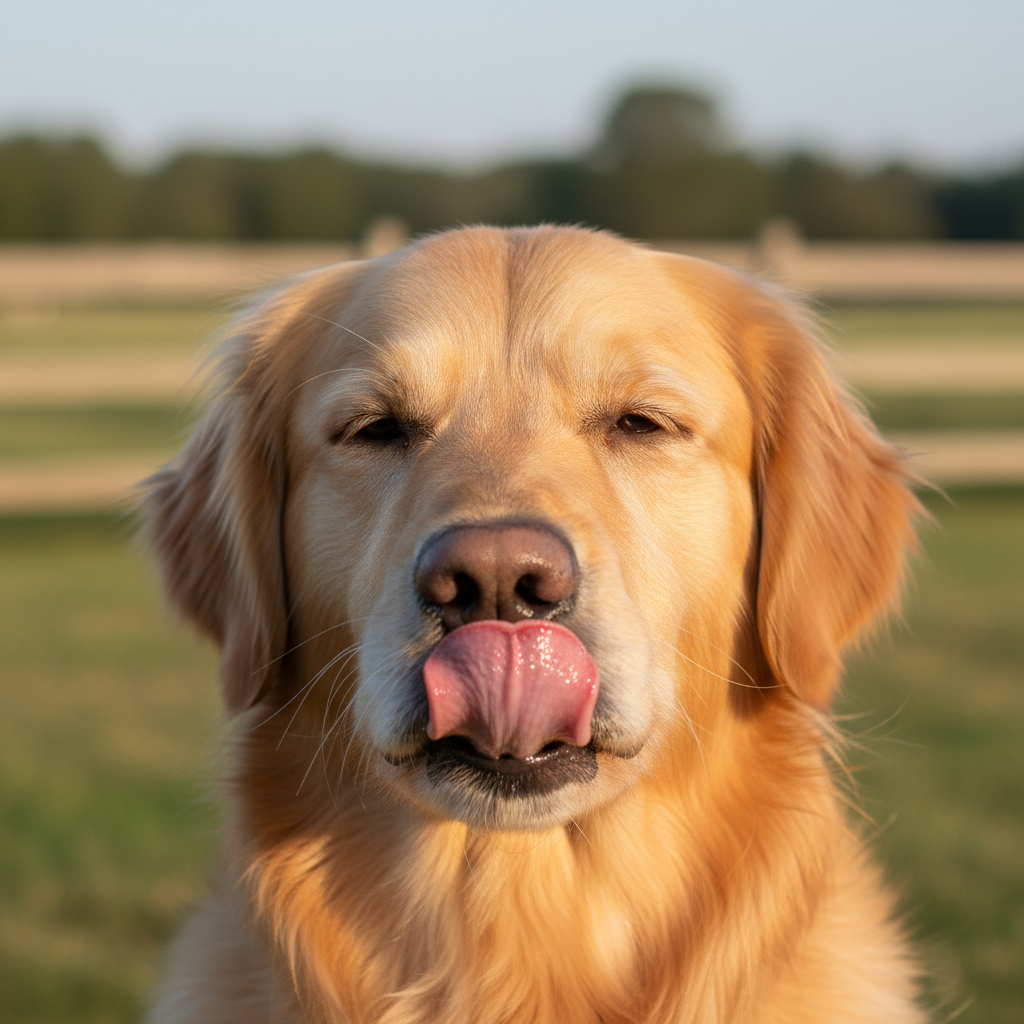
The position of your dog’s mouth and lips, along with tongue movements, are subtle but powerful communicators.
- Relaxed, Slightly Open Mouth– Often seen when a dog is happy and relaxed, sometimes panting gently.
- Licking Lips– Can indicate stress, anxiety, or appeasement, especially if there’s no food around. It’s a common calming signal.
- Yawning– While sometimes a sign of tiredness, it can also be a stress signal, particularly in new or uncomfortable situations.
- Showing Teeth (Snarl)– A clear warning of aggression. Combined with a growl, it’s a serious threat.
- Tight, Closed Mouth– Can indicate tension or discomfort.
Observe these subtle cues closely, as they often precede more overt behaviors.
Paw Power – What Their Paws Are Telling You

While not as varied as other signals, paw movements are direct ways dogs seek interaction or express discomfort.
- Paw Lift– A raised paw can indicate uncertainty, a mild request for attention, or even a sign of discomfort or pain in that paw.
- Paw on You– Often a direct request for attention, petting, or play. Some dogs use it to ‘herd’ you towards what they want.
- Scratching– Can be for an itch, but excessive scratching can also be a sign of stress, anxiety, or an underlying health issue.
- Digging– Instinctual behavior, but can also be a sign of boredom or pent-up energy.
Consider the context: is your dog pawing you while you’re ignoring them, or after a long walk?
Facial Expressions – Beyond the Wag
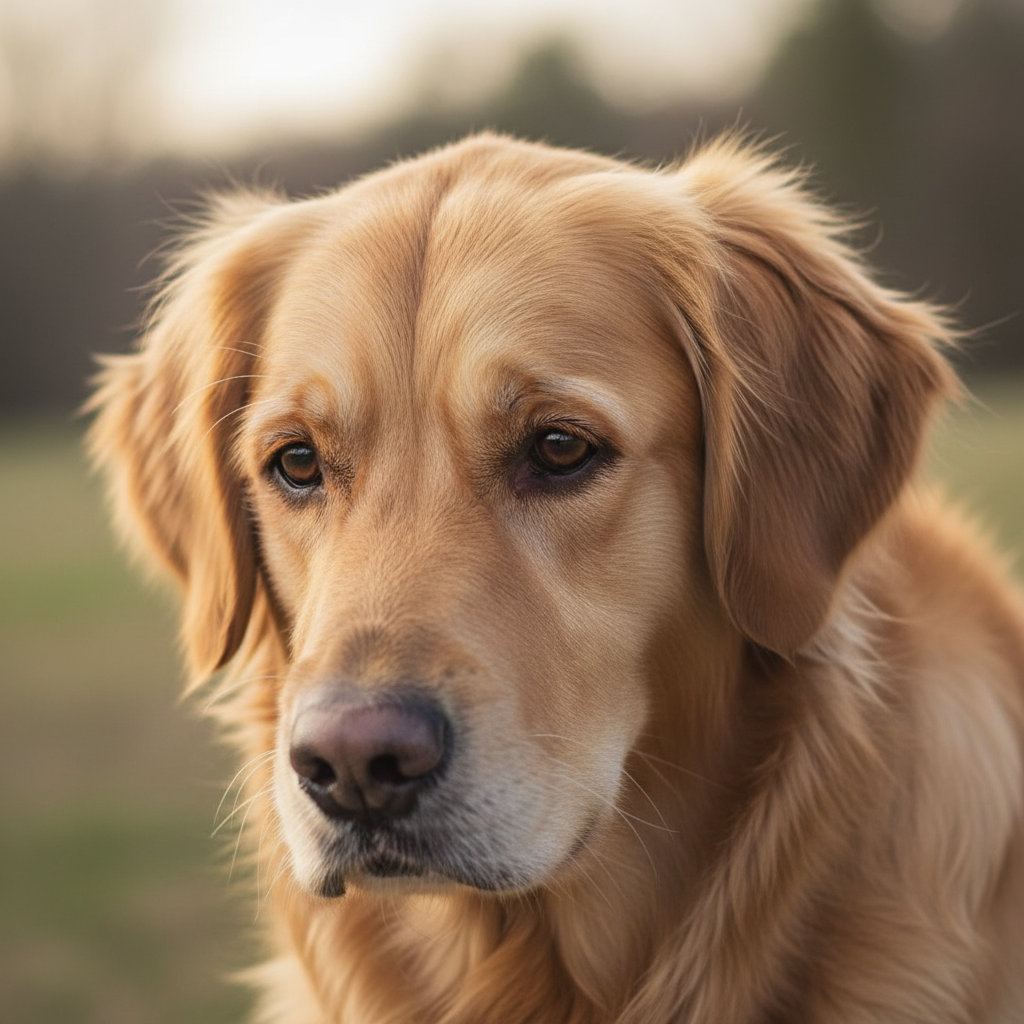
Beyond the eyes and mouth, a dog’s overall facial expression can convey a lot, often reflecting human-like emotions.
- Relaxed Face– Smooth forehead, soft eyes, natural mouth.
- “Worried” or Furrowed Brow– Can indicate confusion, concern, or mild anxiety.
- Pulled Back Lips (without showing teeth)– Often a sign of fear or discomfort, sometimes seen during a grin-like submission.
- “Smiling”– Some dogs appear to smile by pulling back their lips and showing their front teeth, often in a submissive or appeasement gesture.
Combine facial cues with other body signals for the most accurate interpretation.
Understanding Your Dog Transforms Your Bond
Learning to interpret these eight clear signals is like gaining a superpower—the ability to truly understand your dog’s inner world. It’s a journey of observation, patience, and empathy. The more you pay attention to these cues, the better equipped you’ll be to respond to their needs, alleviate their fears, and celebrate their joys.
By becoming fluent in ‘dog-speak,’ you’re not just a pet owner; you’re a true partner, building a stronger, more loving, and profoundly rewarding relationship with your cherished companion. Keep observing, keep learning, and cherish every conversation with your incredible dog