Our dogs bring so much joy, laughter, and unconditional love into our lives. They are truly members of our family, and just like any family member, we want to keep them safe and healthy. Part of being a responsible dog parent means creating a home environment that is not only clean but also free from hidden dangers. One area often overlooked is the cleaning products we use, especially on our floors, where our furry friends spend so much time.
Think about it: your dog walks, plays, and even naps on the floor. They lick their paws, pick up toys, and sometimes even sneak a taste of something they find on the ground. If your floors are cleaned with harsh chemicals, those substances can easily make their way into your dog’s system, leading to skin irritation, respiratory issues, or even more serious health problems. It’s a scary thought, but thankfully, there are wonderful, pet-safe alternatives available.
In this article, we’ll explore why traditional cleaners can be harmful and then dive into six fantastic, pet-safe floor cleaning solutions that will keep your home sparkling and your dog wagging happily.
Why Regular Cleaners Can Be Dangerous for Pets
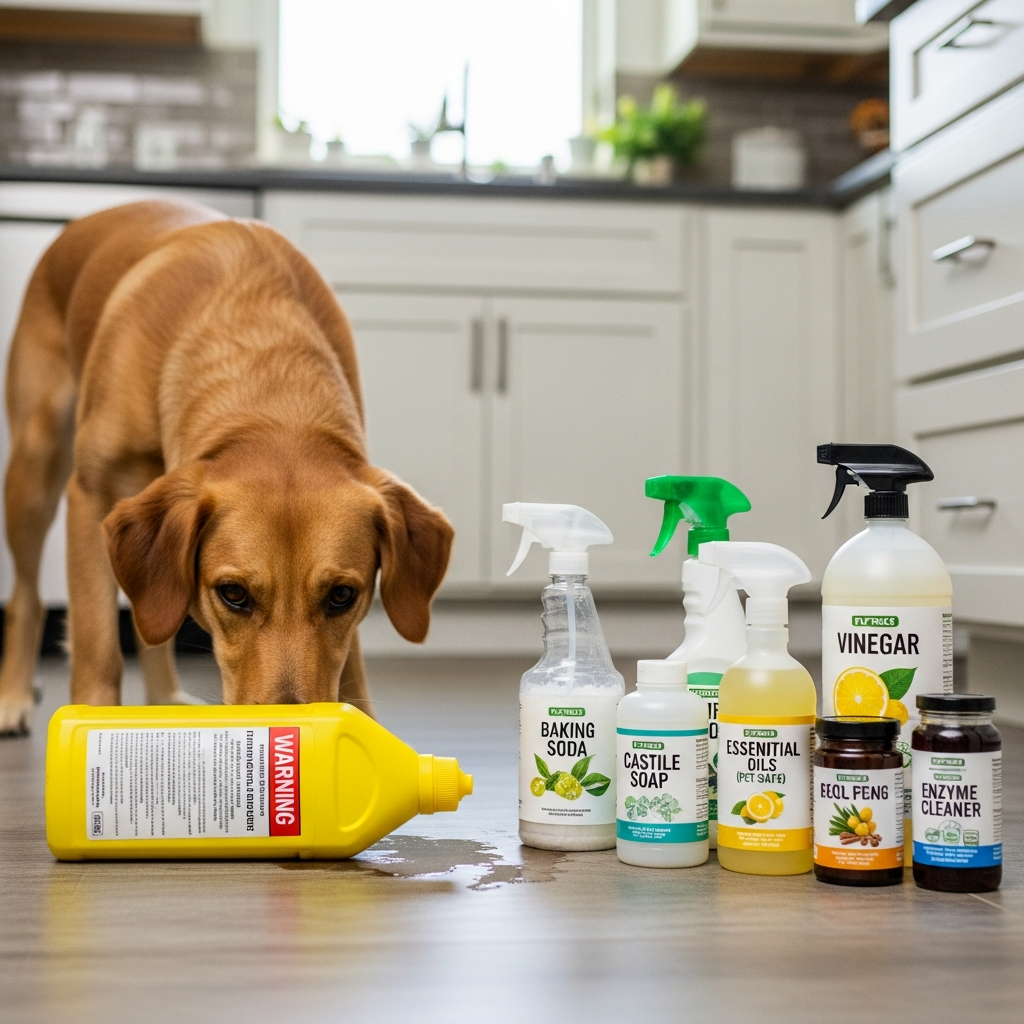
Many conventional household cleaners contain ingredients that are effective against dirt and germs but can be toxic to pets. These chemicals can linger on surfaces, become airborne, or even be absorbed through your pet’s skin.
Common Harmful Ingredients
– Ammonia: Found in many glass and floor cleaners, ammonia can cause respiratory irritation and burns if ingested.
– Bleach: A strong disinfectant, bleach is highly corrosive and can cause severe burns internally and externally. Its fumes are also irritating.
– Phthalates: Often found in fragranced products, these chemicals are linked to endocrine disruption and other health issues in animals and humans.
– Glycol Ethers: These solvents, common in all-purpose cleaners, can cause kidney and liver damage.
– Phenols: Potent disinfectants that can be particularly toxic to cats, but harmful to dogs too, causing liver damage and other issues.
– Formaldehyde: A known carcinogen, sometimes found as a preservative in cleaners.
How Pets Are Exposed
– Paw Contact: Pets walk on recently cleaned floors, picking up chemical residues on their paw pads.
– Licking: They often lick their paws to clean them, or they might lick the floor directly out of curiosity.
– Inhalation: Strong fumes from cleaning products can irritate their sensitive respiratory systems, especially in smaller breeds or those with existing conditions.
– Accidental Ingestion: If a spill isn’t cleaned up properly, or if cleaning products are left within reach, pets might try to taste them.
Potential Health Issues
Exposure to these chemicals can lead to a range of health problems for your dog, including skin rashes, chemical burns, nausea, vomiting, diarrhea, respiratory distress, and in severe cases, organ damage or poisoning. Choosing pet-safe options is not just about cleanliness; it’s about preventative health care for your beloved companion.
What Makes a Floor Cleaner “Pet-Safe”?
A truly pet-safe floor cleaner prioritizes the well-being of your animal companions above all else. When you’re looking for a product or making your own, here’s what to keep in mind:
– Non-Toxic Ingredients: The cleaner should be made from substances that are not harmful if ingested or absorbed. Look for food-grade or plant-derived ingredients.
– Natural and Plant-Based: Ingredients sourced from nature, like vinegar, baking soda, or essential oils (used sparingly and with caution), are generally safer.
– Free from Harsh Chemicals: Avoid products containing ammonia, bleach, phosphates, phthalates, parabens, synthetic fragrances, and dyes.
– Biodegradable: These products break down naturally, which is not only good for your pets but also for the environment.
– No Strong Fumes: Strong odors can irritate a pet’s sensitive nose and lungs. Opt for unscented or naturally scented options.
– Quick Drying: Cleaners that dry quickly reduce the time your pet might come into contact with a wet, cleaned surface.
Always make it a habit to read product labels carefully, even those marketed as “natural.” When in doubt, simpler, DIY solutions are often the best and safest choice.
Our Top 6 Pet-Safe Floor Cleaning Solutions
Now let’s get to the good stuff! Here are our favorite, tried-and-true methods for keeping your floors spotless and your pets safe.
1. White Vinegar and Water Solution (The Classic Go-To)
White vinegar is a powerhouse natural cleaner, disinfectant, and deodorizer. It’s acidic, which helps break down grime and kill many types of bacteria and mold without harming your pets.
How to Use
– General Cleaning: Mix equal parts white vinegar and warm water in a spray bottle or mop bucket.
– For Tougher Jobs: You can use a slightly stronger vinegar-to-water ratio, like 2 parts water to 1 part vinegar.
– Application: Spray directly onto floors and wipe with a clean cloth or sponge mop. For mopping, simply dip your mop into the bucket solution and wring it out well before mopping.
– Rinsing: For most sealed hard floors, rinsing isn’t necessary, as the vinegar smell dissipates quickly. If you prefer, a quick wipe with plain water can follow.
Pros & Cons
– Pros: Inexpensive, readily available, natural disinfectant, deodorizes effectively, great for cutting through grease and grime.
– Cons: Has a distinct, though temporary, smell. Not recommended for unsealed hardwood floors, natural stone (like marble or granite), or grout, as the acidity can etch or damage the surface over time.
2. Baking Soda Power (The Gentle Scrubber & Deodorizer)
Baking soda, or sodium bicarbonate, is a mild abrasive and an excellent natural deodorizer. It’s fantastic for tackling odors and gentle scrubbing tasks.
How to Use
– For Odors: Sprinkle a generous amount of baking soda over carpets or hard floors where odors linger. Let it sit for at least 15-30 minutes (or longer for deep odors), then vacuum it up thoroughly.
– For Stains and Grout: Make a paste by mixing baking soda with a little water. Apply the paste to the stained area or grout lines, let it sit for a few minutes, then gently scrub with a brush. Wipe clean with a damp cloth.
– As an Additive: Add a quarter cup of baking soda to your vinegar and water mop solution for an extra cleaning and deodorizing boost.
Pros & Cons
– Pros: Superb for absorbing and neutralizing odors, gentle abrasive for scrubbing, safe for almost all surfaces, very affordable.
– Cons: Can leave a powdery residue if not vacuumed or wiped thoroughly. Not a primary liquid cleaner on its own.
3. Dr. Bronner’s (or similar) Castile Soap
Castile soap is a concentrated, plant-based soap made from vegetable oils. It’s biodegradable, non-toxic, and incredibly versatile, making it a wonderful pet-safe cleaning option. Always choose the unscented variety for pet homes.
How to Use
– Dilution: For general floor cleaning, add just a few drops (about 1-2 tablespoons) of unscented liquid Castile soap to a bucket of warm water (around 1-2 gallons). A little goes a long way!
– Application: Dip your mop into the diluted solution, wring it out well, and mop your floors as usual.
– Rinsing: For most sealed surfaces, a light rinse with plain water afterward can prevent any potential film buildup, especially if you used a bit too much soap.
Pros & Cons
– Pros: Highly concentrated and economical, effective on dirt and grease, biodegradable, gentle on hands and surfaces.
– Cons: Can leave a slight film if too much is used or if not rinsed, requires careful dilution. Avoid on unsealed wood.
4. Targeted Enzyme Cleaners (For Pet Stains and Odors)
Enzyme cleaners are specifically designed to break down organic matter like urine, feces, vomit, and blood. They don’t just mask odors; they eliminate them at the source by destroying the odor-causing molecules, making them indispensable for pet parents.
How to Use
– Blot First: For fresh accidents, first blot up as much of the liquid or solid mess as possible with paper towels or an old cloth.
– Saturate: Apply the enzyme cleaner directly to the stained and soiled area, making sure to saturate it completely. Follow the product’s instructions for how much to use.
– Dwell Time: Allow the cleaner to sit and work for the recommended dwell time, which can range from 10 minutes to several hours, or even overnight, depending on the severity and age of the stain. You might cover it with a damp cloth to prevent drying.
– Wipe Away: Blot up the remaining liquid and residue. You may need to scrub gently with a brush if the stain is stubborn.
– Allow to Dry: Let the area air dry completely. The enzymes continue to work as long as the area is moist.
Pros & Cons
– Pros: Effectively eliminates pet odors and stains by breaking down organic matter, discourages re-marking by removing scent cues, safe for most surfaces when used as directed.
– Cons: Can be more expensive than DIY solutions, often requires longer dwell times, specific for organic messes, so not a general all-purpose cleaner.
5. The Power of Steam (Chemical-Free Deep Clean)
A steam cleaner uses only water and high heat to sanitize and clean various surfaces. It’s an excellent chemical-free option for deep cleaning and disinfecting.
How to Use
– Fill with Water: Fill the steam cleaner’s reservoir with distilled water. This prevents mineral buildup in your machine.
– Attach Accessory: Choose the appropriate attachment for your floor type (e.g., floor nozzle for hard floors, carpet glider for rugs).
– Steam Away: Follow the manufacturer’s instructions for using your specific steam cleaner. Move the cleaner slowly over the floor surface, allowing the steam to penetrate and clean.
– No Chemicals: The beauty of steam cleaning is that it uses no chemicals at all, making it inherently pet-safe.
Pros & Cons
– Pros: Kills 99.9% of bacteria, viruses, and germs without chemicals, deep cleans and sanitizes, effective on sealed hard floors (tile, vinyl, sealed wood) and can refresh carpets/rugs.
– Cons: Initial investment for the machine, not suitable for unsealed or moisture-sensitive flooring (e.g., some laminates, unsealed hardwood), can be time-consuming for large areas.
6. Pure Microfiber and Water (Simple and Effective)
Sometimes the simplest solutions are the best. A high-quality microfiber mop or cloth combined with plain water can do wonders for daily cleaning and maintaining clean floors.
How to Use
– Dampen: Simply dampen your microfiber mop pad or cloth with warm water. You don’t need it soaking wet, just thoroughly damp.
– Mop/Wipe: Mop your floors as usual. The unique fibers of microfiber are incredibly effective at trapping dirt, dust, pet hair, and even some microbes, without the need for chemicals.
– Rinse and Wring: Rinse the mop pad or cloth frequently in clean water and wring it out well to continue cleaning effectively.
Pros & Cons
– Pros: Absolutely no chemicals involved, making it 100% pet-safe. Excellent at picking up dust, dirt, and pet hair. Environmentally friendly and cost-effective as microfiber pads are washable and reusable.
– Cons: May not sanitize as deeply as steam or kill as many germs as vinegar. Less effective on tough, dried-on stains or deep-set grime. Best for daily maintenance rather than heavy-duty cleaning.
Important Cleaning Practices for a Pet-Friendly Home
Beyond choosing the right products, how you clean also plays a big role in maintaining a healthy home for your dog.
Vacuum Frequently
Regular vacuuming is crucial, especially if you have a dog that sheds. This removes pet hair, dander, dust, and loose dirt before you even begin wet cleaning, making your cleaning more effective and reducing allergens.
Wipe Up Spills Immediately
Accidents happen. Whether it’s a knocked-over water bowl or a potty mishap, cleaning it up right away prevents stains from setting and reduces the chances of odors lingering, which can tempt your dog to repeat marking.
Proper Ventilation
Even with pet-safe cleaners, it’s a good idea to open windows or use fans during and after cleaning to ensure good air circulation. This helps any moisture dry quickly and dissipates any mild natural odors, like vinegar.
Store Cleaning Supplies Safely
Always keep all cleaning products, whether pet-safe or not, in securely latched cabinets or on high shelves where your dog cannot reach them. Childproof locks work just as well for curious pups!
Choose Pet-Safe Tools
Consider investing in a good quality vacuum cleaner with a HEPA filter to trap allergens and a durable, easy-to-clean mop. Microfiber mops are excellent for pet homes because they are washable and highly effective at picking up pet hair.
Regular Grooming
Keeping your dog well-groomed reduces shedding, dander, and tracked-in dirt, making your floor cleaning efforts much easier and more effective. Brush them regularly and wipe their paws when they come inside.
DIY Pet-Safe Cleaning Recipe Summary
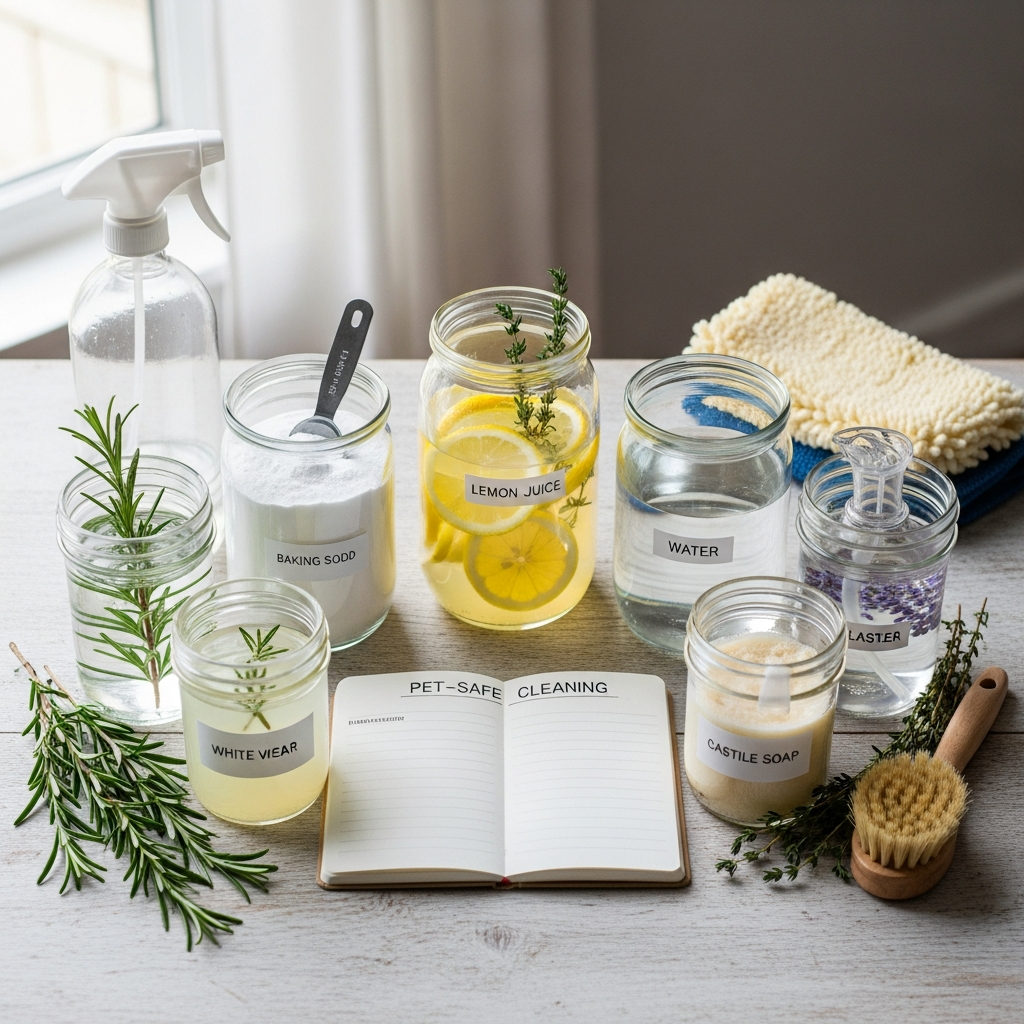
Here’s a quick overview of our top DIY solutions to help you keep track:
| Solution Name | Ingredients | Key Benefit | Best For |
| Vinegar & Water | White vinegar, water | Disinfecting, deodorizing, general cleaning | Sealed hard floors, tackling grime |
| Baking Soda | Baking soda | Deodorizing, gentle scrubbing | Carpets, grout, odor absorption |
| Castile Soap | Unscented liquid Castile soap, water | Versatile, effective on grease, mild cleaning| Sealed hard floors, general cleaning |
| Enzyme Cleaners | (Commercial pet-safe enzyme cleaner) | Breaking down organic pet messes, odors | Pet stains on floors, carpets, upholstery |
| Steam Cleaner | Water | Chemical-free deep cleaning, sanitizing | Sealed hard floors, tiles, some carpets |
| Microfiber & Water | Water, microfiber mop/cloth | Dust and dirt removal, chemical-free | All hard floors, light cleaning |