7 Must-Know Puppy Proofing Tips for First-Time Dog Owners
Bringing a new puppy into your home is an incredibly exciting time! The pitter-patter of tiny paws, the adorable puppy breath, and endless cuddles fill your days with joy. But amidst all the excitement, there’s a crucial step many first-time dog owners might overlook: puppy proofing your home. Just like baby proofing for a toddler, preparing your living space for a curious, energetic puppy is absolutely essential for their safety and your peace of mind.
Puppies are natural explorers. They learn about the world through their mouths, which means anything and everything is fair game for a good chew. Unfortunately, many common household items can pose serious dangers, from electrical shocks and choking hazards to toxic substances. This guide will walk you through seven must-know puppy proofing tips to ensure your home is a safe haven for your new furry family member.
Why Puppy Proofing Matters
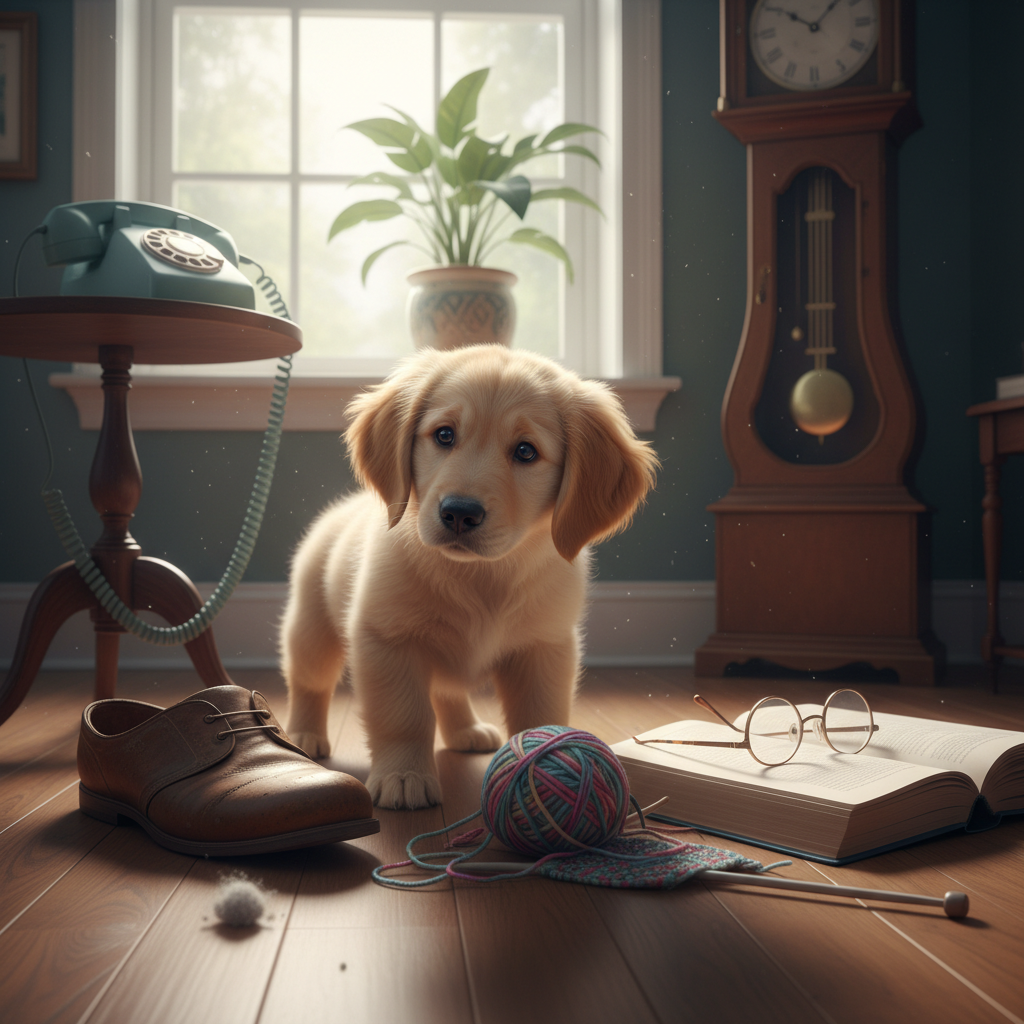
Imagine a tiny, furry tornado with razor-sharp teeth and an insatiable curiosity. That’s essentially what a new puppy is! Their instinct to chew and explore is powerful, and they don’t understand what’s safe or dangerous. A simple electrical cord can look like a fun chew toy, and a dropped pill can be mistaken for a treat. Puppy proofing isn’t about curbing their natural instincts; it’s about redirecting them and removing potential threats from their environment. It prevents costly vet visits, protects your belongings, and most importantly, keeps your beloved puppy healthy and happy.
Tip 1 – Secure Electrical Cords and Outlets
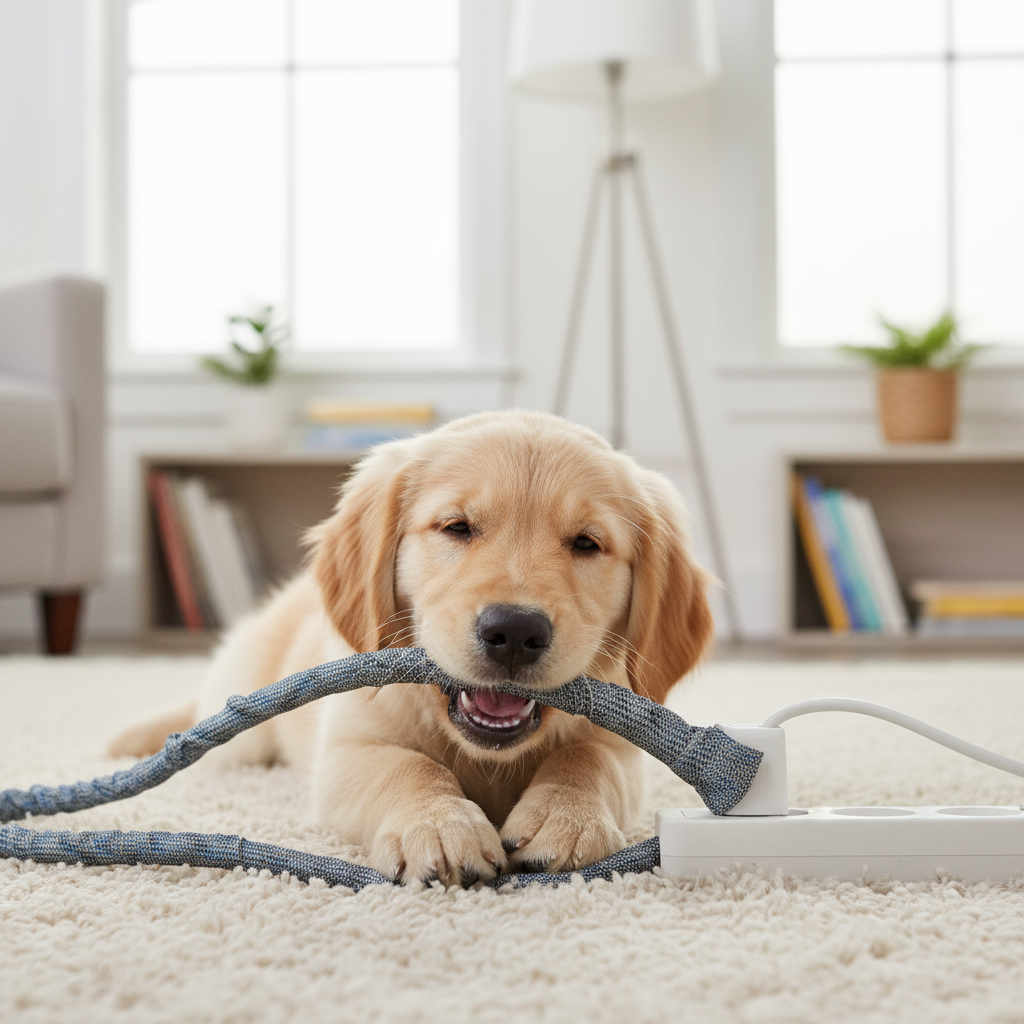
Electrical cords are one of the biggest dangers to a curious puppy. They often resemble appealing chew toys, but a bite through a live wire can cause severe burns, electric shock, or even death. Outlets also pose a risk if a puppy tries to lick or chew them.
How to secure them
- Cover Cords: Use cord protectors or covers to encase loose wires. These durable covers make cords unappealing and inaccessible for chewing.
- Hide Wires: Bundle and secure cords behind heavy furniture, using cable ties or clips to keep them off the floor and out of reach.
- Unplug Unused Appliances: If an appliance isn’t in use, unplug it and store the cord safely.
- Use Outlet Covers: Just like for human babies, place plastic safety caps in unused electrical outlets to prevent curious noses and tongues from investigating.
Tip 2 – Clear Away Small Hazards
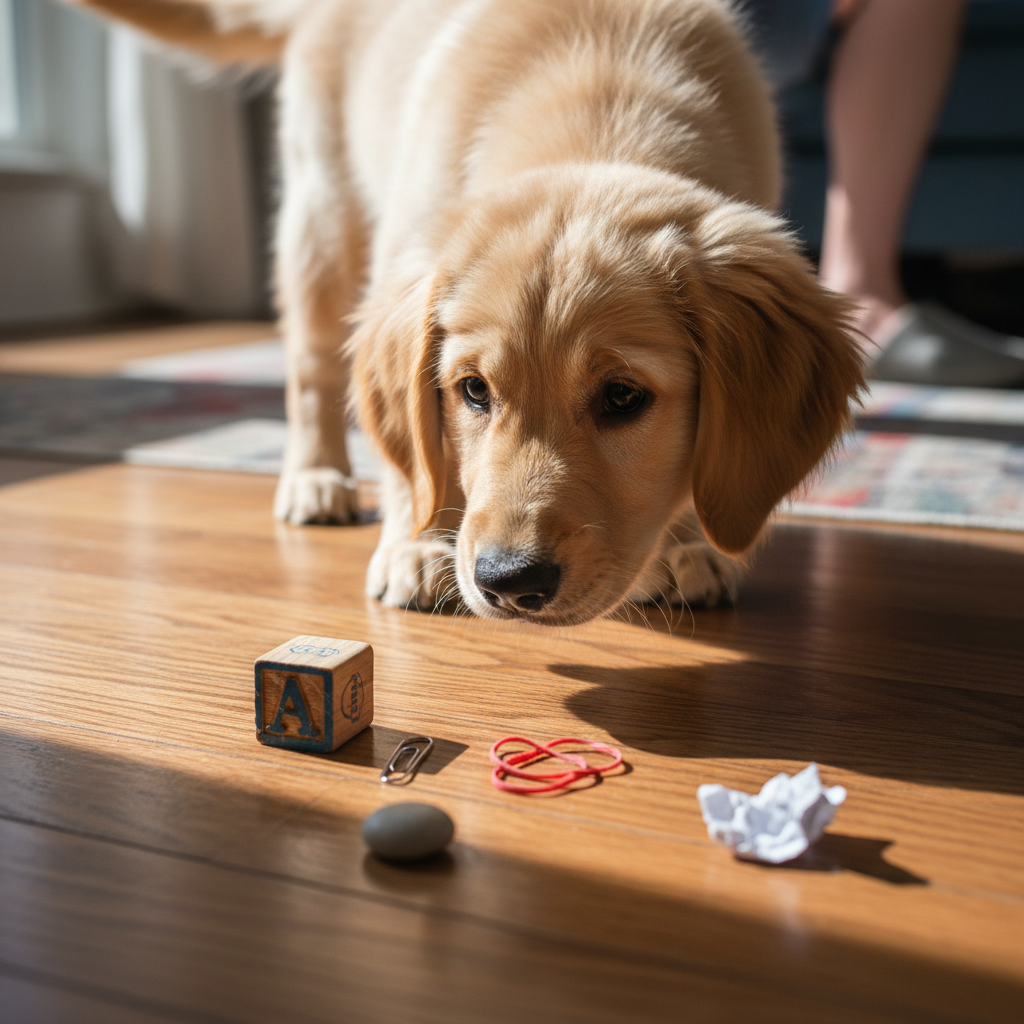
Puppies are notorious for putting anything and everything in their mouths. Small objects can easily become choking hazards or cause internal blockages if swallowed. What might seem insignificant to you can be a major danger to a small pup.
What to look out for
- Small Toys and Games: Children’s toys, especially those with small parts, can be dangerous.
- Coins, Batteries, and Hair Ties: These are common culprits found on floors and low surfaces. Batteries are particularly dangerous due to corrosive leakage.
- Rubber Bands and Paper Clips: Easily swallowed and can cause digestive issues.
- Jewelry and Keys: Often left on coffee tables or nightstands.
- Loose Socks or Underwear: These can be swallowed and cause intestinal blockages.
Make it a habit to regularly scan your floors and low surfaces, ensuring they are free of any tempting, tiny items. Encourage everyone in the household to be mindful of what they leave lying around.
Tip 3 – Lock Up Chemicals and Medications
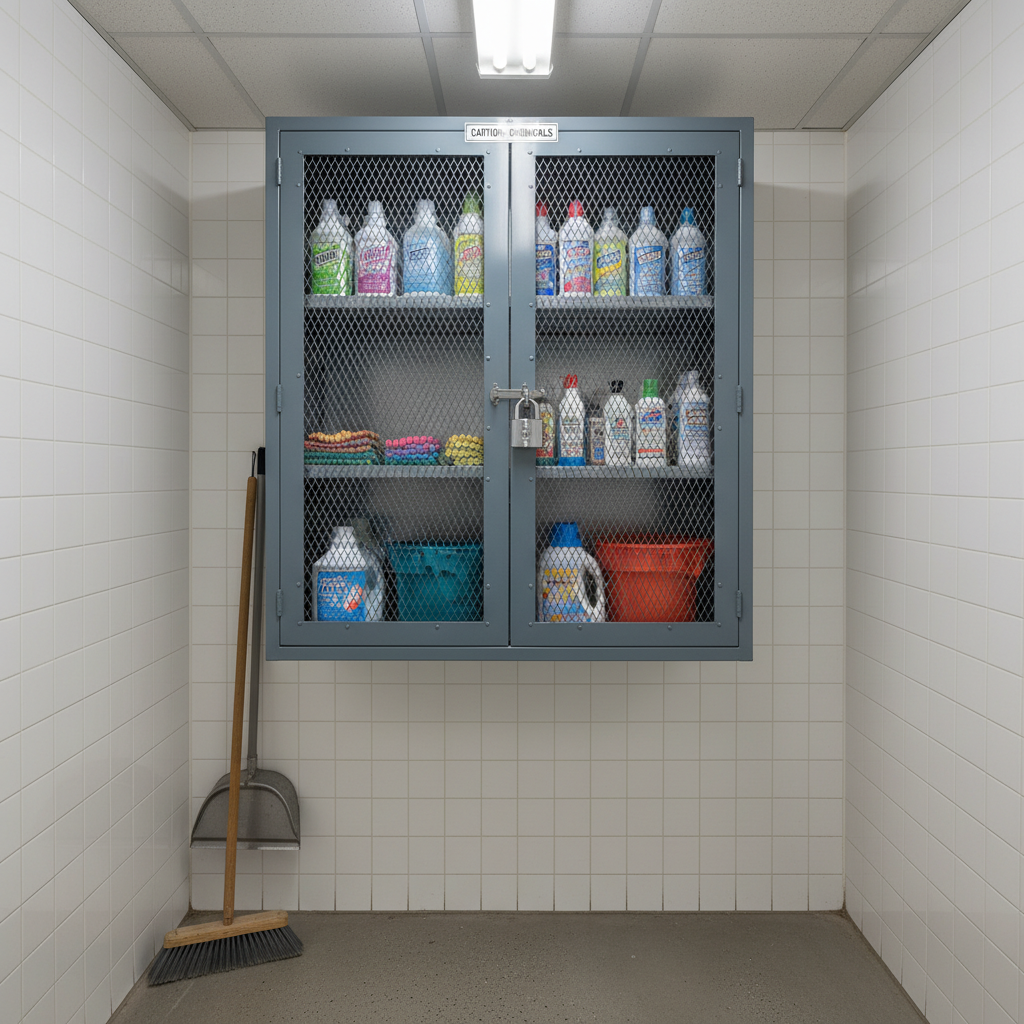
Household chemicals and human medications are highly toxic to dogs. Even small amounts can lead to severe poisoning, organ damage, or death. Puppies are attracted to interesting smells and liquids, making these items especially dangerous.
Where to store dangerous items
- Cleaning Supplies: All detergents, bleaches, floor cleaners, and disinfectants should be stored in high, locked cabinets. Never leave them on the floor or under the sink unless it’s secured.
- Pest Control Products: Mouse traps, rat poison, slug pellets, and insecticides are extremely toxic. Store them in inaccessible areas and use pet-safe alternatives if possible.
- Human Medications: Keep all prescription and over-the-counter medicines (pills, liquids, creams) in secure, high cabinets. A dropped pill can be swallowed in an instant.
- Automotive Fluids: Antifreeze, oil, and other garage chemicals are lethal. Ensure garage doors are closed and containers are tightly sealed and out of reach.
Always clean up spills immediately and thoroughly, as even residue can be harmful.
Tip 4 – Protect Your Furniture and Valuables
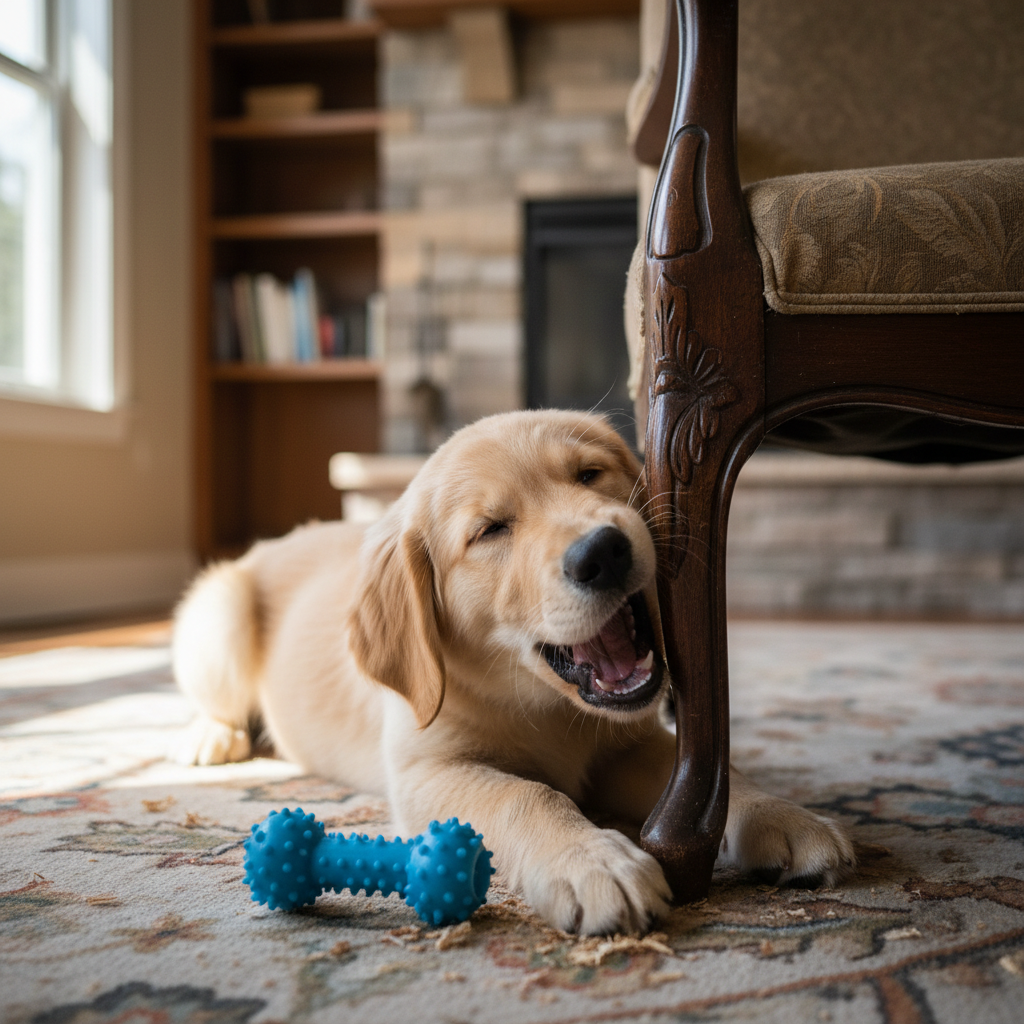
Puppies explore with their mouths, and that often means chewing on furniture legs, shoes, remote controls, books, and anything else they can get their teeth on. This not only damages your belongings but can also be harmful to the puppy if they ingest splinters or pieces of non-food items.
How to safeguard your belongings
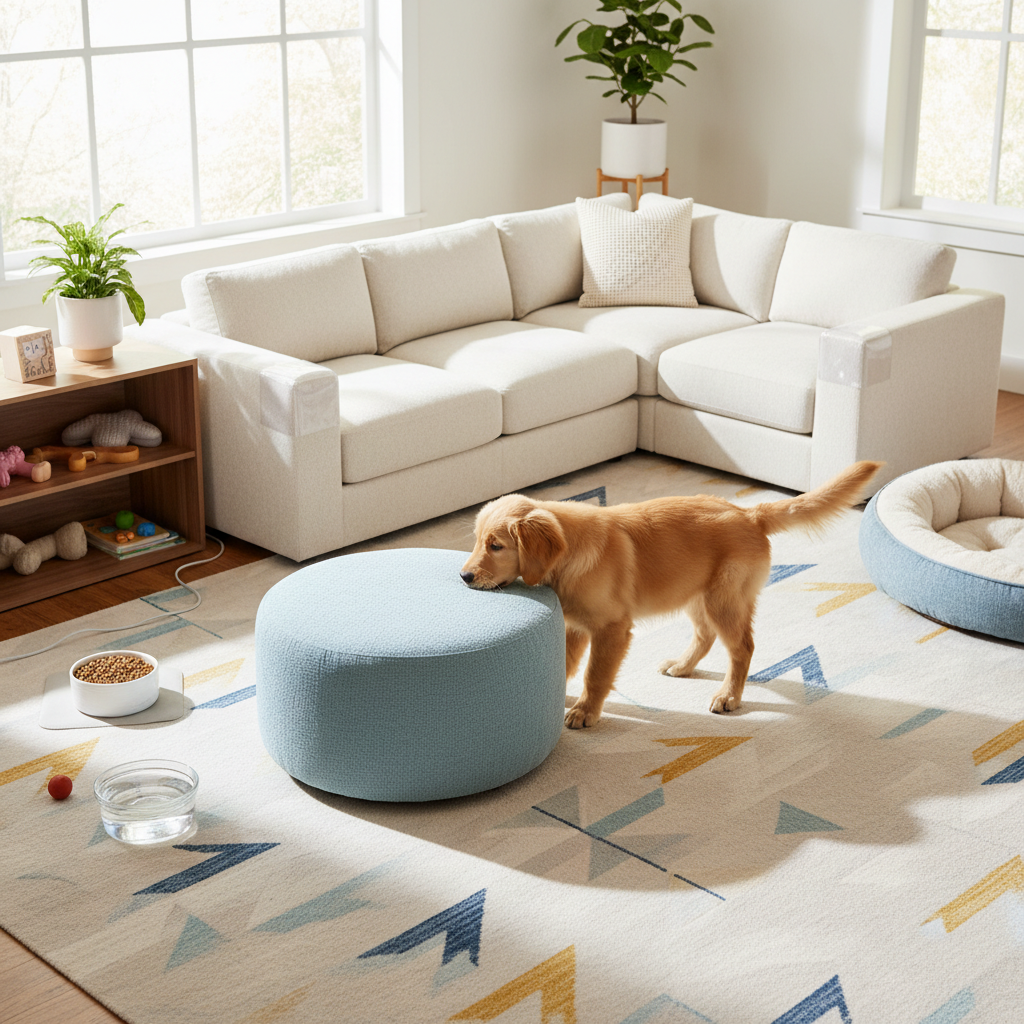
- Bitter Apple Spray: Apply a pet-safe bitter spray to furniture legs, baseboards, or other items your puppy might be tempted to chew. The unpleasant taste often deters them.
- Provide Plenty of Chew Toys: Offer a variety of appropriate chew toys to satisfy their natural urge to chew. Rotate them regularly to keep things interesting.
- Restrict Access: Use baby gates or close doors to rooms where valuable or easily damaged items are kept when you can’t supervise your puppy directly.
- Elevate Valuables: Keep shoes, remote controls, books, and personal items off the floor and on higher surfaces.
Consistency is key. Redirect your puppy to an appropriate chew toy every time you catch them chewing on something they shouldn’t.
Tip 5 – Create a Safe Puppy Zone
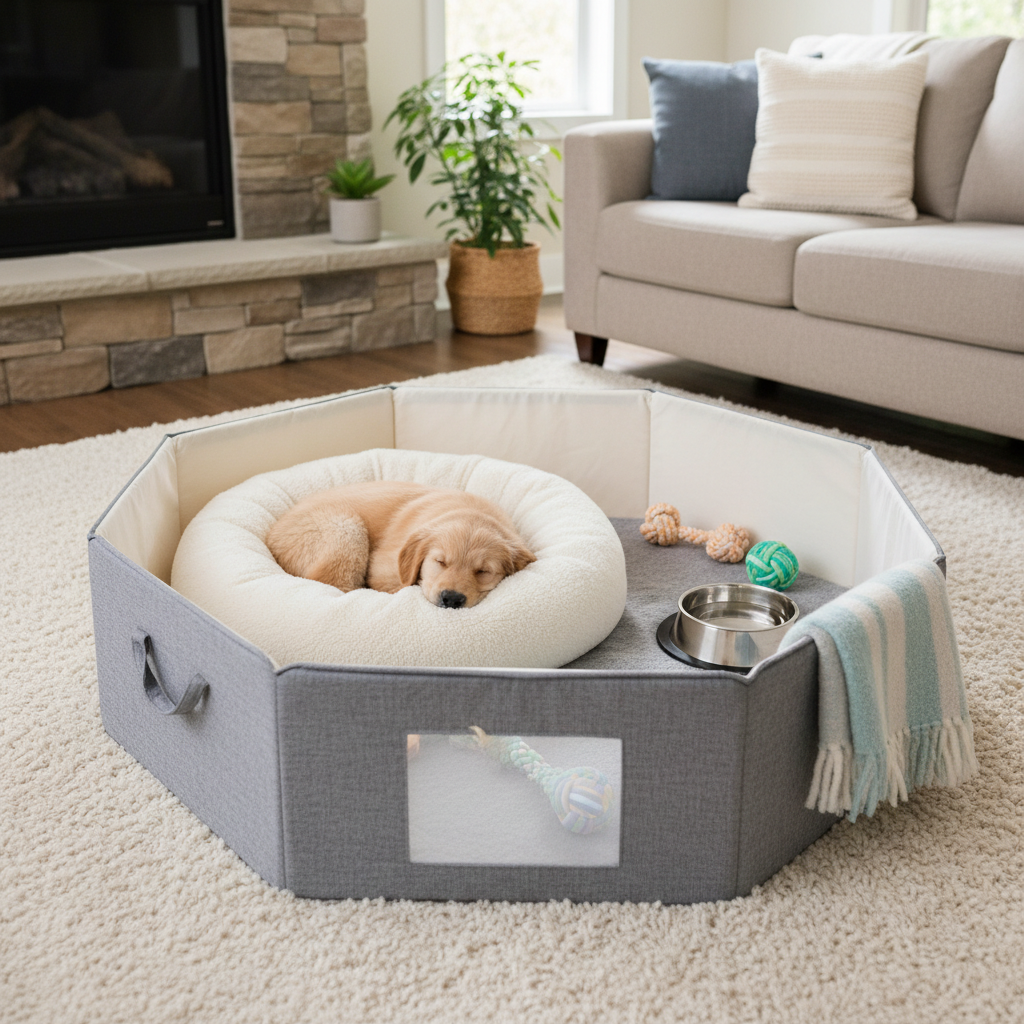
Even with the most thorough puppy proofing, you can’t watch your puppy every single second. Creating a designated safe zone for them is invaluable, especially when you need to leave them unsupervised for short periods or at night.
Setting up their safe space
- Crate Training: A crate can become a comfortable, secure den for your puppy. Ensure it’s the right size and has a soft bed, water, and safe toys.
- Playpen: A puppy playpen offers more space than a crate but still contains your puppy in a safe, controlled environment.
- Gated Room: Choose a room that is easily puppy proofed (e.g., a laundry room or kitchen with tile floors) and use a baby gate to restrict access. Ensure there are no accessible hazards within this room.
This safe zone should be a positive place for your puppy, never used for punishment. It gives them a sense of security and prevents them from getting into trouble when you’re not actively supervising.
Tip 6 – Secure Trash Cans and Food Storage
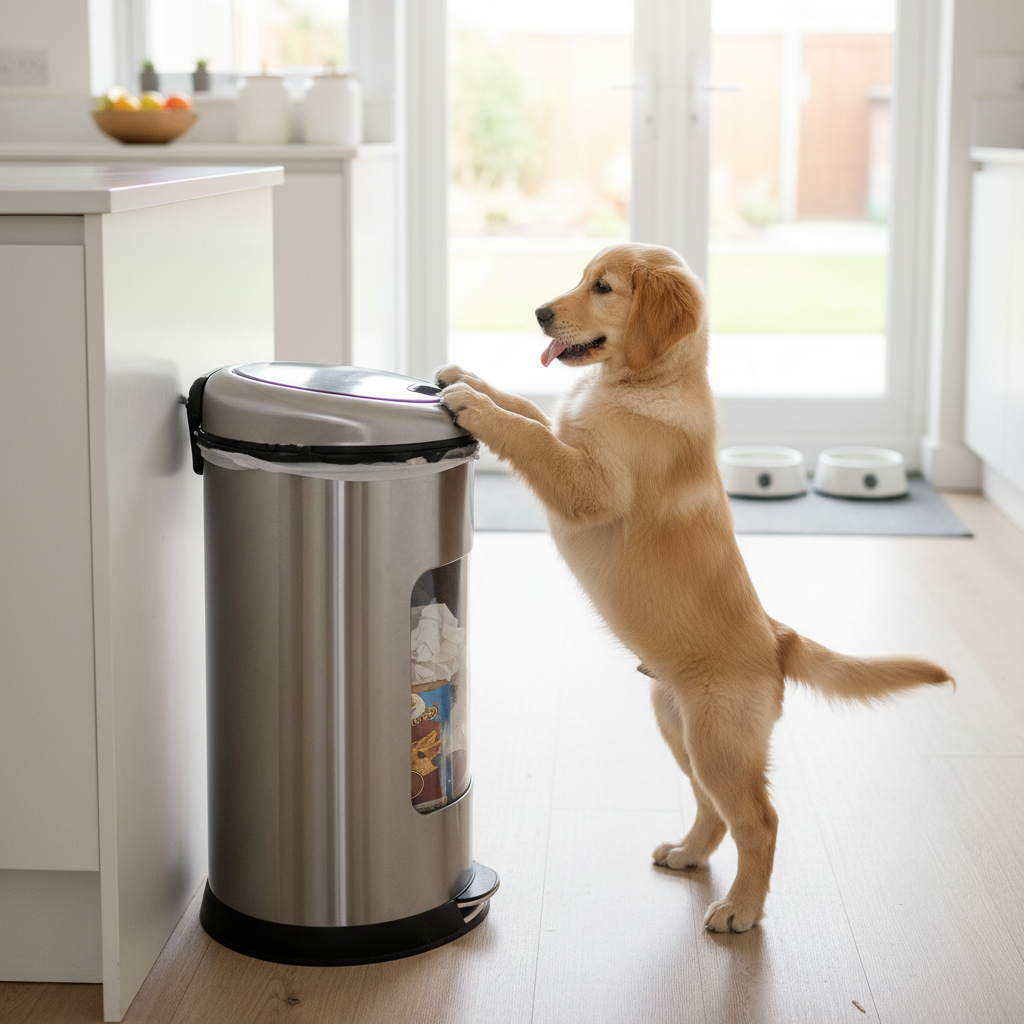
Trash cans are like treasure chests to a puppy, full of interesting smells and potential snacks. However, they often contain spoiled food, bones, coffee grounds, and other items that are toxic or dangerous if ingested. Similarly, unattended human food can be a serious health risk.
Preventing access to food and trash
- Lidded Trash Cans: Invest in heavy, lidded trash cans that your puppy cannot easily knock over or open. Pedal-operated bins or those with locking mechanisms are ideal.
- Secure Pantry and Cabinets: Use childproof locks or latches on pantry doors and low cabinets where food, cleaning supplies, or pet food is stored.
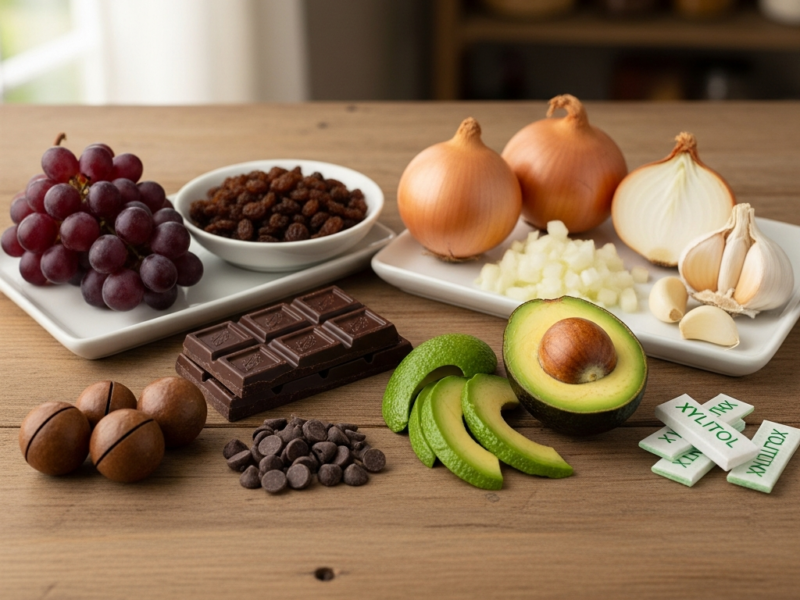
- Don’t Leave Food Unattended: Never leave human food on counters or low tables where a puppy can reach it. Even seemingly harmless foods can be toxic (e.g., chocolate, grapes, onions).
- Pet Food Storage: Store your puppy’s food in sealed containers to prevent them from overeating or accessing it at will.
Counter surfing can become a habit if not addressed early. Consistent training and keeping surfaces clear will help.
Tip 7 – Check Your Outdoor Space
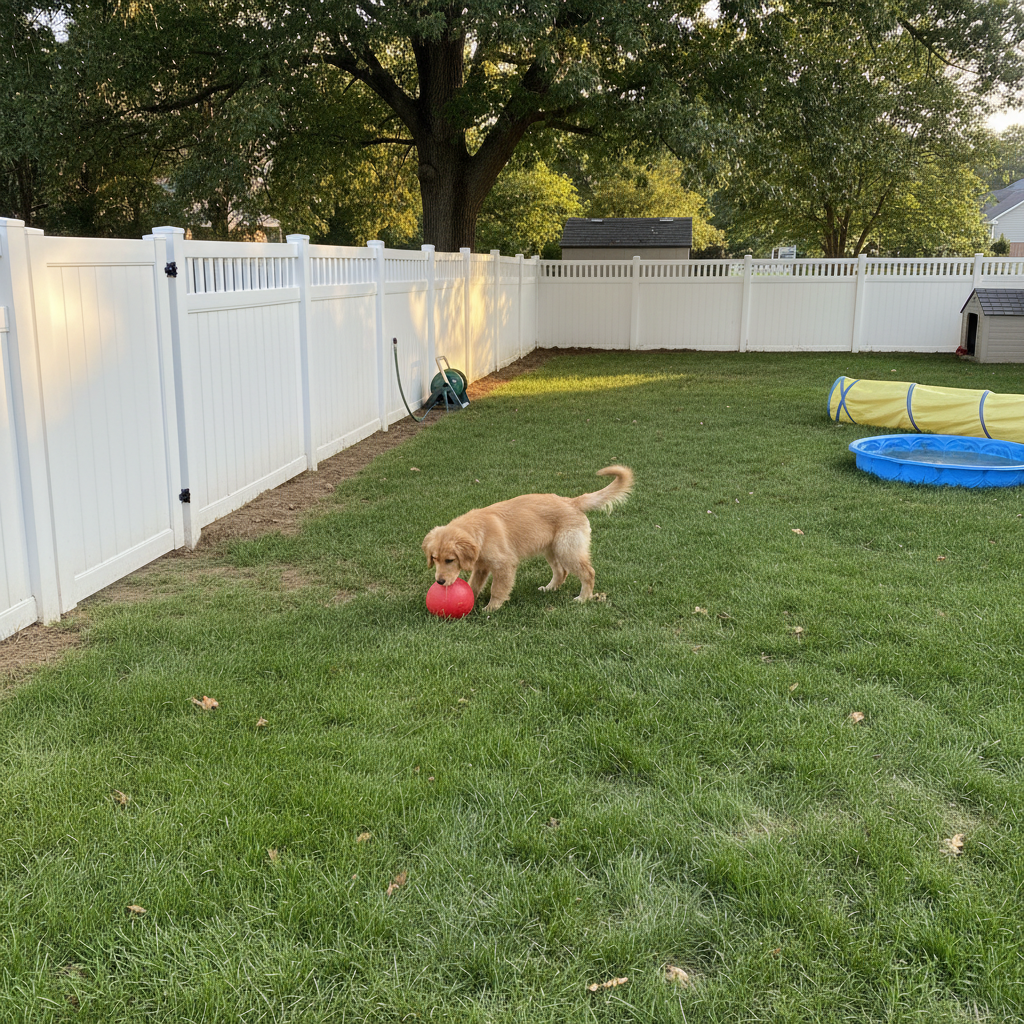
Puppy proofing isn’t just for indoors; your backyard or any outdoor space your puppy will access needs attention too. The outdoor world presents a whole new set of potential dangers.
Outdoor safety considerations
- Secure Fencing: Inspect your fence for any gaps, loose boards, or areas where a small puppy could squeeze under or through. Ensure gates are secure and latched.
- Toxic Plants: Research common plants that are toxic to dogs (e.g., sago palm, azaleas, lilies) and remove them from your yard or restrict access.
- Garden Chemicals: Store fertilizers, pesticides, and weed killers in locked sheds or garages. Clean up any spills immediately.
- Small Objects: Clear the yard of rocks, small toys, tools, or any other items a puppy might try to eat.
- Water Hazards: If you have a pool or pond, ensure it’s fenced off or covered to prevent accidental falls.
Always supervise your puppy when they are outside, especially in a new environment, until you are confident the space is completely safe.
A Safe Start for Your Furry Friend
Puppy proofing your home is an act of love and responsibility. It might seem like a lot of work initially, but the effort you put in now will save you countless worries, potential emergencies, and costly vet bills down the line. Remember, puppies are like toddlers – endlessly curious and prone to getting into mischief. By proactively removing hazards and creating a safe environment, you’re setting your new furry family member up for a happy, healthy, and secure start in their new home.
Embrace this exciting journey with patience, vigilance, and lots of love. Your puppy will thank you for providing a safe space where they can explore, learn, and grow without danger. Enjoy every precious moment with your new best friend!