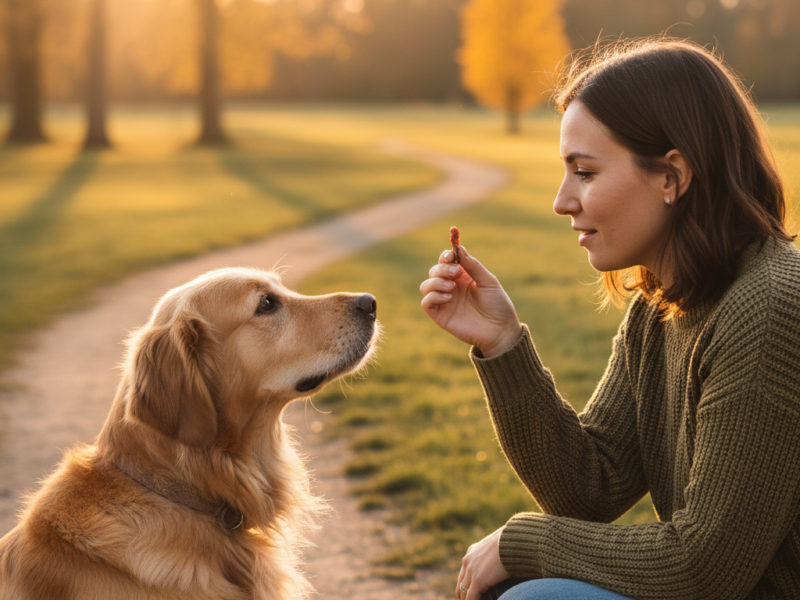
Traveling with our furry family members can be one of life’s greatest joys. Imagine sharing new sights and experiences with your beloved dog by your side! While road trips are a common choice, rail journeys offer a unique, often more relaxing way to travel, allowing you to enjoy the scenery without the stress of driving. However, taking your pet on a train requires careful planning and preparation to ensure everything goes off without a hitch. As a dedicated dog parent, you want to make sure your companion is safe, comfortable, and happy throughout the adventure.
This guide will walk you through six crucial tips to help you navigate the world of pet-friendly rail travel. From understanding booking policies to packing the right essentials and keeping your pet calm on board, we’ll cover everything you need to know for a smooth and enjoyable trip for both you and your four-legged friend.
1- Research and Book Smartly for Pet Travel
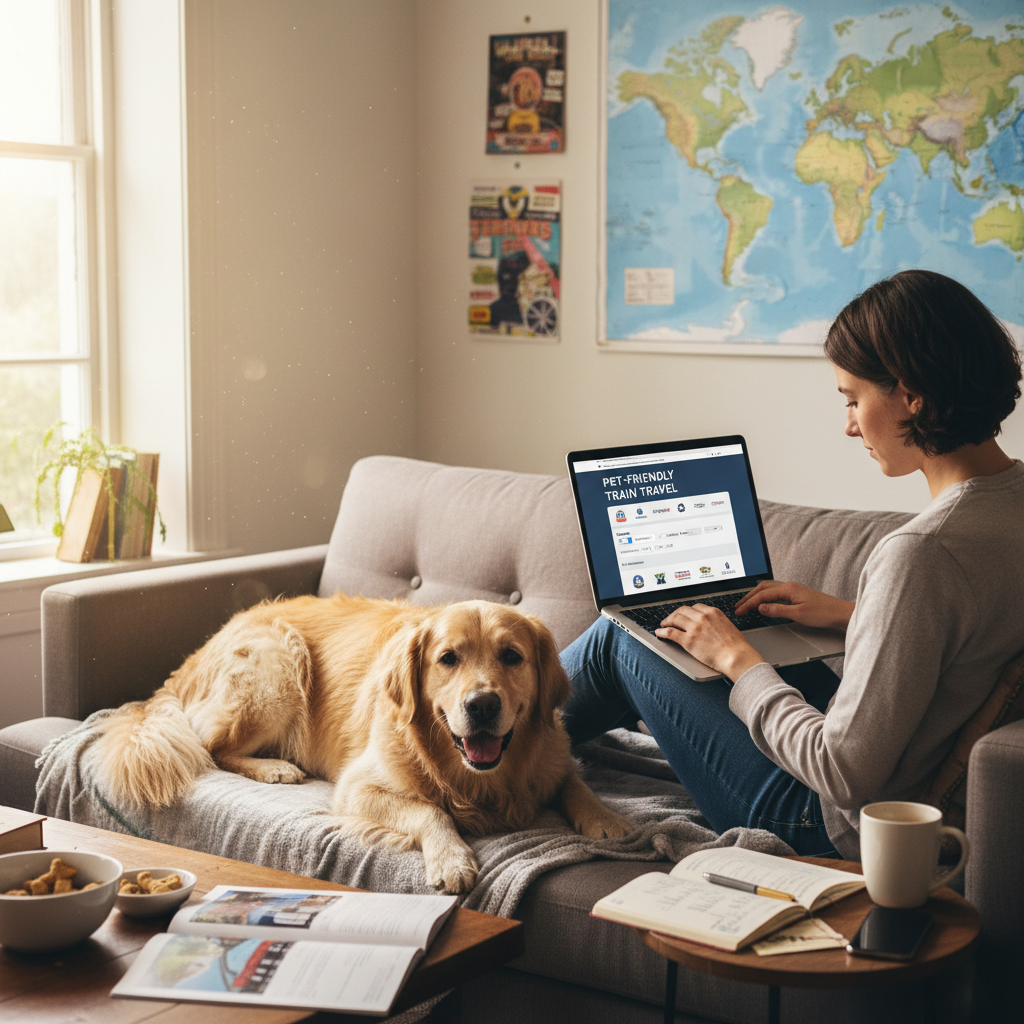
Before you even dream of boarding, thorough research is your best friend. Not all train lines or routes are equally pet-friendly, and policies can vary significantly. Start by identifying the specific rail service you plan to use and dive deep into their pet travel rules. Here’s what to look for:
- Pet Policies Understand the carrier’s rules regarding pet size, type, and breed restrictions. Some services only allow small pets in carriers, while others may accommodate larger dogs in designated pet cars or private compartments.
- Booking Requirements Find out if you need to purchase a separate ticket for your pet or if there’s a pet fee. Some services require advance booking for pets, as space may be limited.
- Carrier Specifications If a carrier is required, note the exact dimensions and ventilation requirements. Ensure your pet’s carrier is comfortable, secure, and meets all specified standards.
- Route and Duration Consider the length of your journey. Longer trips might have different rules or require more extensive planning for potty breaks and feeding.
Booking early is always a good idea, especially for pet-friendly compartments, as these can fill up quickly.
2- Prepare Your Pet for the Journey Day
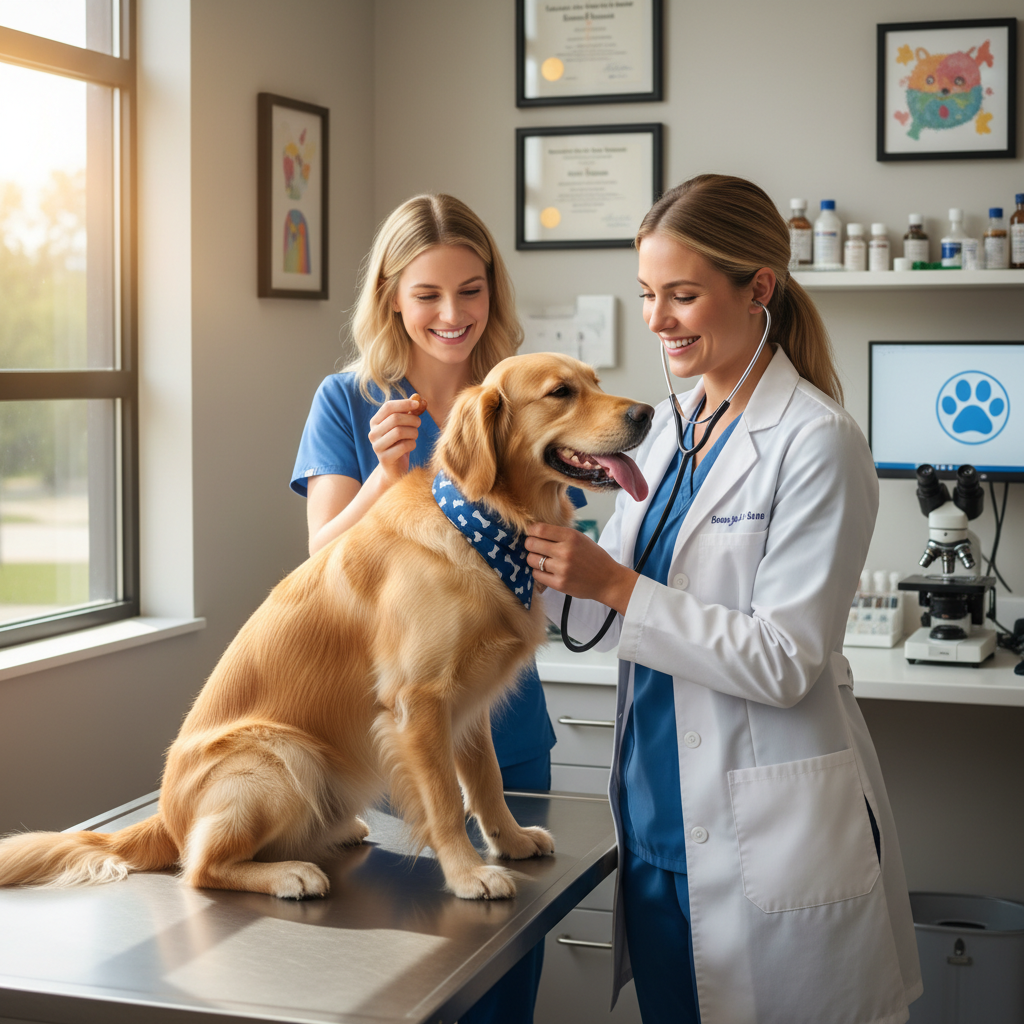
A smooth trip starts long before departure day. Preparing your pet physically and mentally can significantly reduce stress for both of you.
- Vet Check-up Schedule a visit with your veterinarian. Ensure your pet is healthy enough for travel, up-to-date on vaccinations, and discuss any necessary calming medications or motion sickness remedies. Obtain a health certificate if required by the train line or your destination.
- Identification is Key Make sure your pet wears a collar with up-to-date ID tags, including your name, phone number, and destination contact information. Consider microchipping if you haven’t already.
- Crate Training Reinforcement If your pet will be traveling in a carrier, ensure they are well-acclimated to it. Practice short periods inside the carrier at home, making it a positive and comfortable space with treats and toys.
- Exercise Before Departure A tired dog is a calm dog. Take your pet for a good, long walk or play session a few hours before you leave for the station to help them burn off excess energy.
- Potty Break Before Boarding Always make sure your pet has a final potty break right before you head into the station.
3- Pack Essential Pet Supplies
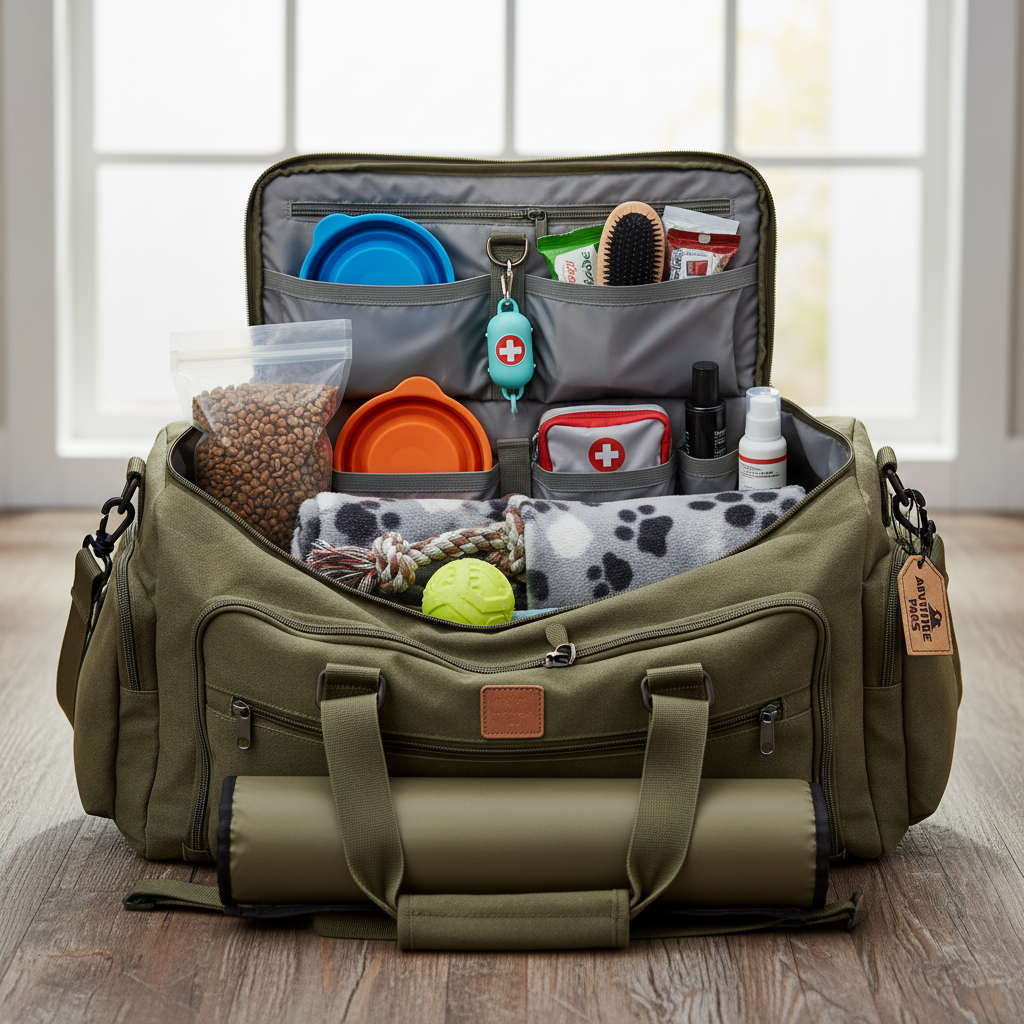
Just like packing for yourself, creating a dedicated bag for your pet’s essentials will make the journey much easier. Here’s a checklist of must-haves:
- Food and Water Pack enough of your pet’s regular food for the entire trip, plus a little extra. Bring a collapsible bowl for water and a sealed container for food.
- Medication If your pet takes any medication, pack it in clearly labeled containers with dosage instructions.
- Waste Bags and Cleaning Supplies Accidents happen. Bring plenty of waste bags, paper towels, and a small bottle of pet-safe cleaner for any spills.
- Comfort Items A favorite blanket, bed, or toy can provide a sense of security and familiarity in a new environment.
- Leash, Harness, and Extra Collar Always have your pet securely leashed when outside their carrier. An extra set is a good backup.
- Treats High-value treats can be invaluable for rewarding good behavior or distracting your pet during stressful moments.
- Documentation Keep all necessary pet documents (health certificate, vaccination records, ID) easily accessible.
4- Ensure Comfort During the Journey
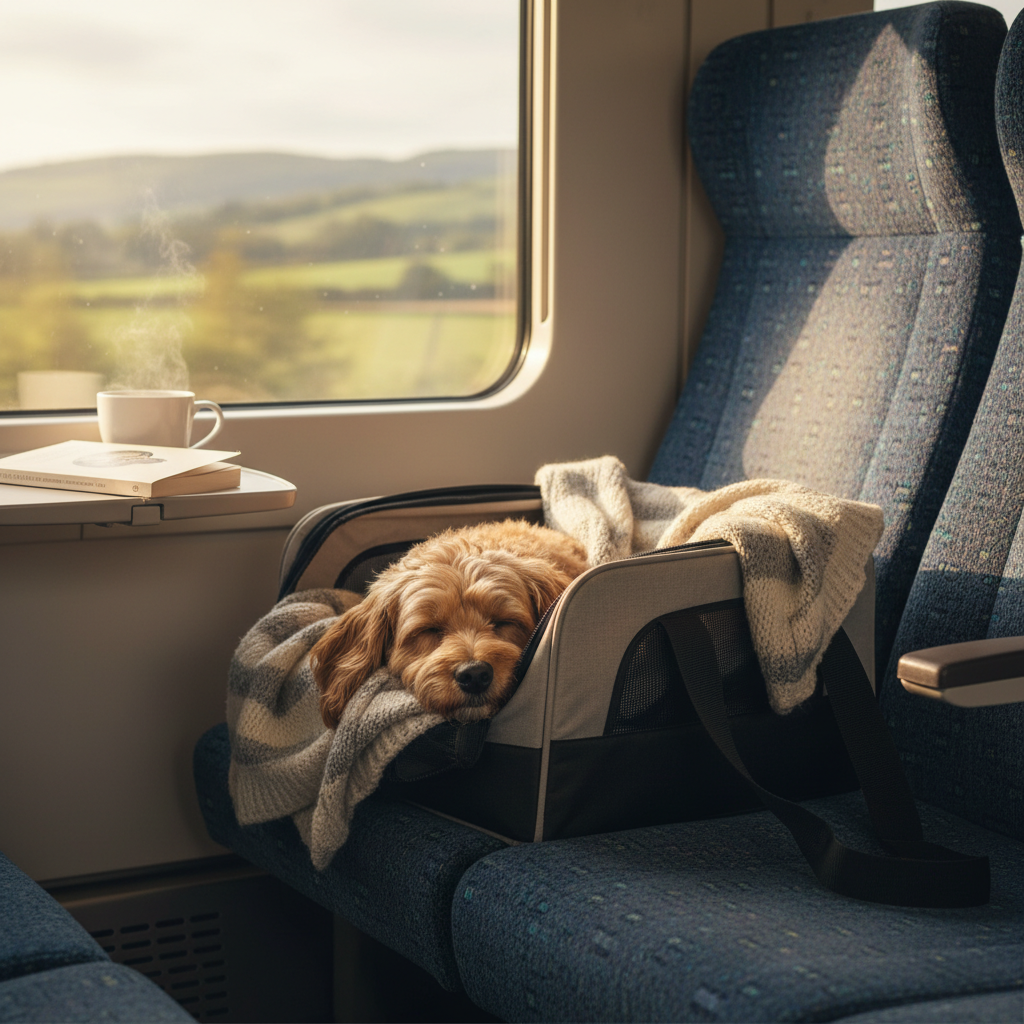
Once on board, your priority is to keep your pet as comfortable and stress-free as possible. Here’s how:
- Crate Setup If your pet is in a carrier, make sure it’s placed in a stable spot where it won’t slide around. Line it with a soft blanket and a pee pad for potential accidents.
- Hydration Offer water frequently, especially if the train is warm. Keep an eye on your pet for signs of dehydration.
- Calming Techniques Speak to your pet in a soothing voice. Gentle petting can also help. Some owners use calming pheromone sprays or thunder shirts, which might be helpful if your vet has approved them.
- Temperature Control Be aware of the temperature in your carriage. If it’s too hot or cold, try to adjust your pet’s comfort with a blanket or by moving to a slightly different spot if possible.
- Monitor Behavior Pay close attention to your pet’s body language. Signs of stress include excessive panting, whining, trembling, or trying to hide. Address these signs promptly.
5- Manage Potty Breaks and Waste
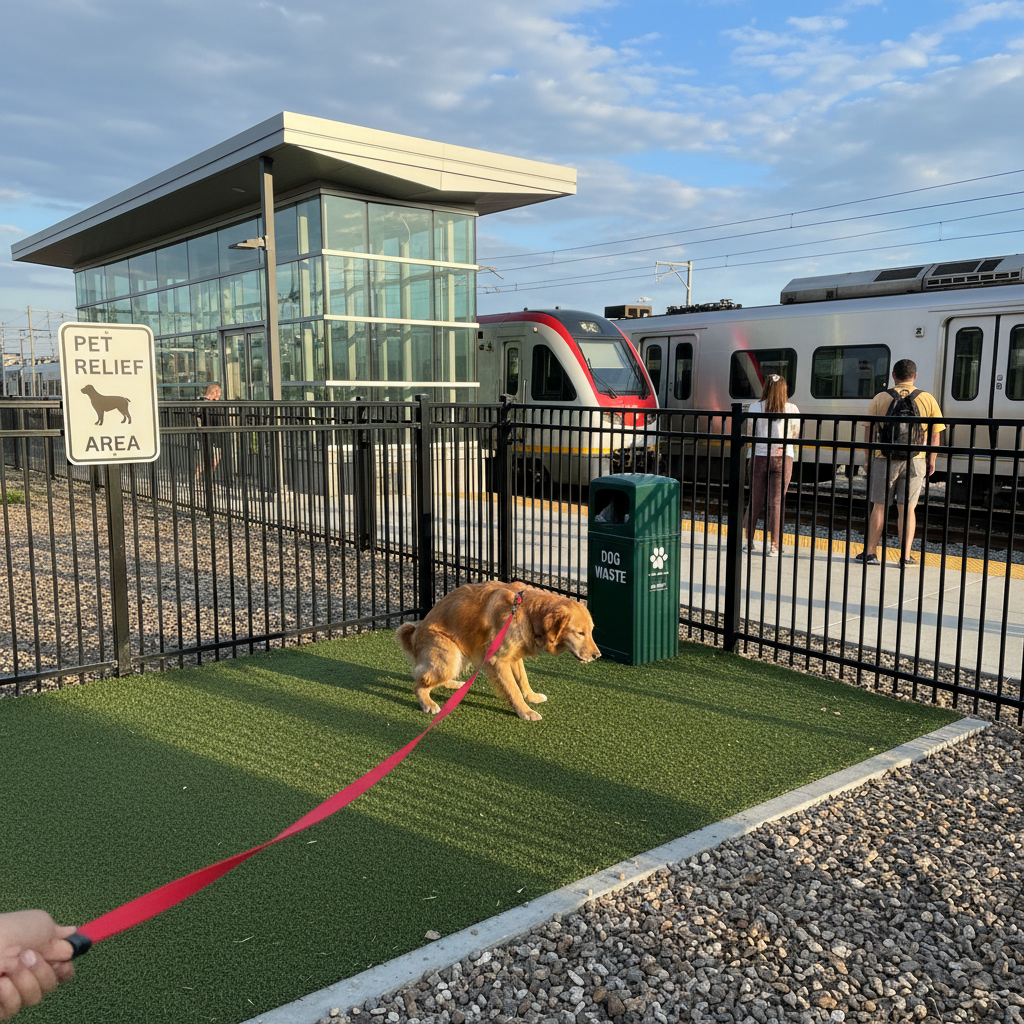
Potty breaks are a significant concern on longer rail journeys. Planning ahead is essential.
- Station Stops Research your train’s schedule for longer station stops. These are your best opportunities for quick potty breaks. Ask a train attendant if you’re unsure about the duration of a stop.
- Designated Areas Many larger train stations have designated pet relief areas. Familiarize yourself with these locations before your trip or upon arrival at a station.
- Leash Control Always keep your pet on a leash and harness when outside their carrier, especially in busy stations.
- Clean Up Thoroughly Always carry waste bags and clean up after your pet immediately and completely. This helps keep pet travel positive for everyone.
- Emergency Plan For very long journeys, discuss with your vet the possibility of using pet-safe absorbent pads inside the carrier, though these are typically only for emergencies or very small pets.
6- Keep Your Pet Engaged and Calm
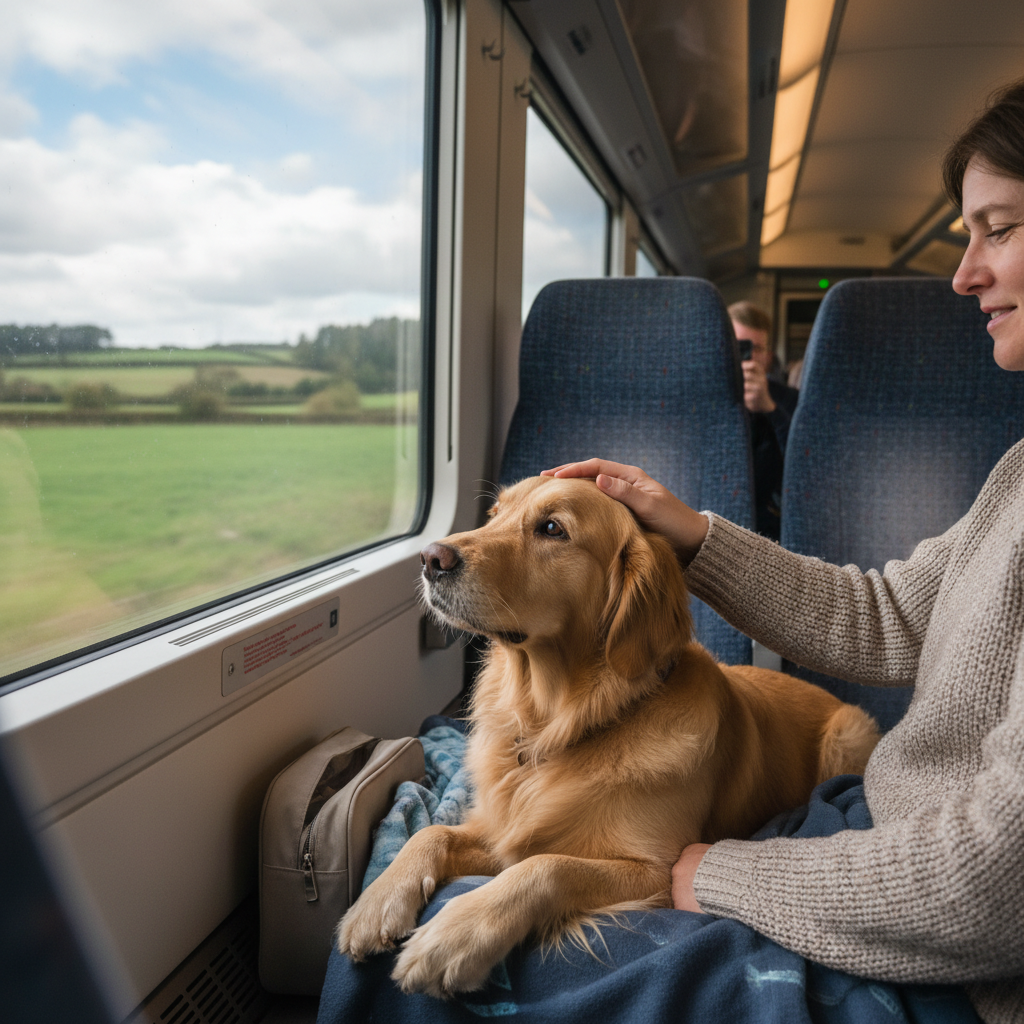
A bored or anxious pet can quickly become a stressed pet. Keeping them engaged and calm is crucial for a pleasant journey.
- Quiet Toys Bring a few of your pet’s favorite quiet toys or chew items to keep them occupied. Avoid squeaky toys that might disturb other passengers.
- Interactive Play If space allows, gentle, quiet interaction can be a great distraction. A puzzle toy filled with treats can keep them mentally stimulated.
- Gentle Interaction Offer praise and gentle petting. Your calm presence is often the most reassuring thing for your pet.
- Minimize Stressors Try to shield your pet from loud noises or sudden movements. If they seem overwhelmed, cover their carrier with a light blanket to create a den-like, secure space.
- Routine Stick to your pet’s usual feeding schedule as much as possible, as routine can be comforting.