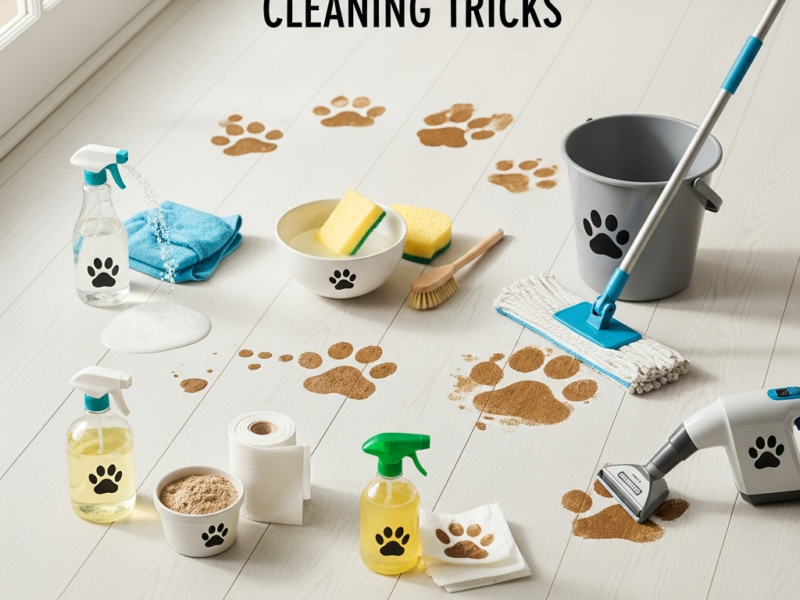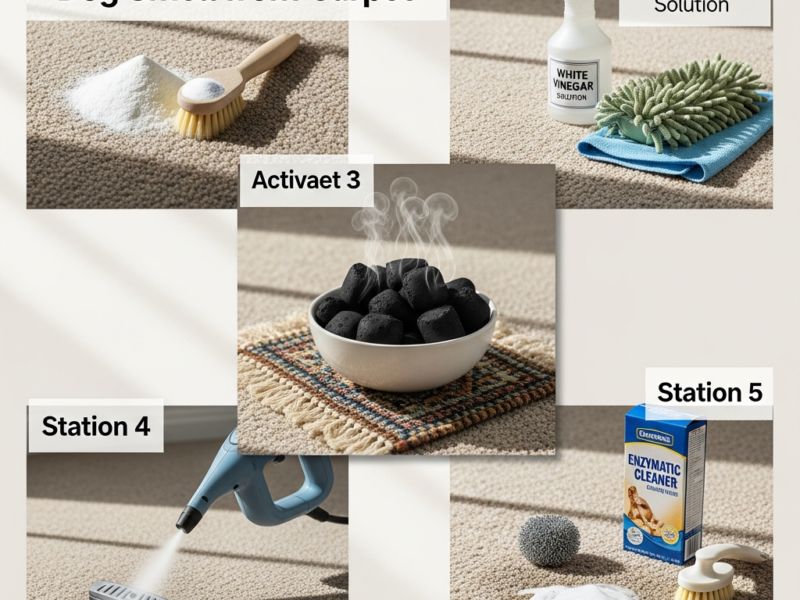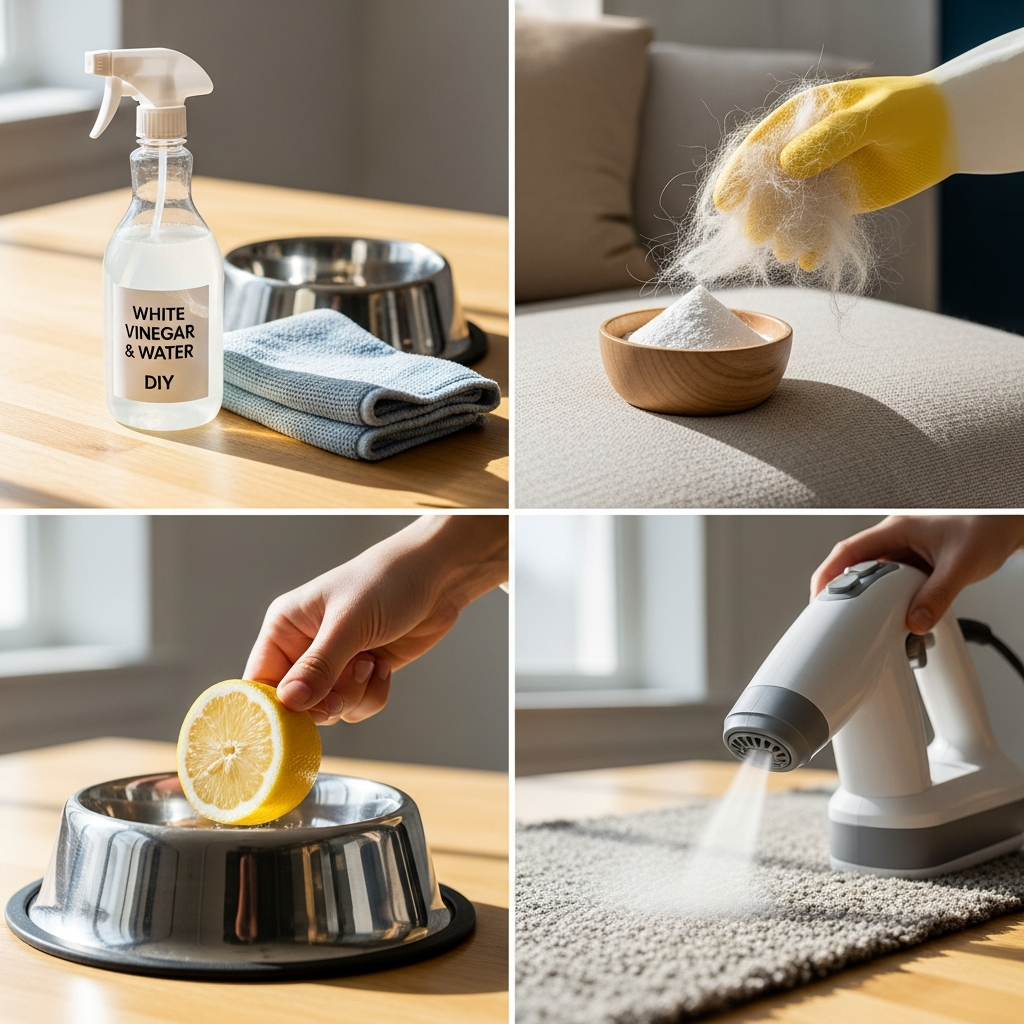
Bringing a dog into your home fills it with incredible joy, endless cuddles, and unconditional love. But let’s be honest, it also brings a fair share of messes! From muddy paw prints to unexpected “accidents” and that distinct “dog smell,” keeping your home clean can feel like a constant battle. As loving pet parents, we always want what’s best for our furry family members, and that includes making sure our living environment is not just clean, but also safe for them.
Many conventional household cleaners contain harsh chemicals that can be harmful to dogs, who spend most of their time close to the floor, often licking paws or toys. The good news is, you don’t need harsh chemicals to achieve a sparkling, fresh home. In fact, some of the most effective and safest cleaning solutions are likely already in your pantry! We’re here to share five amazing, safe cleaning hacks that will help you maintain a clean, pet-friendly home without compromising your dog’s well-being.
Why Safe Cleaning Matters for Your Furry Friend
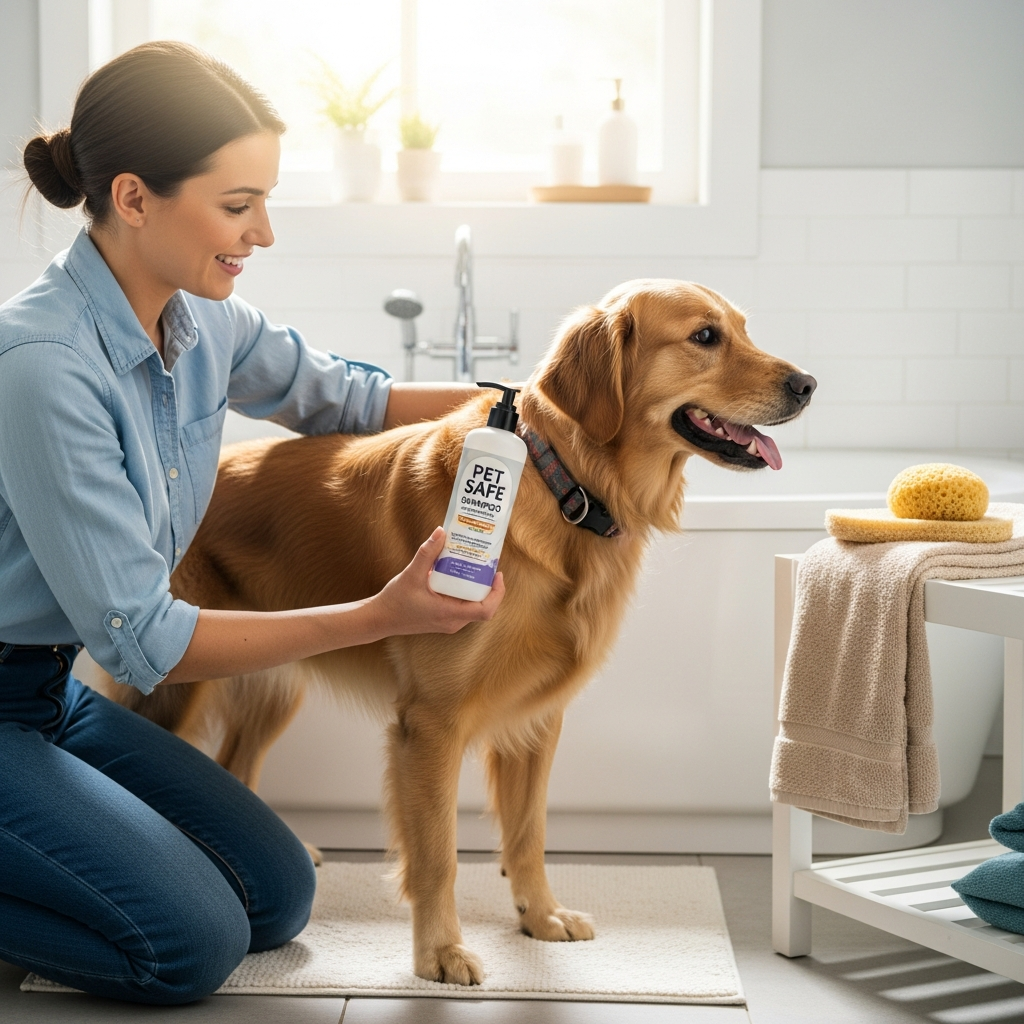
Imagine spending all day with your nose just inches from the floor, then licking your hands and feet. That’s essentially what our dogs do! They are much more susceptible to the chemicals we use in our homes for several reasons:
Dogs are lower to the ground, where chemical residues settle and accumulate.
They clean themselves by licking their paws and fur, directly ingesting anything that’s been on the floor or their coat.
Many common cleaning ingredients, like ammonia, bleach, phthalates, and phenols, can cause skin irritation, respiratory issues, and even serious internal problems if ingested by dogs.
Their smaller size and faster metabolism can make them more sensitive to toxic substances.
Choosing safe alternatives isn’t just a nice idea; it’s a vital part of responsible dog ownership. It protects their health, ensures their comfort, and gives you peace of mind.
Hack 1: Harnessing the Power of Vinegar
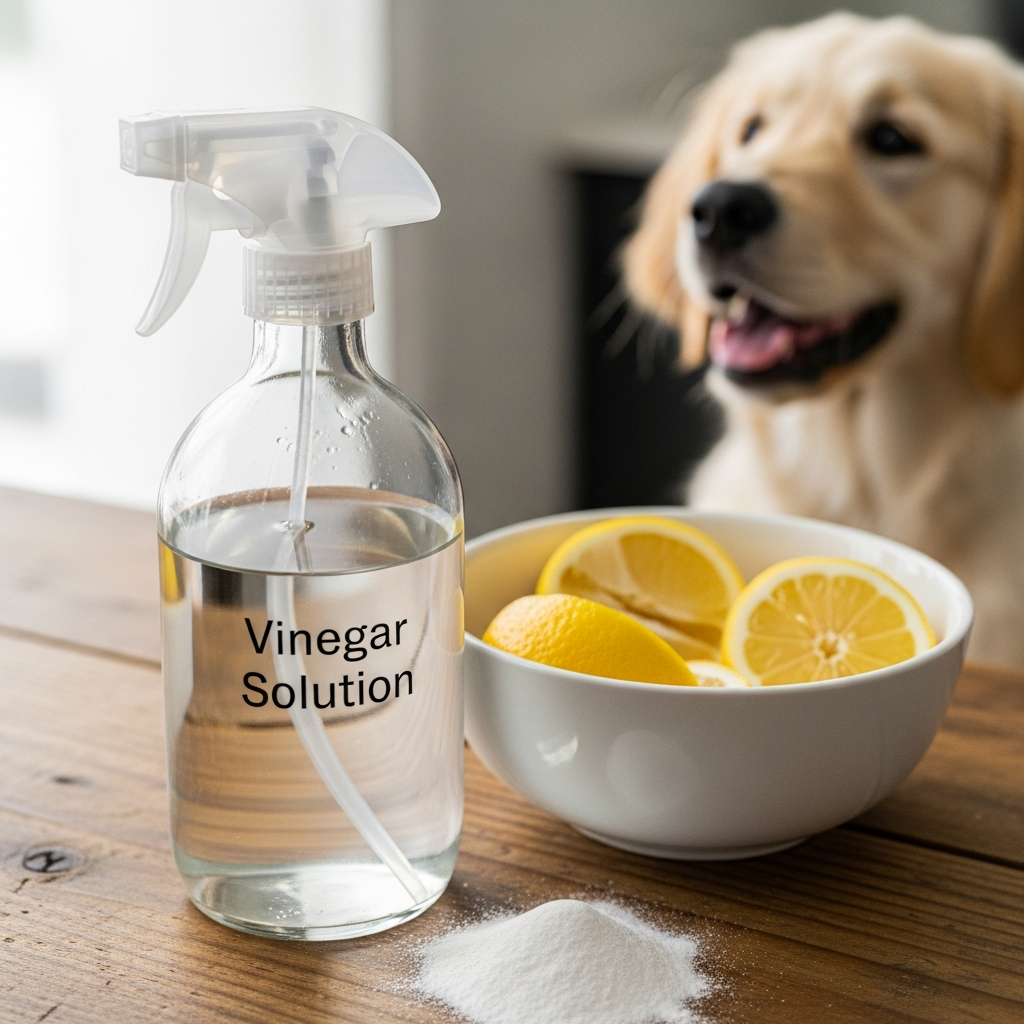
Vinegar, especially white distilled vinegar, is a true powerhouse in safe cleaning. It’s inexpensive, readily available, and incredibly versatile. Its acidic nature makes it excellent for cutting through grease, dissolving mineral deposits, and neutralizing odors, rather than just masking them.
The All-Purpose Odor & Stain Remover
Vinegar works wonders because its acidity helps break down organic compounds and neutralize alkaline odors. This makes it perfect for tackling common pet messes without any harsh fumes.
Vinegar Cleaning Solutions
Here are a few simple recipes to get started:
General Surface Cleaner: Mix equal parts white distilled vinegar and water in a spray bottle. You can add a few drops of a pet-safe essential oil like lavender or cedarwood (ensure extreme dilution and dog separation during cleaning if using essential oils, or better yet, skip them entirely for pet-safe cleaning).
Pet Accident Spot Cleaner: For fresh urine spots, blot up as much liquid as possible first. Then, spray the area generously with undiluted white vinegar. Let it sit for 5-10 minutes, then blot thoroughly with a clean cloth. The vinegar neutralizes the ammonia in the urine, helping to eliminate the odor.
Floor Cleaner: Add half a cup of white distilled vinegar to a bucket of warm water. Mop your hard floors (tile, linoleum, sealed hardwood) for a streak-free, disinfected shine.
How to Use Vinegar Safely
Dilution is key: While undiluted vinegar is safe for spot treatments, always dilute it for general cleaning to avoid potential damage to certain surfaces and to reduce the strong smell.
Test in an inconspicuous area: Before using vinegar on any new surface, especially delicate ones or fabrics, test it in a small, hidden spot to ensure it doesn’t cause discoloration or damage.
Ventilation tips: Even though it’s natural, vinegar has a strong smell. Ensure good ventilation by opening windows or using fans while cleaning, especially if using it undiluted. The smell dissipates quickly once dry.
Avoid certain surfaces: Do not use vinegar on natural stone surfaces like marble or granite, unsealed grout, or cast iron, as its acidity can etch or damage them over time.
Hack 2: Baking Soda – The Odor Eliminator Extraordinaire
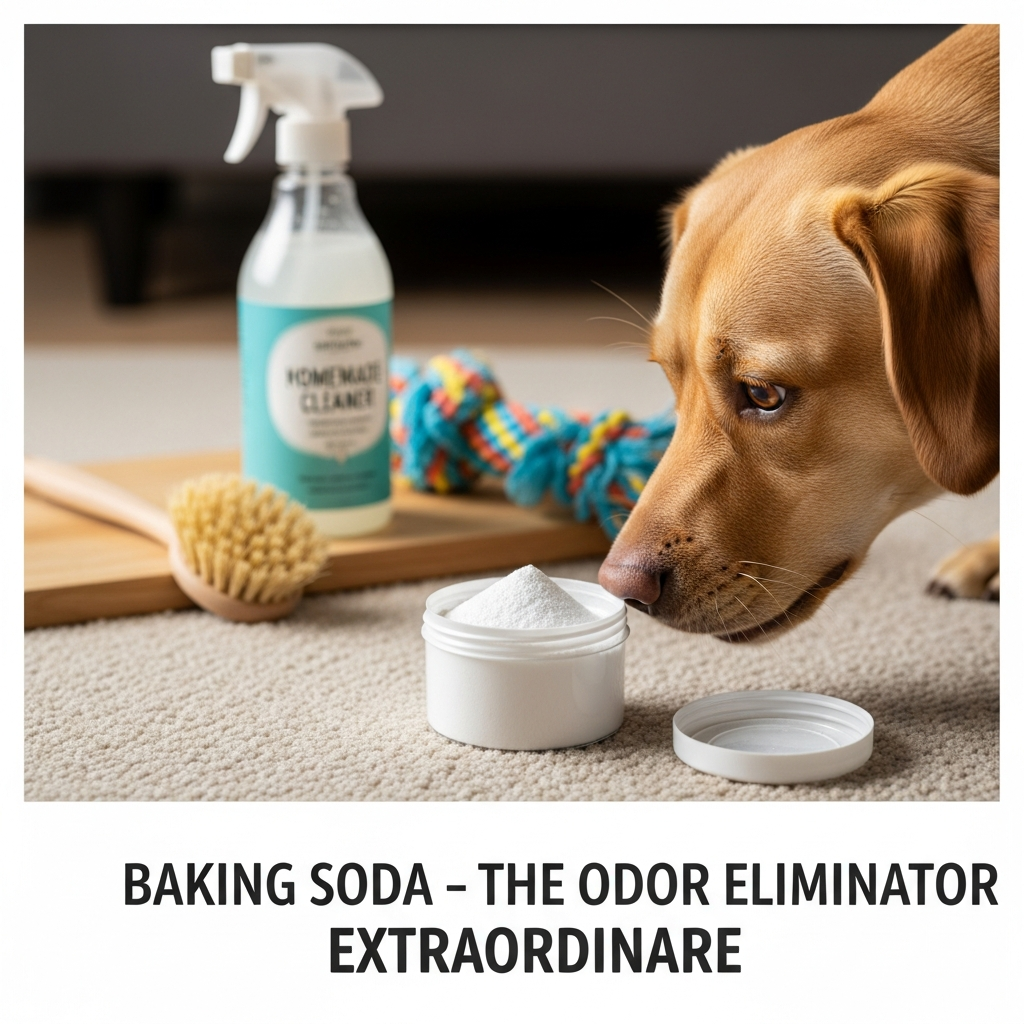
Baking soda, or sodium bicarbonate, is another kitchen staple that’s a fantastic, non-toxic cleaner for dog owners. It’s a mild abrasive and a natural deodorizer, excellent for absorbing odors rather than just covering them up.
Absorbing Smells, Not Just Covering Them Up
Baking soda works by absorbing odor-causing molecules, making it incredibly effective for pet smells embedded in fabrics and carpets. Its gentle abrasive quality also makes it great for scrubbing without scratching.
Baking Soda Cleaning Applications
Carpet Deodorizer: This is a classic for a reason. Baking soda effectively pulls out pet odors from carpets.
Pet Bed Refresher: Keep your dog’s bed smelling fresh between washes.
Dog Toy Cleaner: Safe for cleaning your dog’s favorite toys.
Step-by-Step for Carpets
1. Sprinkle: Generously sprinkle baking soda directly onto your carpets, especially in areas where your dog frequently rests or where accidents have occurred.
2. Wait: Let the baking soda sit for at least 15-30 minutes, or even longer (several hours or overnight) for very strong odors. The longer it sits, the more odors it can absorb.
3. Vacuum: Thoroughly vacuum up the baking soda. You’ll notice a significant improvement in freshness!
Repeat this process regularly to keep carpets smelling clean.
For pet beds, just sprinkle a light layer of baking soda, let it sit for about 15 minutes, then brush or vacuum it off before your dog uses it again. For hard toys, a paste of baking soda and water can be used to scrub them clean, then rinse thoroughly.
Hack 3: Lemon and Water – Freshness without the Chemicals
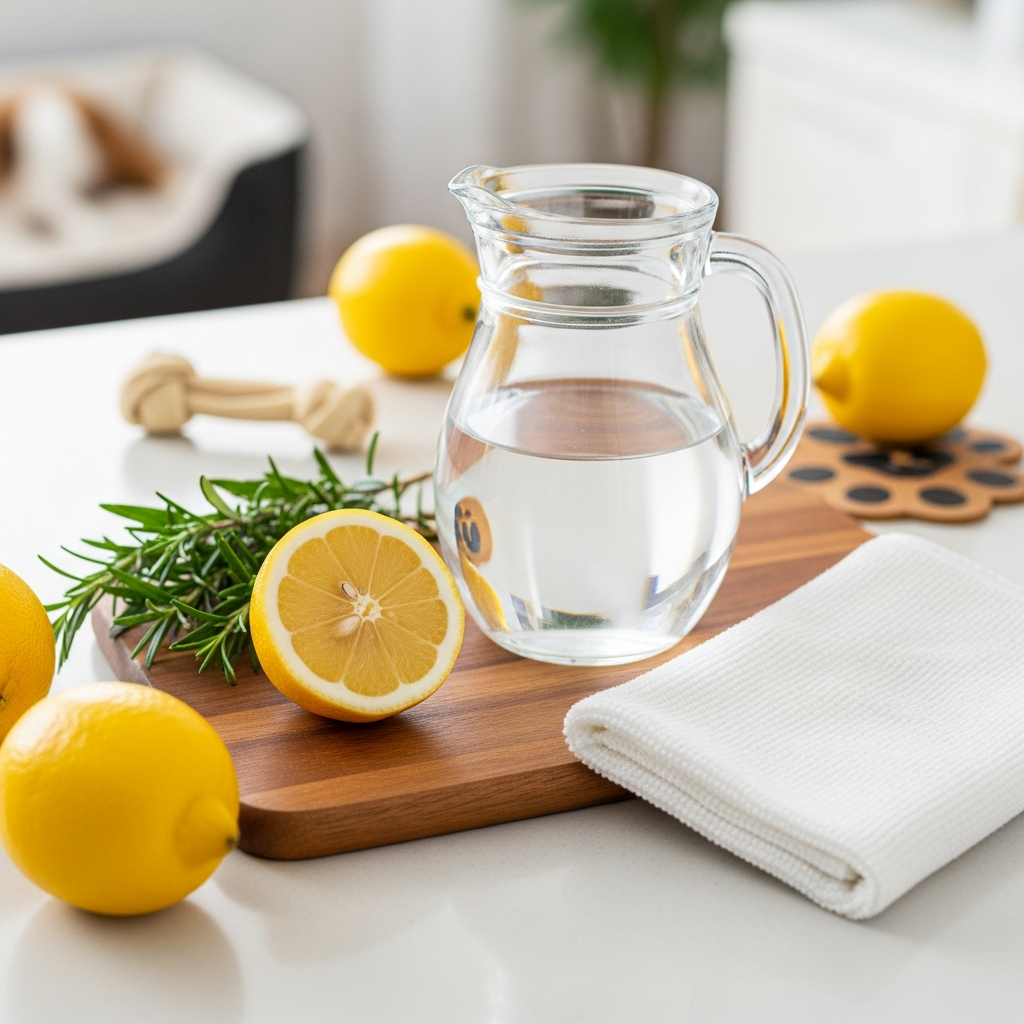
Lemon juice, with its natural acidity and pleasant citrus scent, offers a refreshing alternative to chemical air fresheners and cleaners. It’s a natural degreaser and mild disinfectant.
Natural Degreaser and Brightener
The citric acid in lemons is great for breaking down grease and grime. It also leaves behind a naturally clean scent, making your home feel fresh and inviting without any synthetic fragrances.
Lemon-Based Cleaning Recipes
Hard Surface Spray: Mix the juice of one lemon with a cup of water in a spray bottle. Use it to wipe down kitchen counters, tabletops, and other hard surfaces. It helps cut grease and leaves a fresh scent.
Stain Pre-treater for Fabrics: For light stains on washable fabrics (like dog blankets before a wash), you can dab a small amount of diluted lemon juice onto the stain, let it sit for a few minutes, then wash as usual. Test first on an inconspicuous area!
Shiny Floors: Add a few tablespoons of lemon juice to your mop water for a natural shine and fresh scent on tile or linoleum floors.
Important Lemon Precautions
While lemon is natural, it’s acidic. Always dilute lemon juice for cleaning.
Avoid direct contact with pet’s skin/eyes: Ensure your dog isn’t present during cleaning and that surfaces are dry before they return. While diluted lemon is generally safe for surfaces, avoid direct application to your dog.
Rinse well: After cleaning with lemon solutions, especially on surfaces your dog might lick, give them a quick rinse with plain water.
Hack 4: Microfiber Cloths and Steam – Chemical-Free Cleaning
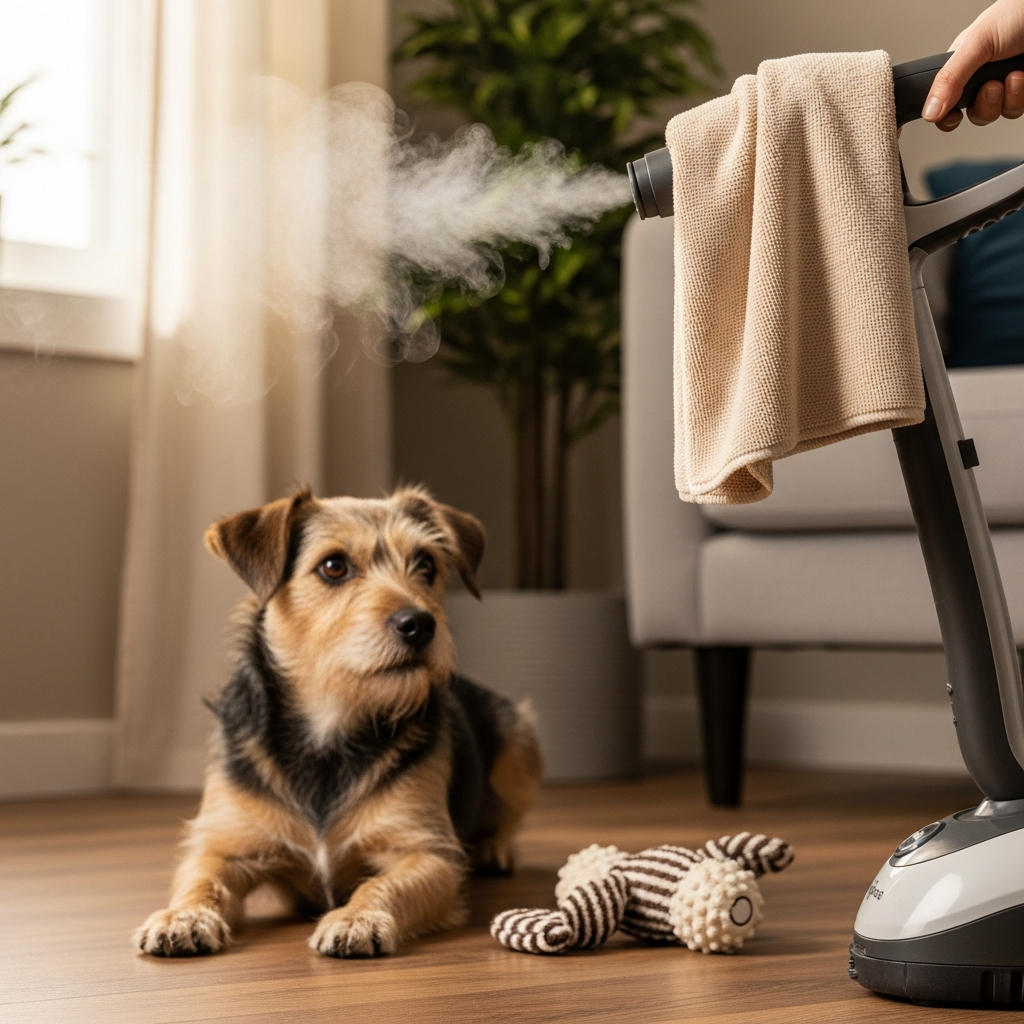
Sometimes, the best cleaning hacks involve ditching chemicals altogether and relying on smart tools and the power of heat. Microfiber cloths and steam cleaners are fantastic for this, offering deep cleaning and sanitization without any added ingredients.
The Power of Physics Over Chemicals
Microfiber cloths are incredibly effective because their tiny fibers are designed to pick up and trap dirt, dust, and even microscopic particles, rather than just pushing them around. Steam cleaners use high-temperature steam to loosen dirt, melt grease, and kill germs and bacteria on contact, all without a single drop of detergent.
Microfiber Cloth Best Practices
Use for dusting and wiping: Microfiber cloths are excellent for dusting furniture, wiping down kitchen surfaces, and cleaning glass or mirrors. They can be used dry for dusting or damp with just water for general cleaning.
Use with just water: For many everyday spills and messes, a damp microfiber cloth is all you need. The tiny fibers do the heavy lifting, trapping grime effectively.
Wash separately: To maintain their effectiveness, wash microfiber cloths separately from other laundry, and avoid using fabric softener, which can clog their fibers.
Steam Cleaner for Deeper Clean
Benefits: A steam cleaner is a game-changer for deep cleaning. It sanitizes floors, upholstery, and even some carpets by using heat to kill bacteria, viruses, and allergens. It tackles tough grime and sticky messes without chemical residues.
Areas to use: Great for hard floors (tile, sealed hardwood, laminate), sealed grout, and even refreshing pet beds or upholstery (check manufacturer guidelines first).
Safety tips: Allow freshly steamed areas to cool and dry completely before allowing your dog back into the area. Always read your steam cleaner’s manual for specific instructions and precautions. Keep your dog out of the room during use to prevent accidental burns from hot steam.
Hack 5: Enzymatic Cleaners – Tackling Pet Accidents at the Source
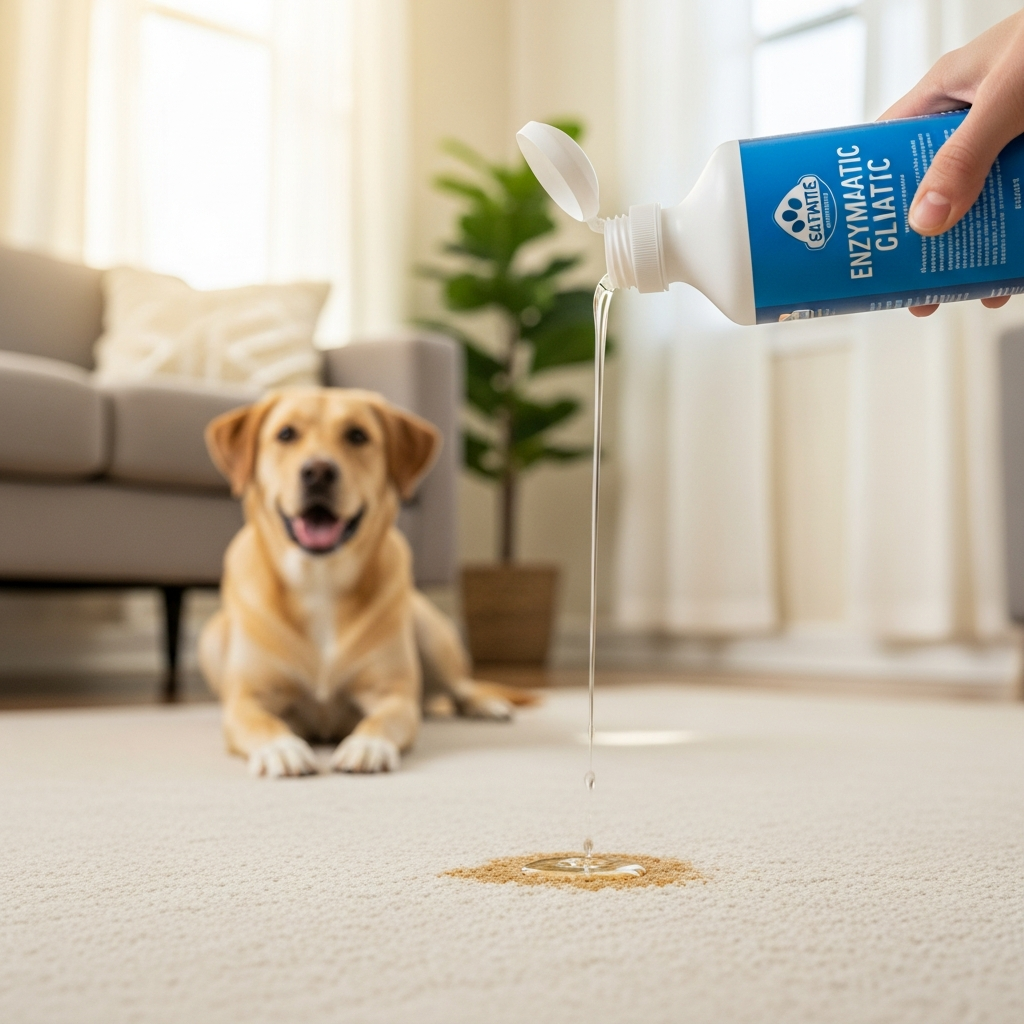
For those inevitable pet accidents like urine, vomit, or feces, enzymatic cleaners are your best friend. They are specifically designed to break down organic matter and eliminate odors at their source, rather than just masking them.
Breaking Down Stains and Odors Organically
Enzymatic cleaners contain special enzymes that target and break down the proteins, fats, and carbohydrates present in organic stains. For urine, this means breaking down the uric acid crystals that cause that persistent, strong odor, which can attract your dog to “remark” the same spot.
How to Effectively Use Enzymatic Cleaners
1. Blot, don’t rub: For fresh accidents, first blot up as much of the liquid or solid as possible with a clean cloth or paper towels. Rubbing can push the stain deeper into fibers.
2. Saturate the area: Spray or pour the enzymatic cleaner directly onto the soiled area. It’s crucial to saturate the spot thoroughly, extending beyond the visible stain, as urine can spread.
3. Allow dwell time: Let the cleaner sit for the time recommended on the product label (often 10-15 minutes, or even longer for old stains). This gives the enzymes time to work.
4. Cover the spot (optional): For very deep or old stains, you can cover the treated area with plastic wrap to keep it moist, allowing the enzymes more time to work.
5. Rinse and dry: After the dwell time, blot the area again with a clean, damp cloth to remove any residue. Allow the area to air dry completely, or use a fan to speed up the process.
Choosing the Right Enzymatic Cleaner
Look for pet-specific formulas: These are designed to tackle common pet stains effectively.
Check ingredients for safety: Ensure the product explicitly states it’s safe for pets and children once dry.
Avoid mixing: Do not mix enzymatic cleaners with other cleaning products, especially bleach, as this can deactivate the enzymes and render the cleaner ineffective.
Beyond the Hacks: Everyday Habits for a Cleaner, Safer Home
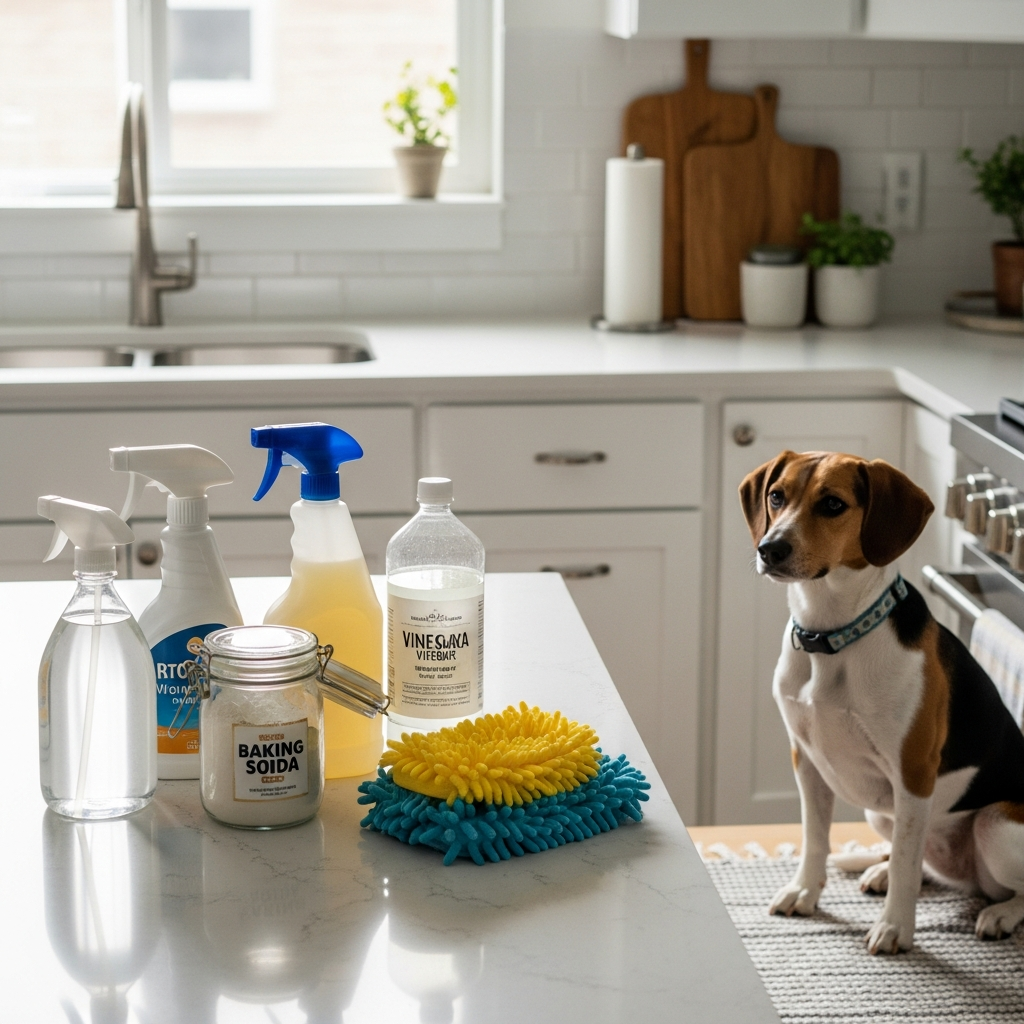
While these cleaning hacks are incredibly powerful, establishing some simple daily and weekly habits can make a huge difference in keeping your home clean and your dog safe and happy.
Simple Routine Changes That Make a Big Difference
Regular Vacuuming: Vacuum frequently, especially in high-traffic pet areas, to pick up loose fur, dander, and dirt before it becomes embedded.
Wiping Paws at the Door: Keep a towel near the door to quickly wipe muddy or dirty paws before your dog tracks grime through the house.
Frequent Washing of Pet Bedding: Wash your dog’s bed covers and blankets weekly (or more often for active dogs) to eliminate odors, dander, and potential allergens.
Grooming Your Dog Regularly: Regular brushing reduces shedding, helps keep their coat clean, and minimizes the amount of dirt they bring inside.
Quick Clean-Ups: Address spills and accidents immediately. The faster you clean them, the easier they are to remove and the less likely they are to set in.