Our furry friends bring so much joy and unconditional love into our homes. They’re family! But let’s be honest, sometimes accidents happen, and a puddle on the sofa can quickly turn a cozy spot into a source of frustration. The lingering smell of dog urine isn’t just unpleasant; it can also attract your dog back to the same spot, making the problem worse.
As devoted dog parents, we want our homes to be clean and fresh, but also safe for our beloved pets. That’s why we’ve put together this guide featuring 6 pet-safe, effective methods to help you banish those stubborn urine odors from your sofa for good. Say goodbye to unwanted smells and hello to a fresh, inviting living space for everyone!
Understanding Why Pet Urine Odor Lingers
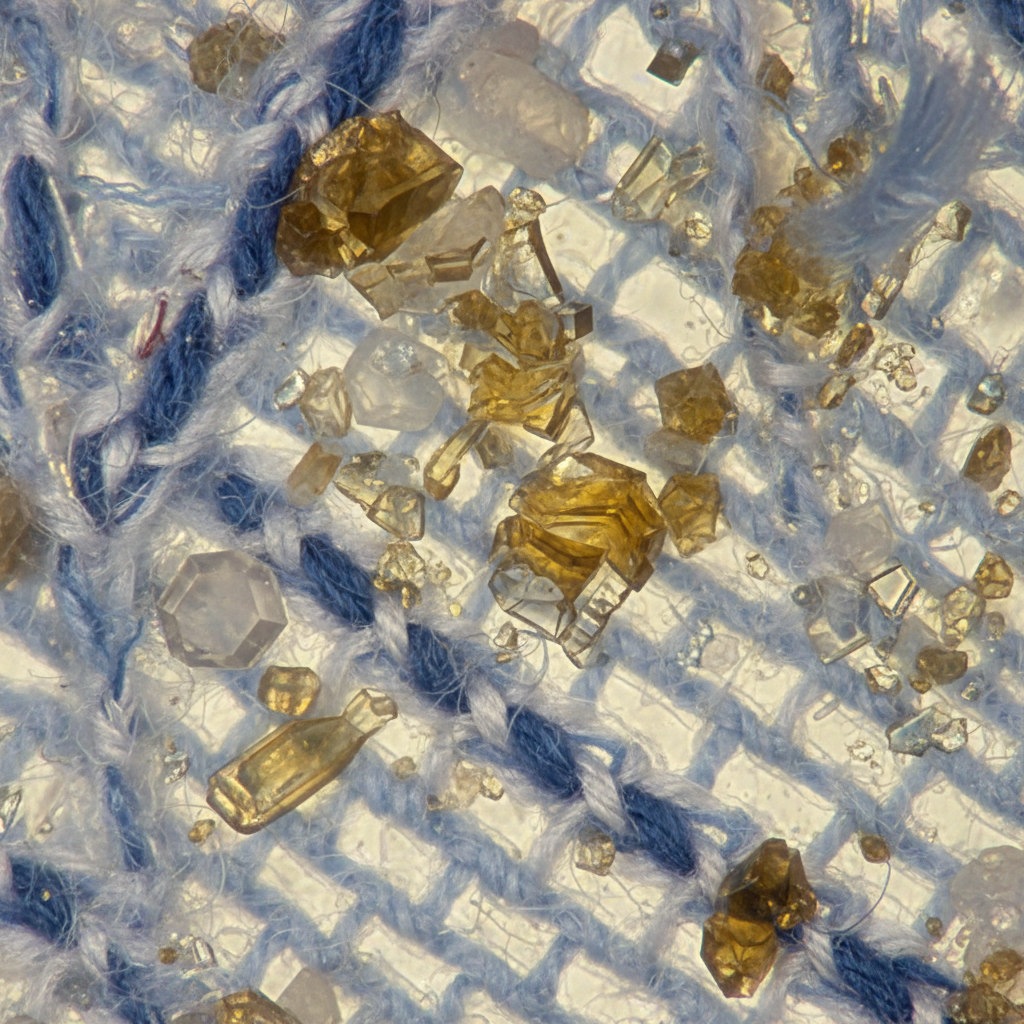
Dog urine contains a cocktail of chemicals, including urea, uric acid, creatinine, and various salts. While urea breaks down fairly quickly, uric acid is the real culprit behind persistent odors. It’s not water-soluble and forms crystals as it dries. These crystals bind to fabric fibers and, when re-exposed to moisture (like humidity in the air), they release that distinct, pungent ammonia-like smell. The longer urine sits, the deeper these crystals penetrate, making removal more challenging.
Essential First Steps Before Cleaning
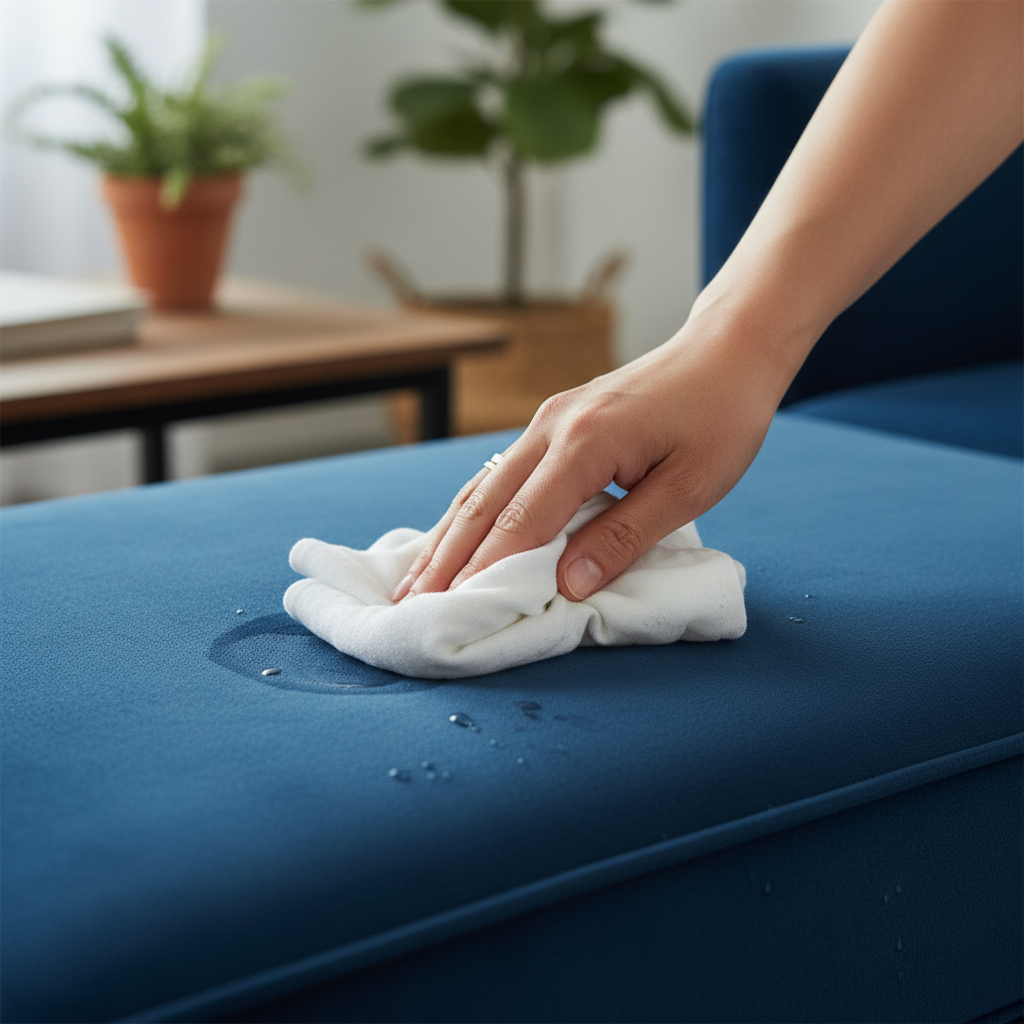
Before you dive into cleaning, these crucial initial steps can make a big difference in the outcome:
- Act Immediately The quicker you address the accident, the better your chances of complete odor removal. Fresh urine is much easier to clean than dried, set-in stains.
- Blot, Don’t Rub Grab a stack of clean, absorbent cloths or paper towels. Press firmly onto the wet area to soak up as much urine as possible. Stand on the towels for a few seconds to apply pressure. Repeat with fresh towels until no more moisture transfers. Rubbing can push the urine deeper into the fabric and padding.
- Test in an Inconspicuous Area Before applying any cleaning solution to a visible part of your sofa, always test it on a hidden spot (like the back or underneath a cushion). Apply a small amount, let it sit for a few minutes, then blot dry. Check for discoloration, staining, or damage to the fabric.
- Check Your Sofa’s Cleaning Code Most sofas have a tag with a cleaning code:
- W Water-based cleaner safe
- S Solvent-based cleaner safe (no water)
- WS Water or solvent-based cleaner safe
- X Vacuum only (professional cleaning recommended)
Method 1 – Baking Soda Power
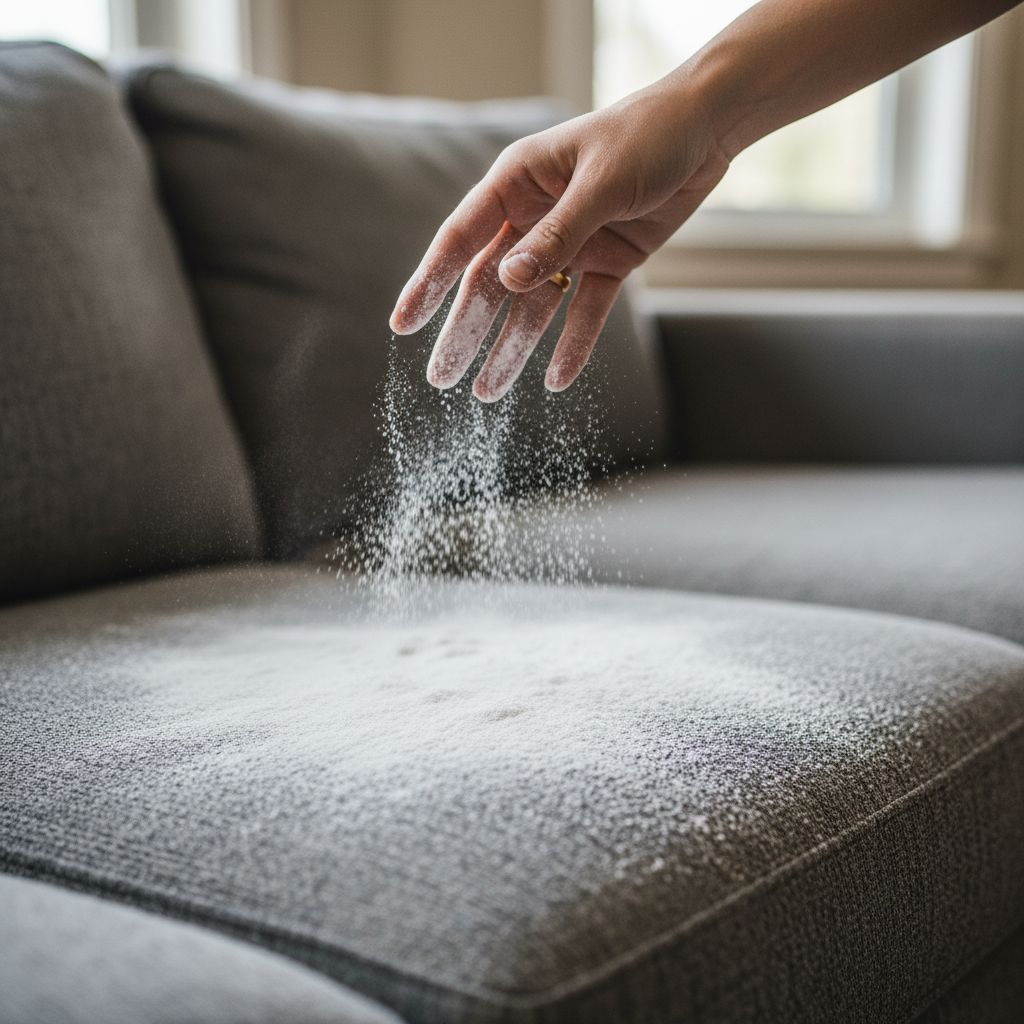
Baking soda (sodium bicarbonate) is a natural deodorizer that works by absorbing odors, not just masking them. It’s safe, affordable, and effective for many fabric types.
How to Use Baking Soda
- Blot Thoroughly Ensure you’ve blotted up as much fresh urine as possible.
- Sprinkle Generously Liberally sprinkle baking soda over the affected area, ensuring it covers the entire spot and extends slightly beyond.
- Let It Sit For best results, let the baking soda sit for several hours, or even overnight. The longer it sits, the more odor it will absorb.
- Vacuum Away Use a vacuum cleaner with a brush attachment to thoroughly remove all the baking soda.
Baking Soda Tips
- For very strong odors, you might need to repeat the process.
- Mix a few drops of pet-safe essential oil (like lavender or cedarwood) with the baking soda for an added fresh scent, but ensure it’s safe for your pet first.
Method 2 – White Vinegar Solution
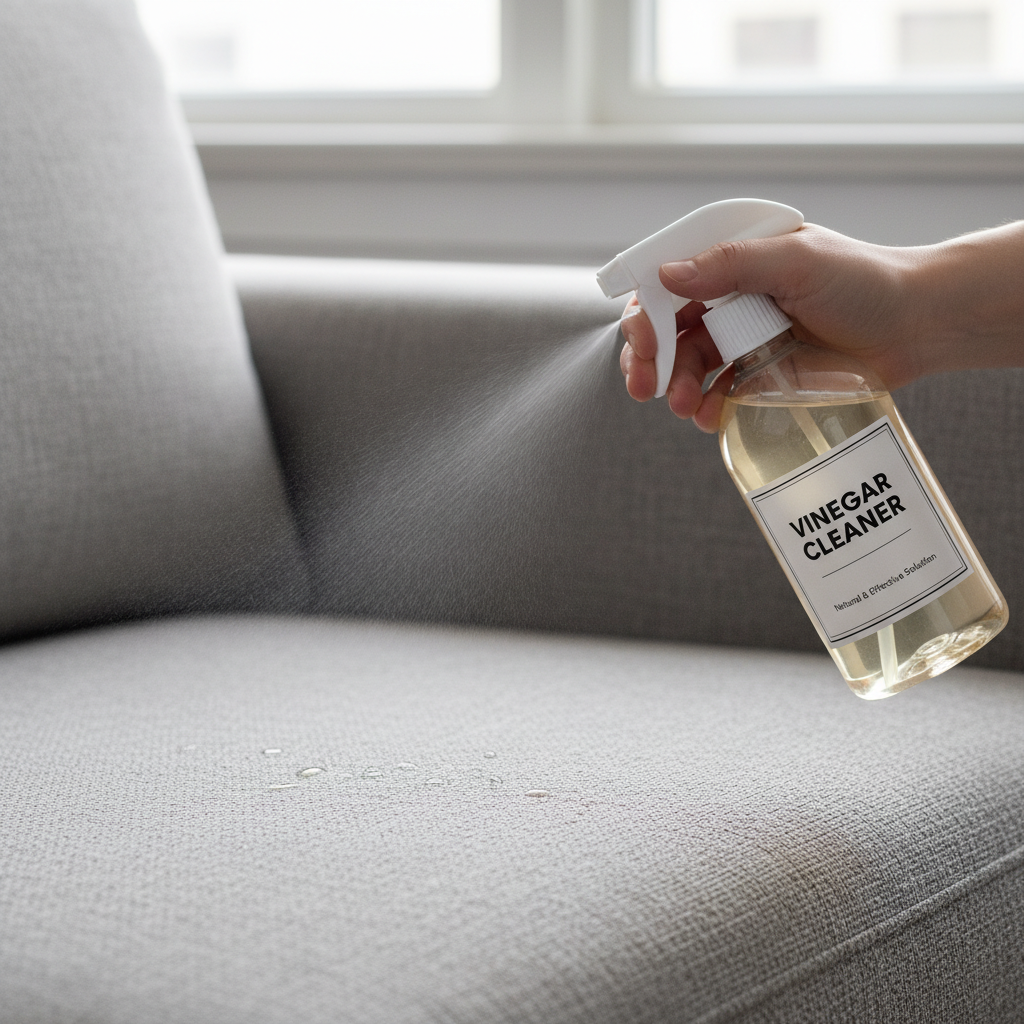
White vinegar is a mild acid that neutralizes the alkaline salts in urine, effectively breaking down the odor-causing uric acid crystals. Don’t worry, the vinegar smell dissipates as it dries.
How to Use White Vinegar
- Mix the Solution Combine equal parts white vinegar and water in a spray bottle.
- Saturate the Area Lightly spray the affected area with the vinegar solution. Don’t over-saturate, especially if your sofa has delicate padding.
- Let It Sit Allow the solution to sit for 10-15 minutes to work its magic.
- Blot and Dry Blot the area thoroughly with clean cloths until dry. You can also use a fan or open windows to speed up drying.
White Vinegar Tips
- For older, stubborn stains, you might want to follow the vinegar treatment with a baking soda application (Method 1) once the area is dry.
- Always test on an inconspicuous area first, especially on darker fabrics, as vinegar can sometimes cause slight discoloration.
Method 3 – Enzyme Cleaners – Your Best Friend
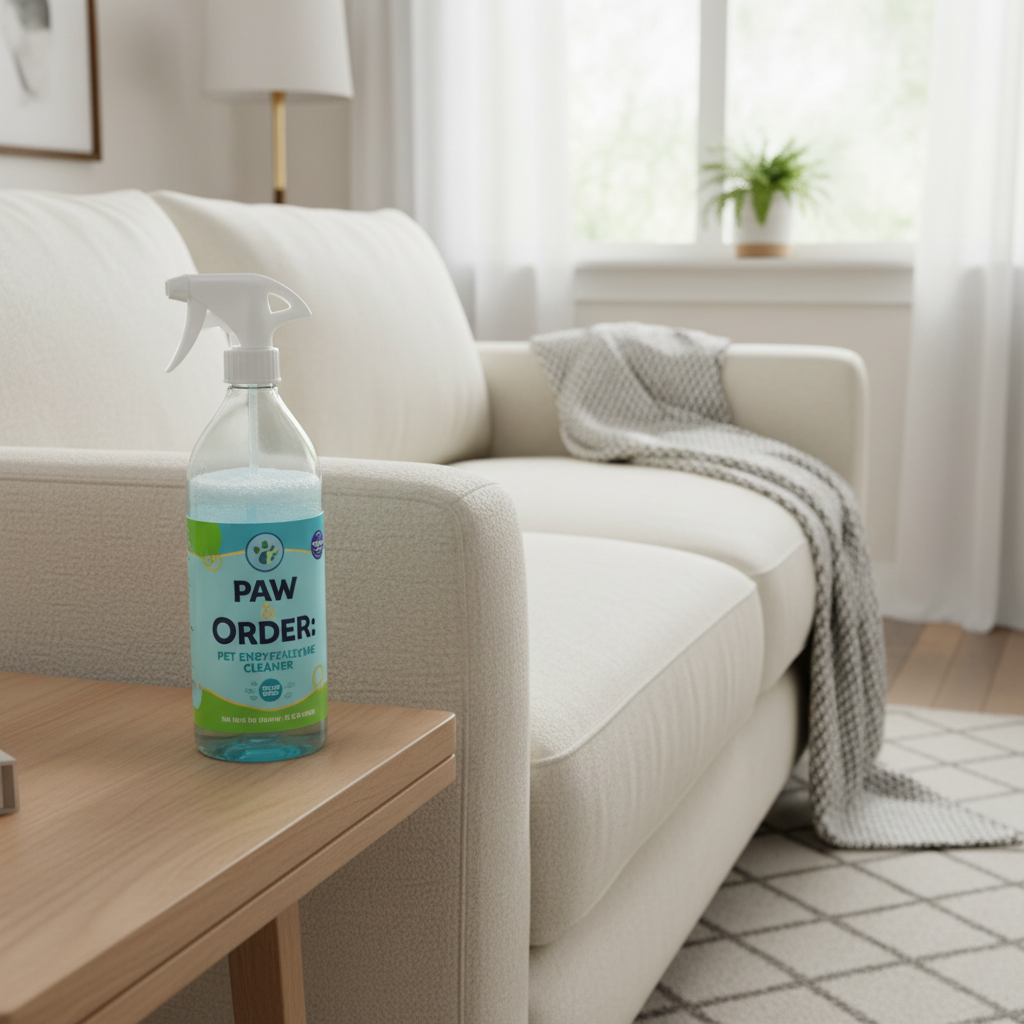
Enzyme cleaners are specifically designed for pet stains and odors. They contain beneficial bacteria that produce enzymes. These enzymes break down the uric acid and other organic matter in pet urine, literally eating away the odor at its source. This is often the most effective method for complete odor elimination.
How to Use Enzyme Cleaners
- Blot and Prepare Remove as much urine as possible by blotting.
- Apply Generously Follow the product instructions carefully. Typically, you’ll need to saturate the soiled area with the enzyme cleaner, ensuring it reaches as deep as the urine penetrated.
- Allow to Air Dry This is crucial! Enzyme cleaners need time to work. Cover the treated area with a damp towel to prevent it from drying out too quickly, or follow specific product instructions. Do not blot dry immediately.
- Clean Up Residue Once completely dry, vacuum any residue.
Enzyme Cleaner Tips
- Choose an enzyme cleaner specifically formulated for pet urine.
- Patience is key; these cleaners need time to break down the urine components.
- Avoid using other harsh chemicals before or with enzyme cleaners, as they can deactivate the enzymes.
Method 4 – Hydrogen Peroxide for Tough Stains
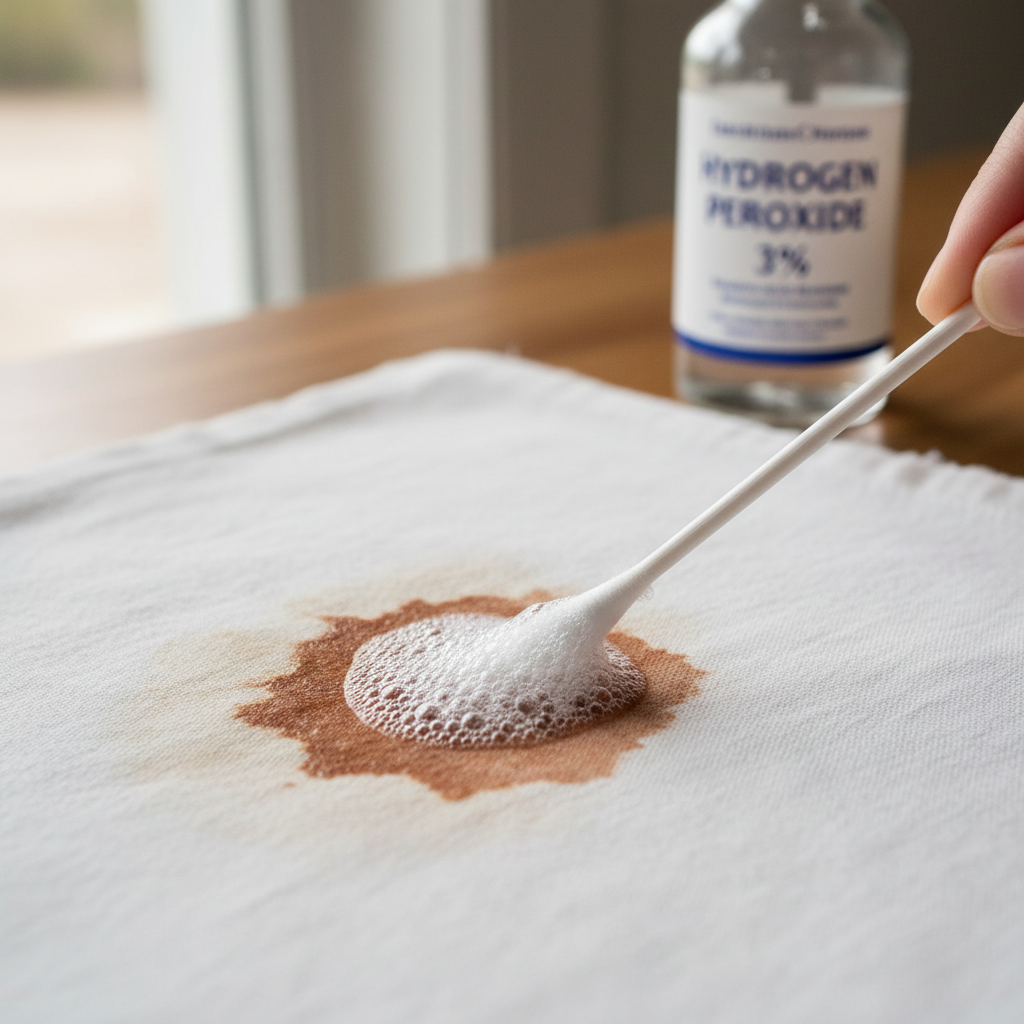
Hydrogen peroxide is a mild bleaching agent and powerful oxidizer that can help remove tough stains and odors. Use with caution, as it can lighten some fabrics.
How to Use Hydrogen Peroxide
- Test First Absolutely essential to test on an inconspicuous area first for colorfastness.
- Mix Solution Mix 1/2 cup 3% hydrogen peroxide with 1 teaspoon mild dish soap and 1 teaspoon baking soda.
- Apply and Blot Apply the solution to the stained area with a clean cloth, dabbing gently. Let it sit for 5-10 minutes.
- Rinse and Dry Blot with a damp cloth to ‘rinse’ the area, then blot dry thoroughly.
Hydrogen Peroxide Tips
- Only use 3% hydrogen peroxide, which is readily available.
- Do not use on wool, silk, or other delicate fabrics.
- Always use in a well-ventilated area.
Method 5 – Dish Soap and Water Spot Treatment
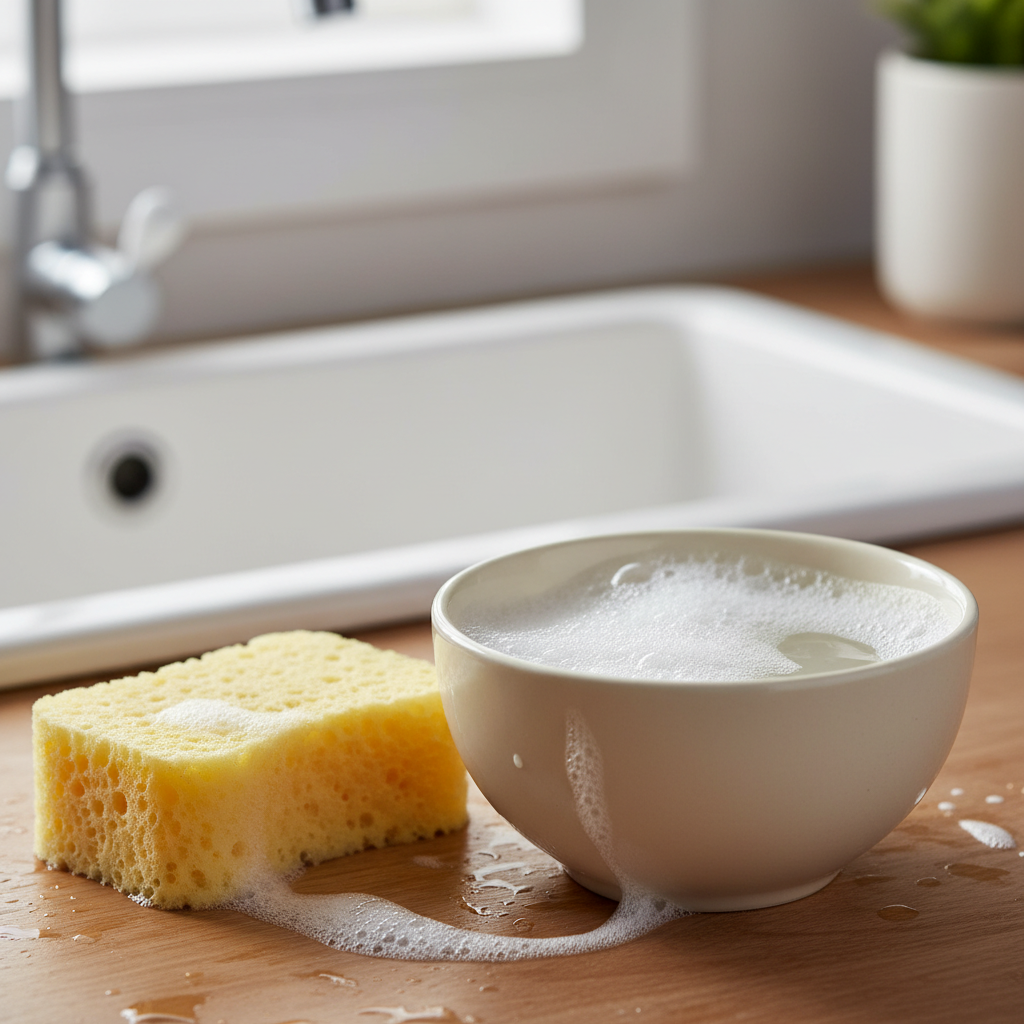
For very fresh and light accidents, a simple dish soap and water solution can sometimes be enough, especially if followed by a deodorizing step.
How to Use Dish Soap and Water
- Blot Thoroughly Absorb as much urine as possible.
- Mix a Mild Solution In a small bowl, mix a few drops of mild, clear dish soap with a cup of warm water.
- Dab and Blot Dip a clean cloth into the soapy water, wring it out well, and dab the stained area. Work from the outside in to prevent spreading.
- ‘Rinse’ and Dry With a separate clean, damp cloth (water only), dab the area to remove soap residue. Blot dry thoroughly.
Dish Soap Tips
- Avoid using too much soap, as it can leave a residue that attracts dirt.
- This method is best for very fresh, minor spots and should often be combined with baking soda for odor removal.
Method 6 – Steam Cleaning (with caution)
Steam cleaning can be effective for deep cleaning, but it must be used correctly. High heat can sometimes set urine odors if not combined with the right cleaning solution.
How to Use Steam Cleaning
- Pre-Treat For best results, pre-treat the urine spot with an enzyme cleaner (Method 3) and allow it to work first.
- Use a Pet-Specific Solution If your steam cleaner allows, use a pet-specific upholstery cleaning solution.
- Follow Instructions Carefully follow your steam cleaner’s instructions for upholstery attachments.
- Extract Thoroughly Ensure you extract as much moisture as possible to prevent mold and mildew.
Steam Cleaning Tips
- Always check your sofa’s cleaning code (W or WS) before steam cleaning.
- Avoid over-saturating the fabric and padding.
- Ensure the sofa dries completely and quickly after steaming.
Preventing Future Accidents and Odors
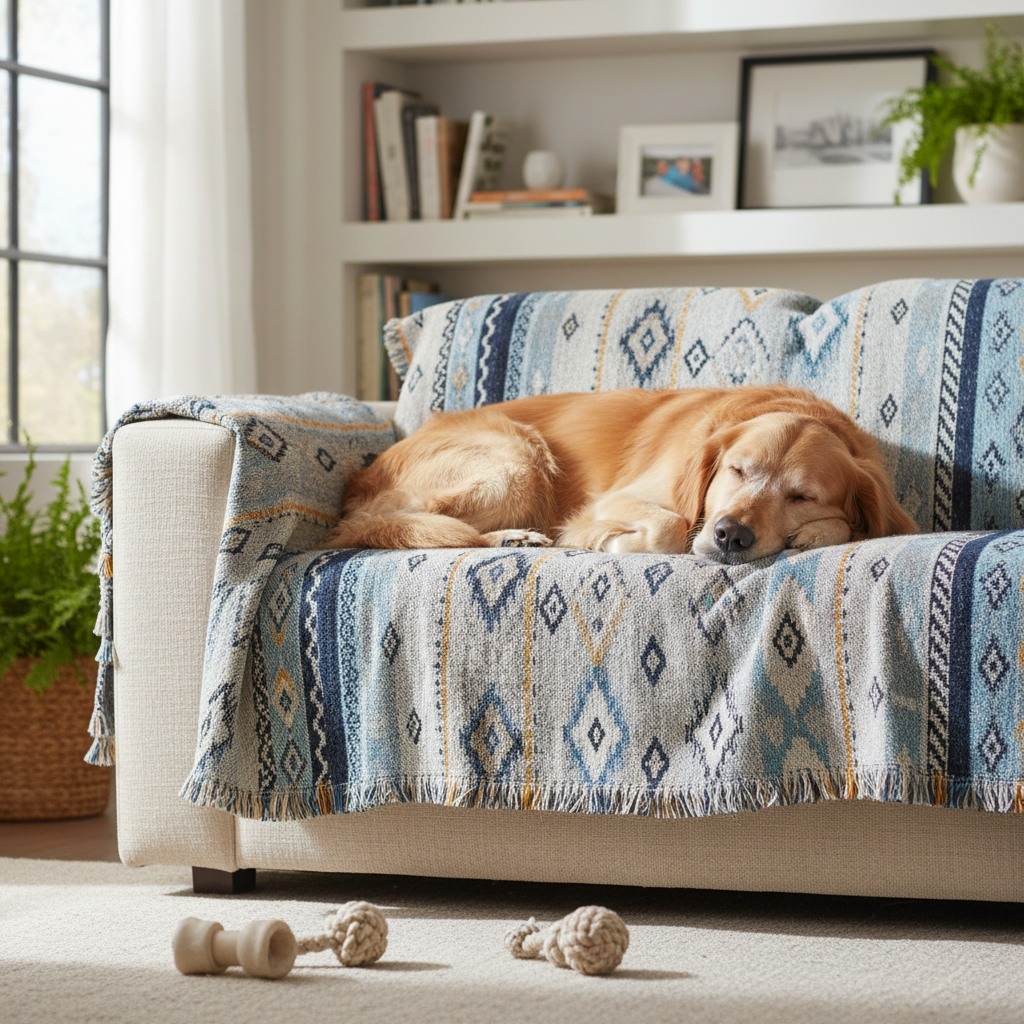
Prevention is always better than cure! Here are some tips to minimize future sofa accidents:
- Consistent Training Reinforce potty training, especially for puppies or new dogs. Take them out frequently.
- Waterproof Sofa Covers Invest in washable, waterproof sofa covers or throws. They protect your furniture and are easy to clean.
- Dog Beds Ensure your dog has a comfortable, designated bed that’s their own safe space, encouraging them to use it instead of the sofa for naps.
- Regular Vet Check-ups Sudden accidents can sometimes indicate a urinary tract infection or other health issues. A vet visit can rule out medical causes.
- Clean Up Thoroughly Always use an enzyme cleaner to ensure no residual odor encourages repeat marking.
When to Call a Professional
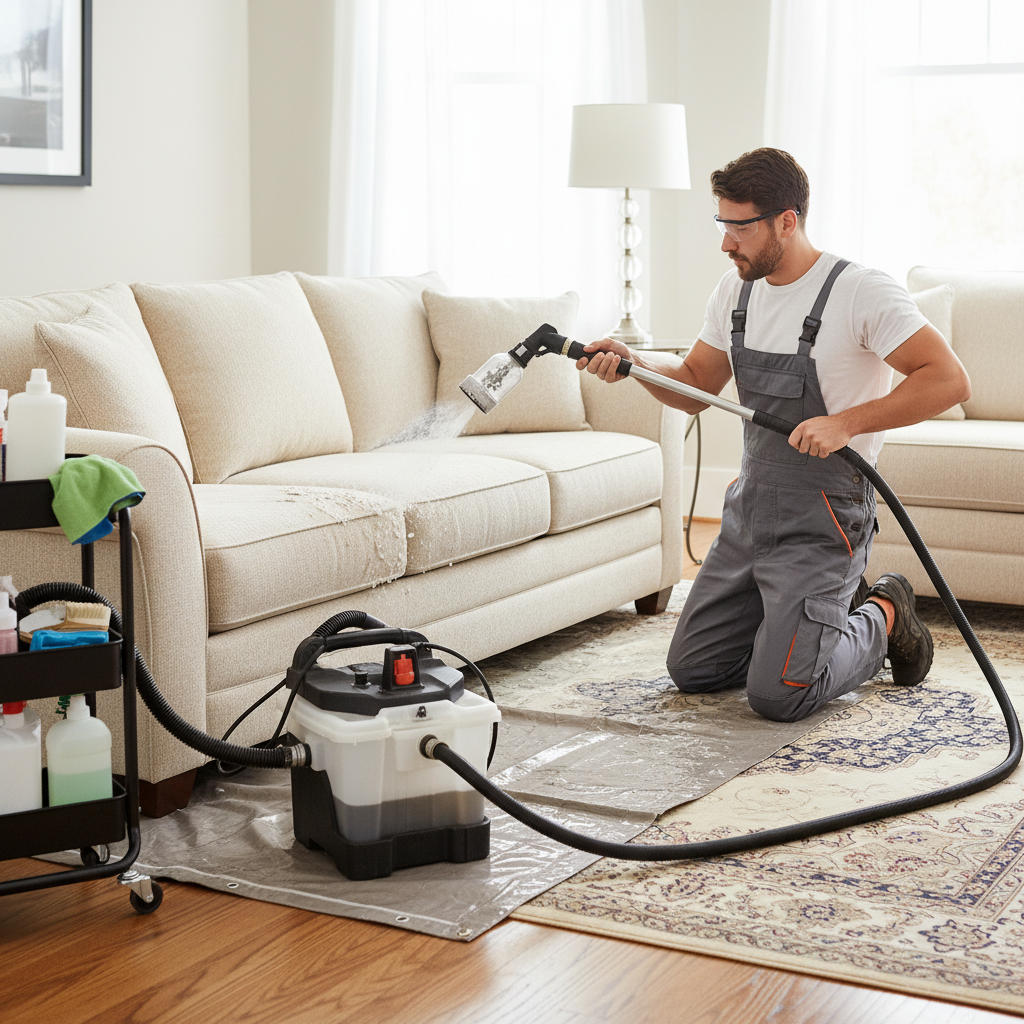
While DIY methods are often effective, there are times when calling a professional upholstery cleaner is the best course of action:
- Delicate Fabrics If your sofa is made of silk, velvet, or other delicate materials that require special care.
- Extensive Saturation If the urine has deeply soaked into the sofa’s padding and frame, professional extraction might be necessary.
- Persistent Odors If you’ve tried multiple DIY methods and the odor still lingers.
- Cleaning Code ‘X’ If your sofa’s cleaning code indicates vacuum-only.
Professionals have specialized equipment and knowledge to safely and effectively clean even the toughest pet stains and odors.
A Fresh Start for You and Your Best Friend
Dealing with pet urine odors on your sofa can be frustrating, but it’s a common challenge for dog parents. With the right pet-safe methods and a little patience, you can effectively remove those unwelcome smells and restore freshness to your home. Remember, accidents happen, and it’s all part of the journey of loving and living with dogs.
By understanding why odors linger and applying these proven techniques, you’re not just cleaning your sofa; you’re creating a more comfortable, hygienic, and harmonious environment for your entire family, including your beloved canine companion. Here’s to many more happy, fresh-smelling snuggles on the sofa with your best friend!